



Więcej o książce
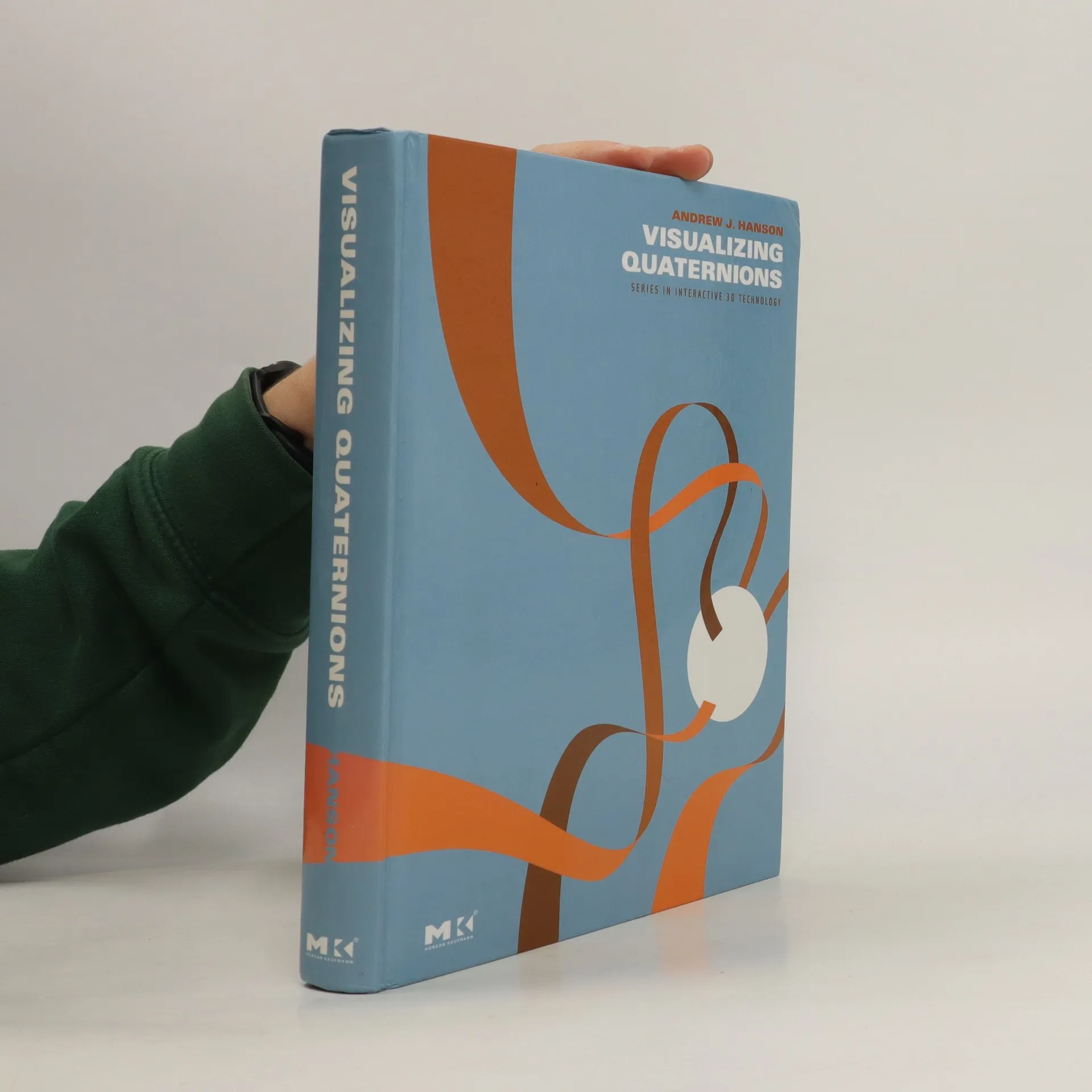
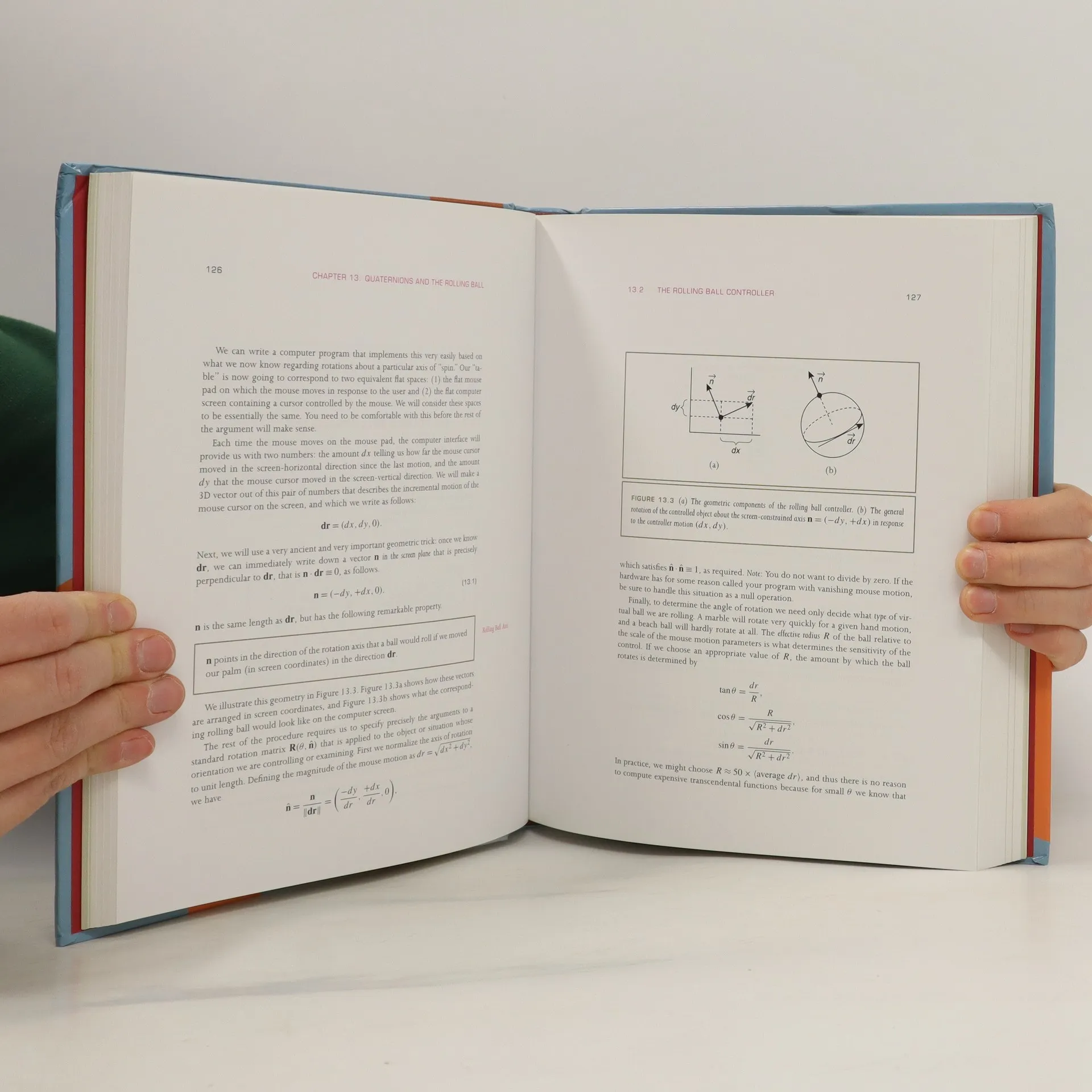
Introduced 160 years ago, quaternions have become essential in modern computer graphics, providing an efficient way to represent rotations. They require less memory than rotation matrices, compose faster, and facilitate efficient interpolation. However, their complex mathematics has deterred many practitioners. Andrew Hanson's new book offers a fresh perspective, aiming to make quaternions more accessible. The first part emphasizes visualizing quaternions to build intuition, featuring illustrative examples that highlight their significance—a welcoming introduction for those interested in quaternions without the burden of heavy mathematics. The second part delves into advanced applications, including quaternion curves, surfaces, and volumes. For those seeking a deeper understanding, the book concludes with a gentle introduction to the mathematics of quaternions, exploring their four-dimensional nature and the broader context of Clifford Algebras. This richly illustrated guide caters to developers, scientists, engineers, and students in computer graphics, visualization, or entertainment computing, balancing both non-mathematical and mathematical approaches. Additionally, a companion website offers quaternion utilities, sample code, data sets for illustrations, and Mathematica notebooks with essential algebraic tools.
Zakup książki
Visualizing Quaternions, Andrew J. Hanson
- Język

- Rok wydania
- 2006
- Oprawa
- (twarda)
Metody płatności
Brakuje nam tutaj Twojej recenzji.
- Tytuł
- Visualizing Quaternions
- Język
- angielski
- Autorzy
- Andrew J. Hanson
- Wydawca
- Morgan Kaufmann Publishers
- Rok wydania
- 2006
- Oprawa
- twarda
- Liczba stron
- 600
- ISBN10
- 0120884003
- ISBN13
- 9780120884001
- Seria
- Kategorie
- Tagi
- Ocena
- 3,85 z 5
- Opis
- Introduced 160 years ago, quaternions have become essential in modern computer graphics, providing an efficient way to represent rotations. They require less memory than rotation matrices, compose faster, and facilitate efficient interpolation. However, their complex mathematics has deterred many practitioners. Andrew Hanson's new book offers a fresh perspective, aiming to make quaternions more accessible. The first part emphasizes visualizing quaternions to build intuition, featuring illustrative examples that highlight their significance—a welcoming introduction for those interested in quaternions without the burden of heavy mathematics. The second part delves into advanced applications, including quaternion curves, surfaces, and volumes. For those seeking a deeper understanding, the book concludes with a gentle introduction to the mathematics of quaternions, exploring their four-dimensional nature and the broader context of Clifford Algebras. This richly illustrated guide caters to developers, scientists, engineers, and students in computer graphics, visualization, or entertainment computing, balancing both non-mathematical and mathematical approaches. Additionally, a companion website offers quaternion utilities, sample code, data sets for illustrations, and Mathematica notebooks with essential algebraic tools.