





Parametry
Więcej o książce
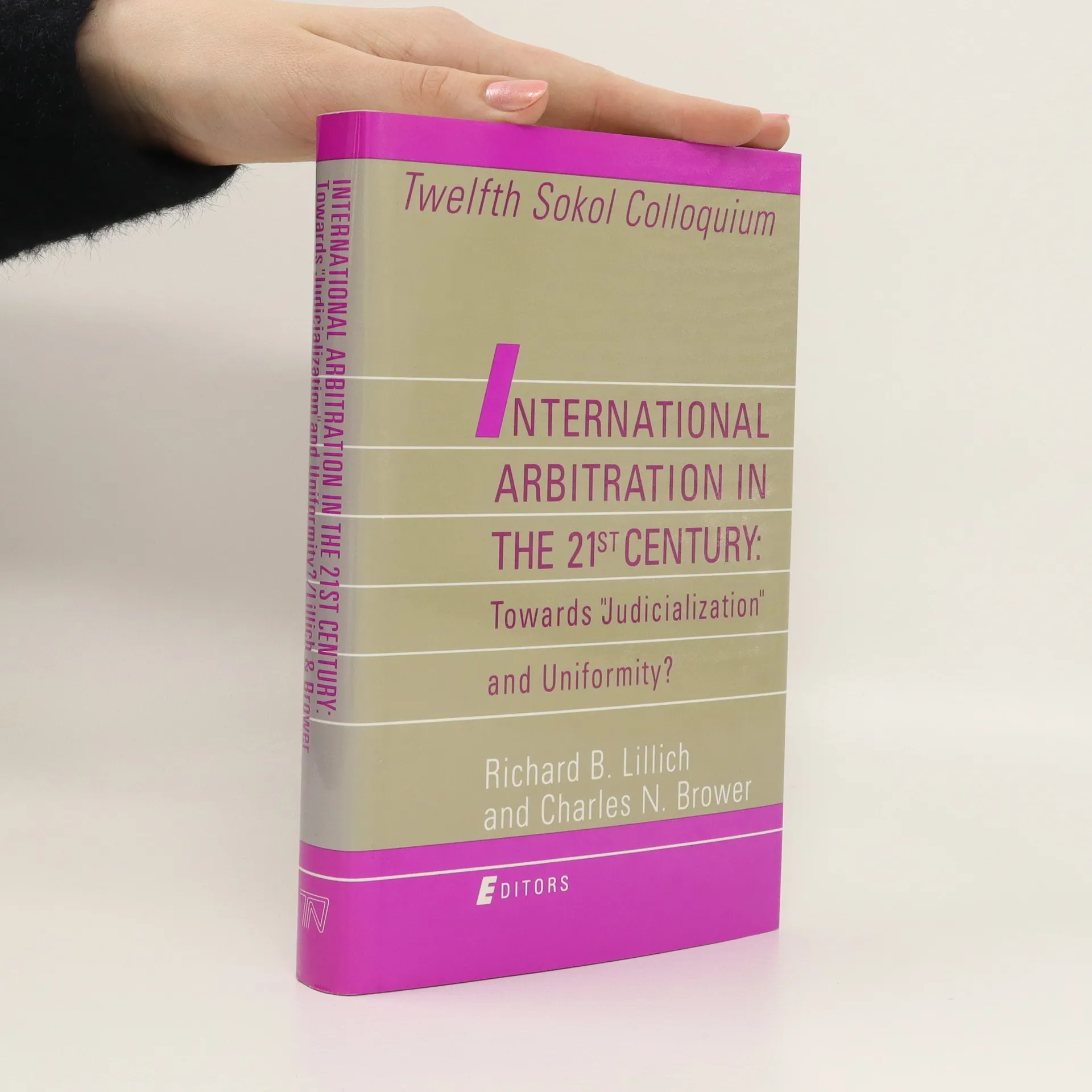
The field of international arbitration is rapidly expanding, leading to an increase in arbitral institutions, new arbitration rules, and a growing number of practitioners and related laws. This growth has resulted in two notable trends. First, there is an increasing "judicialization" of international arbitration, where proceedings adopt the complexity and formality typical of national court litigation and face more judicial oversight. Second, there is heightened concern over uniformity, particularly highlighted by national discussions regarding the adoption of the UNCITRAL Model Law on Commercial Arbitration. The Twelfth Sokol Colloquium on Private International Law, held at the University of Virginia College of Law, aimed to reflect on three key questions: How advanced are these trends? Are they beneficial or detrimental? If beneficial, how can they be fostered; if detrimental, how can they be mitigated? The Colloquium explored these questions across three areas: arbitral procedure, the law applicable to disputes, and the review of awards. The resulting ten chapters feature contributions from members of international tribunals, leading lawyers, and esteemed academic figures from the U.S. and abroad.
Zakup książki
International arbitration in the 21st century: towards judicialization and uniformity?, kolektiv
- Język

- Rok wydania
- 1994
- Oprawa
- (twarda)
Metody płatności
Nikt jeszcze nie ocenił.
- Tytuł
- International arbitration in the 21st century: towards judicialization and uniformity?
- Język
- angielski
- Autorzy
- kolektiv
- Rok wydania
- 1994
- Oprawa
- twarda
- ISBN10
- 0941320723
- ISBN13
- 9780941320726
- Seria
- Tagi
- Biznes, Tematy prawne
- Opis
- The field of international arbitration is rapidly expanding, leading to an increase in arbitral institutions, new arbitration rules, and a growing number of practitioners and related laws. This growth has resulted in two notable trends. First, there is an increasing "judicialization" of international arbitration, where proceedings adopt the complexity and formality typical of national court litigation and face more judicial oversight. Second, there is heightened concern over uniformity, particularly highlighted by national discussions regarding the adoption of the UNCITRAL Model Law on Commercial Arbitration. The Twelfth Sokol Colloquium on Private International Law, held at the University of Virginia College of Law, aimed to reflect on three key questions: How advanced are these trends? Are they beneficial or detrimental? If beneficial, how can they be fostered; if detrimental, how can they be mitigated? The Colloquium explored these questions across three areas: arbitral procedure, the law applicable to disputes, and the review of awards. The resulting ten chapters feature contributions from members of international tribunals, leading lawyers, and esteemed academic figures from the U.S. and abroad.