

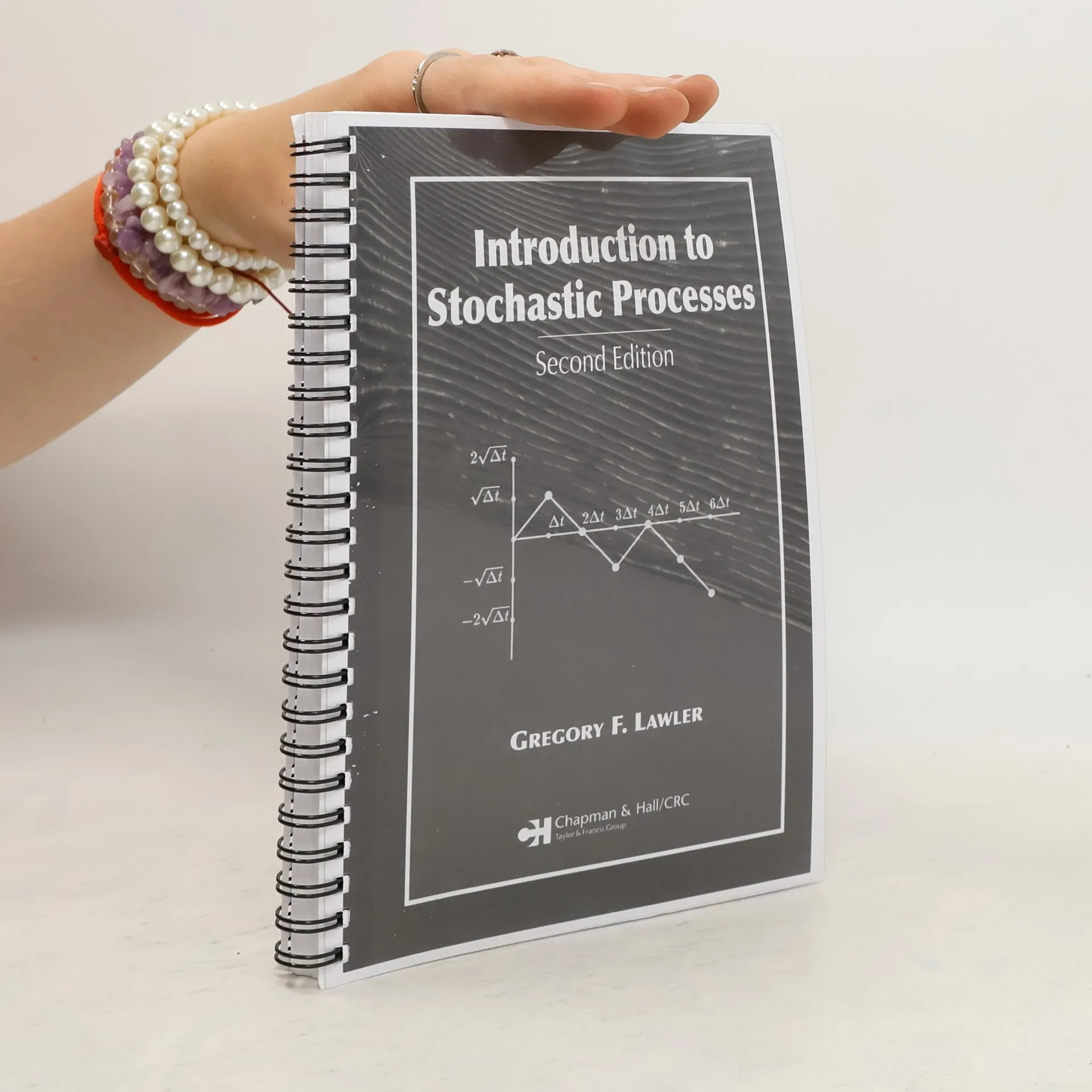


Więcej o książce
Emphasizing fundamental mathematical ideas rather than proofs, Introduction to Stochastic Processes, Second Edition provides quick access to important foundations of probability theory applicable to problems in many fields. Assuming that you have a reasonable level of computer literacy, the ability to write simple programs, and the access to software for linear algebra computations, the author approaches the problems and theorems with a focus on stochastic processes evolving with time, rather than a particular emphasis on measure theory.For those lacking in exposure to linear differential and difference equations, the author begins with a brief introduction to these concepts. He proceeds to discuss Markov chains, optimal stopping, martingales, and Brownian motion. The book concludes with a chapter on stochastic integration. The author supplies many basic, general examples and provides exercises at the end of each chapter.New to the Second
Zakup książki
Introduction to Stochastic Processes, Gregory F. Lawler
- Język

- Rok wydania
- 2006
- Oprawa
- (twarda)
Metody płatności
Brakuje nam tutaj Twojej recenzji.
- Tytuł
- Introduction to Stochastic Processes
- Podtytuł
- Second Edition
- Język
- angielski
- Autorzy
- Gregory F. Lawler
- Wydawca
- Chapman and Hall/CRC
- Rok wydania
- 2006
- Oprawa
- twarda
- Liczba stron
- 248
- ISBN10
- 158488651X
- ISBN13
- 9781584886518
- Seria
- Tagi
- Ocena
- 4,4 z 5
- Opis
- Emphasizing fundamental mathematical ideas rather than proofs, Introduction to Stochastic Processes, Second Edition provides quick access to important foundations of probability theory applicable to problems in many fields. Assuming that you have a reasonable level of computer literacy, the ability to write simple programs, and the access to software for linear algebra computations, the author approaches the problems and theorems with a focus on stochastic processes evolving with time, rather than a particular emphasis on measure theory.For those lacking in exposure to linear differential and difference equations, the author begins with a brief introduction to these concepts. He proceeds to discuss Markov chains, optimal stopping, martingales, and Brownian motion. The book concludes with a chapter on stochastic integration. The author supplies many basic, general examples and provides exercises at the end of each chapter.New to the Second