

Więcej o książce
This work explores the canon law of the Roman Catholic Church through a comparative lens, highlighting historical antinomian and legalistic approaches. Antinomianism minimizes the importance of canon law, while legalism exaggerates its role, both posing threats to the Church's rule of law. The introduction sets the stage by discussing these approaches and their implications, alongside the views of various Anglo-American legal theorists. The first chapter provides an overview of canon law as the foundational system for this analysis. Subsequent chapters delve into the implications of antinomian and legalistic perspectives on three key issues: the sexual abuse crisis, church property ownership, and the denial of Holy Communion to Catholic public officials. Chapters two and three examine how these approaches have undermined the rule of law regarding the sexual abuse crisis. Chapters four and five compare canon law property concepts with liberal political theory, addressing parish property ownership amid diocesan bankruptcies and the intersection of church property with secular law. Chapters six and seven discuss the indeterminacy of canon law concerning the denial of Holy Communion to public officials. While focused on the U.S., these issues raise broader theoretical questions about antinomianism, legalism, and the rule of law, with American legal theory providing clarity throughout. The conclusion synthesizes the findings of thi
Zakup książki
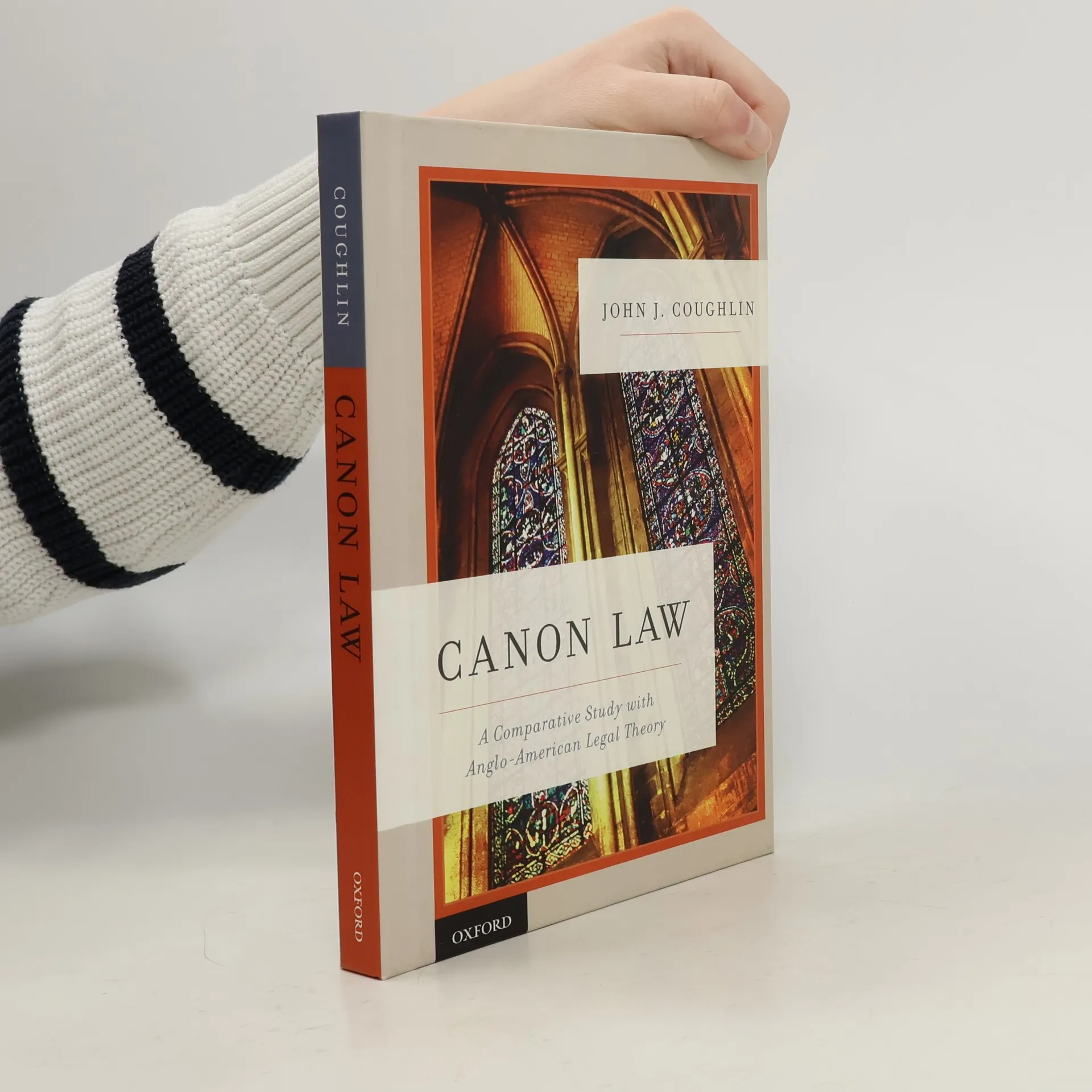
Canon Law, John J. Coughlin
- Język

- Rok wydania
- 2010
- Oprawa
- (twarda)
Metody płatności
Brakuje nam tutaj Twojej recenzji.
- Tytuł
- Canon Law
- Podtytuł
- A Comparative Study with Anglo-American Legal Theory
- Język
- angielski
- Autorzy
- John J. Coughlin
- Wydawca
- Oxford University Press
- Rok wydania
- 2010
- Oprawa
- twarda
- Liczba stron
- 248
- ISBN10
- 0195372972
- ISBN13
- 9780195372977
- Seria
- Tagi
- Tematy religijne, Tematy prawne, Tematy chrześcijańskie, USA, Erotyka, Lingwistyka, Kościół katolicki, Katolicy, Prawo kanoniczne
- Ocena
- 4,35 z 5
- Opis
- This work explores the canon law of the Roman Catholic Church through a comparative lens, highlighting historical antinomian and legalistic approaches. Antinomianism minimizes the importance of canon law, while legalism exaggerates its role, both posing threats to the Church's rule of law. The introduction sets the stage by discussing these approaches and their implications, alongside the views of various Anglo-American legal theorists. The first chapter provides an overview of canon law as the foundational system for this analysis. Subsequent chapters delve into the implications of antinomian and legalistic perspectives on three key issues: the sexual abuse crisis, church property ownership, and the denial of Holy Communion to Catholic public officials. Chapters two and three examine how these approaches have undermined the rule of law regarding the sexual abuse crisis. Chapters four and five compare canon law property concepts with liberal political theory, addressing parish property ownership amid diocesan bankruptcies and the intersection of church property with secular law. Chapters six and seven discuss the indeterminacy of canon law concerning the denial of Holy Communion to public officials. While focused on the U.S., these issues raise broader theoretical questions about antinomianism, legalism, and the rule of law, with American legal theory providing clarity throughout. The conclusion synthesizes the findings of thi