

Więcej o książce
The development and application of Bayesian inferential methods have seen significant growth, largely due to powerful simulation-based algorithms that summarize posterior distributions. Interest in the R programming language for statistical analyses has also increased, as its open-source nature, free availability, and extensive contributor packages make it a preferred choice for statisticians. This text introduces Bayesian modeling through computation using R, starting with fundamental Bayesian concepts illustrated by one and two-parameter inferential problems. It covers computational methods like Laplace's method, rejection sampling, and the SIR algorithm within a random effects model framework. The book also introduces Markov Chain Monte Carlo (MCMC) methods, applied to various Bayesian applications including normal and binary response regression, hierarchical modeling, and robust modeling. R algorithms are utilized for developing Bayesian tests and assessing models via the posterior predictive distribution, along with interfacing R with WinBUGS for MCMC. This resource is ideal for introductory courses on Bayesian methods and for practitioners seeking to enhance their knowledge of R and Bayesian techniques. The second edition features new topics like mixtures of conjugate priors and Zellner’s g priors for model selection in linear regression, along with updated R code illustrations in line with the latest LearnBayes package.
Zakup książki
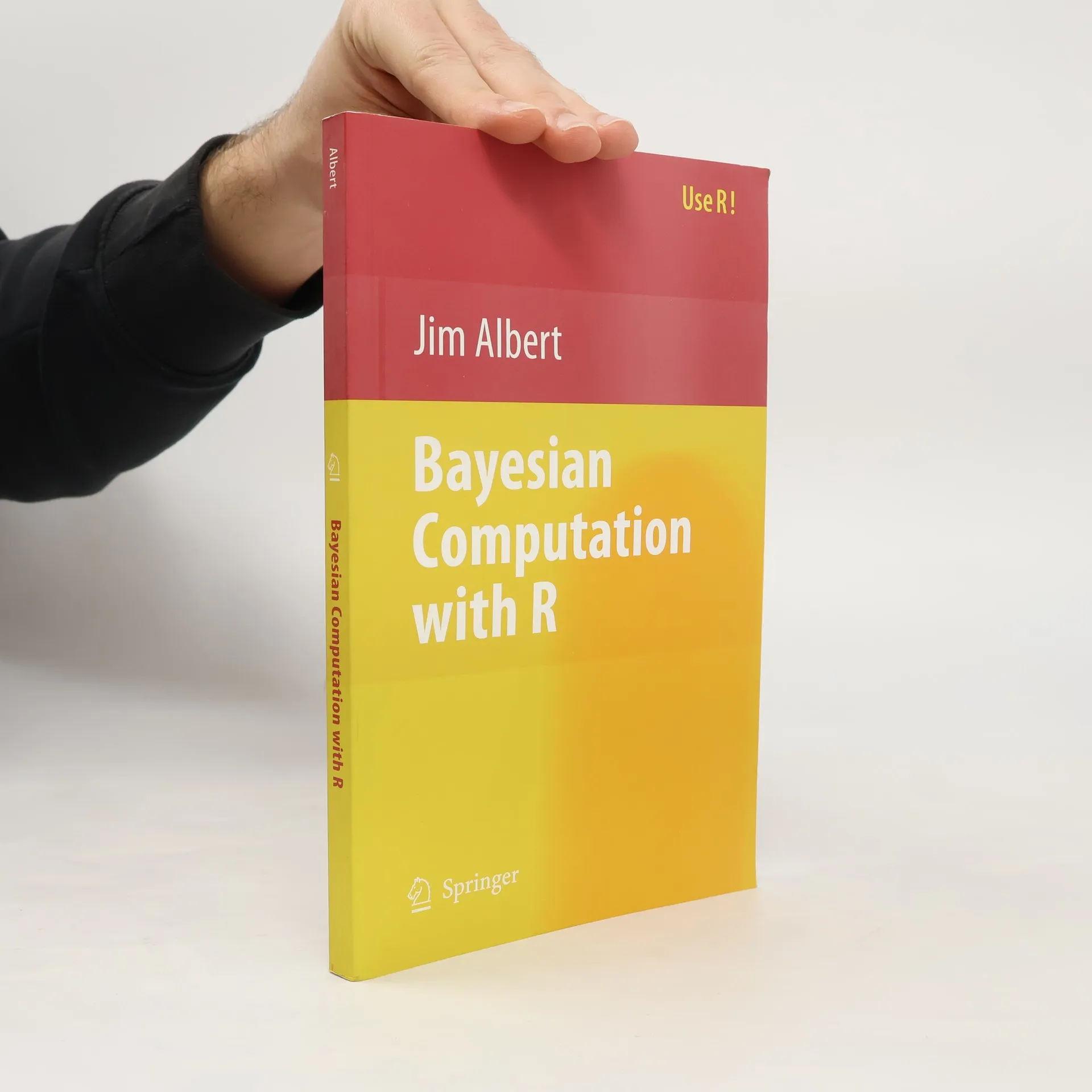
Bayesian Computation with R, Jim Albert
- Język

- Rok wydania
- 2007
- Oprawa
- (miękka)
Metody płatności
Brakuje nam tutaj Twojej recenzji.
- Tytuł
- Bayesian Computation with R
- Język
- angielski
- Autorzy
- Jim Albert
- Wydawca
- Springer
- Rok wydania
- 2007
- Oprawa
- miękka
- Liczba stron
- 270
- ISBN10
- 0387713840
- ISBN13
- 9780387713847
- Seria
- Kategorie
- Tagi
- USA, Algorytmy, Optymalizacja, Modelarstwo, Wizualizacja
- Ocena
- 3,35 z 5
- Opis
- The development and application of Bayesian inferential methods have seen significant growth, largely due to powerful simulation-based algorithms that summarize posterior distributions. Interest in the R programming language for statistical analyses has also increased, as its open-source nature, free availability, and extensive contributor packages make it a preferred choice for statisticians. This text introduces Bayesian modeling through computation using R, starting with fundamental Bayesian concepts illustrated by one and two-parameter inferential problems. It covers computational methods like Laplace's method, rejection sampling, and the SIR algorithm within a random effects model framework. The book also introduces Markov Chain Monte Carlo (MCMC) methods, applied to various Bayesian applications including normal and binary response regression, hierarchical modeling, and robust modeling. R algorithms are utilized for developing Bayesian tests and assessing models via the posterior predictive distribution, along with interfacing R with WinBUGS for MCMC. This resource is ideal for introductory courses on Bayesian methods and for practitioners seeking to enhance their knowledge of R and Bayesian techniques. The second edition features new topics like mixtures of conjugate priors and Zellner’s g priors for model selection in linear regression, along with updated R code illustrations in line with the latest LearnBayes package.