

Więcej o książce
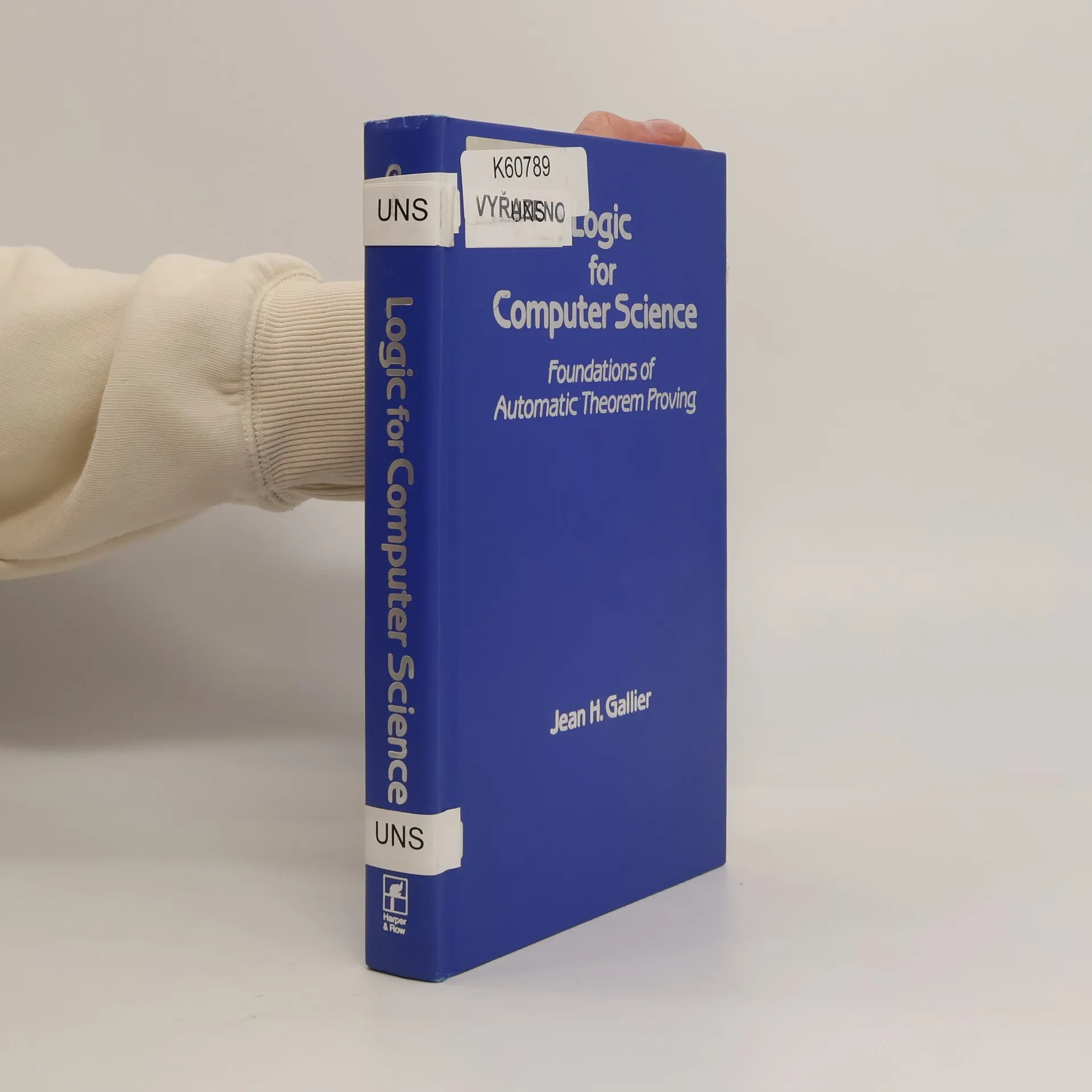
"Logic for Computer Science" provides an introduction to mathematical logic, with emphasis on proof theory and procedures for constructing formal proofs of formulae algorithmically. It is designed primarily for students, computer scientists, and, more generally, for mathematically inclined readers interested in the formalization of proofs and the foundations of automatic theorem proving. Since the main emphasis of the text is on the study of proof systems and algorithmic methods for constructing proofs, it contains features rarely found in other texts on logic. Four of these the use of Gentzen systems; a justification of the resolution method via a translation from a Gentzen system; a presentation of SLD-resolution and a presentation of the foundations of PROLOG; fast decisions procedures based on congruence closures.
Zakup książki
Logic for Computer Science, Jean H. Gallier
- Język

- Rok wydania
- 1986
- Oprawa
- (twarda)
Metody płatności
Brakuje nam tutaj Twojej recenzji.
- Tytuł
- Logic for Computer Science
- Podtytuł
- Foundations of Automatic Theorem Proving
- Język
- angielski
- Autorzy
- Jean H. Gallier
- Wydawca
- Longman Higher Education
- Rok wydania
- 1986
- Oprawa
- twarda
- Liczba stron
- 511
- ISBN10
- 0060422254
- ISBN13
- 9780060422257
- Seria
- Kategorie
- Tagi
- Logika
- Ocena
- 4,5 z 5
- Opis
- "Logic for Computer Science" provides an introduction to mathematical logic, with emphasis on proof theory and procedures for constructing formal proofs of formulae algorithmically. It is designed primarily for students, computer scientists, and, more generally, for mathematically inclined readers interested in the formalization of proofs and the foundations of automatic theorem proving. Since the main emphasis of the text is on the study of proof systems and algorithmic methods for constructing proofs, it contains features rarely found in other texts on logic. Four of these the use of Gentzen systems; a justification of the resolution method via a translation from a Gentzen system; a presentation of SLD-resolution and a presentation of the foundations of PROLOG; fast decisions procedures based on congruence closures.