


Więcej o książce
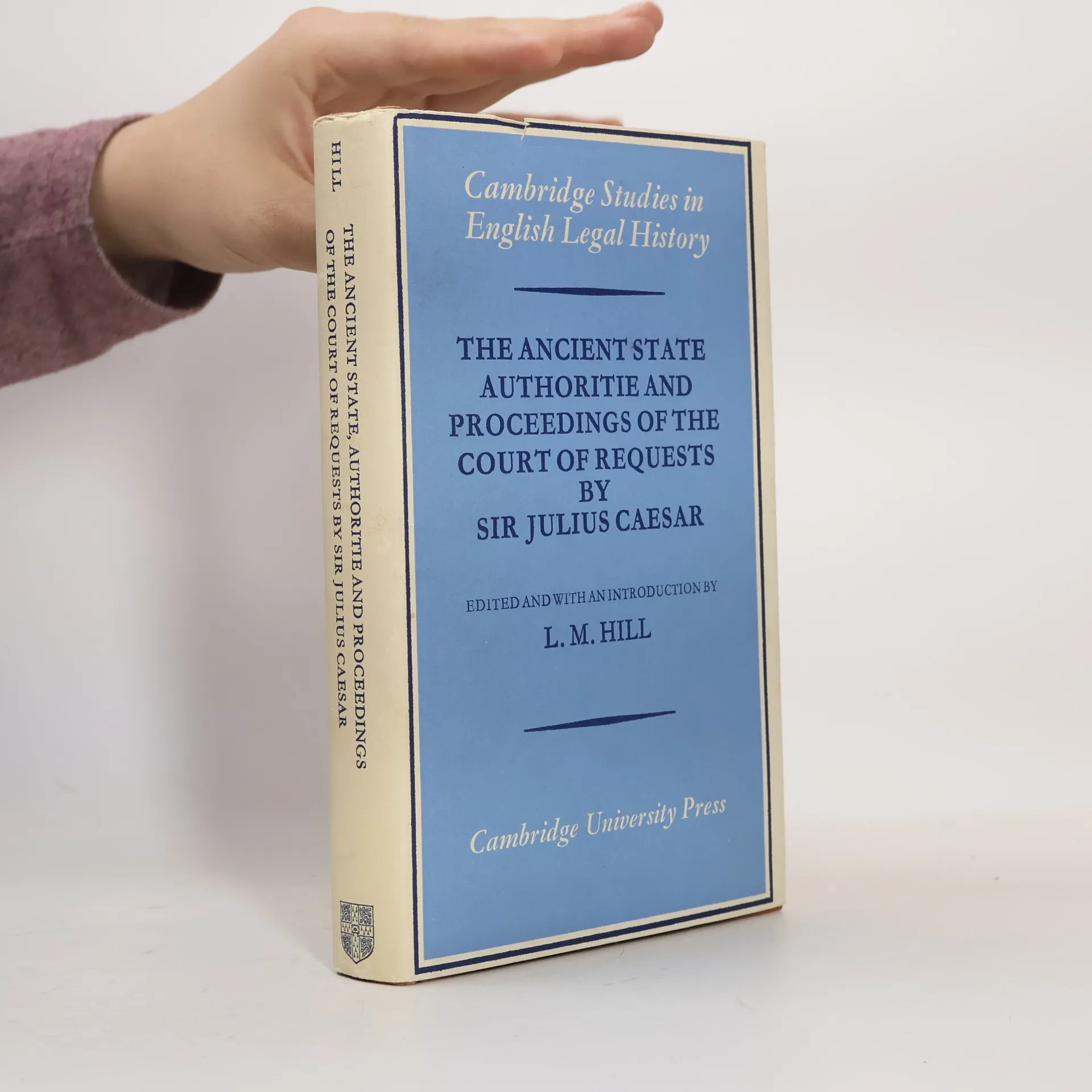
Sir Julius Caesar was the servant of Elizabeth I, James I and Charles I, serving as Judge of the High Court of Admiralty, Master of Requests, Chancellor of the Exchequer, Master of the Rolls and Privy Councillor. He also sat in the later Elizabethan parliaments and all but one in James' reign. Throughout his long and active career, Caesar preserved hundreds of volumes of his papers. They are largely in the custody of the British Museum and the text of this edition has been taken from BM Lansdowne MS 125. At the end of the sixteenth century English civilians were pressed to defend themselves and their courts against the judicial monopoly which the common lawyers were asserting. While this has often been regarded as a problem of conflicting legal systems and jurisprudential ideologies, it is apparent from Sir Julius Caesar's work that the questions were far more pragmatic than ideological.
Zakup książki
Cambridge Studies in English Legal History: The Ancient State Authoritie and Proceedings of the Court of Requests by Sir Julius Caesar, Gaius Julius Ceasar, L. M. Hill
- Język

- Rok wydania
- 1975
- Oprawa
- (twarda),
- Stan książki
- Dobry
- Cena
- 114,56 zł
Metody płatności
Nikt jeszcze nie ocenił.
- Tytuł
- Cambridge Studies in English Legal History: The Ancient State Authoritie and Proceedings of the Court of Requests by Sir Julius Caesar
- Język
- angielski
- Autorzy
- Gaius Julius Ceasar, L. M. Hill
- Wydawca
- Cambridge University Press
- Rok wydania
- 1975
- Oprawa
- twarda
- Liczba stron
- 328
- ISBN10
- 0521203864
- ISBN13
- 9780521203869
- Seria
- Opis
- Sir Julius Caesar was the servant of Elizabeth I, James I and Charles I, serving as Judge of the High Court of Admiralty, Master of Requests, Chancellor of the Exchequer, Master of the Rolls and Privy Councillor. He also sat in the later Elizabethan parliaments and all but one in James' reign. Throughout his long and active career, Caesar preserved hundreds of volumes of his papers. They are largely in the custody of the British Museum and the text of this edition has been taken from BM Lansdowne MS 125. At the end of the sixteenth century English civilians were pressed to defend themselves and their courts against the judicial monopoly which the common lawyers were asserting. While this has often been regarded as a problem of conflicting legal systems and jurisprudential ideologies, it is apparent from Sir Julius Caesar's work that the questions were far more pragmatic than ideological.