


Parametry
Więcej o książce
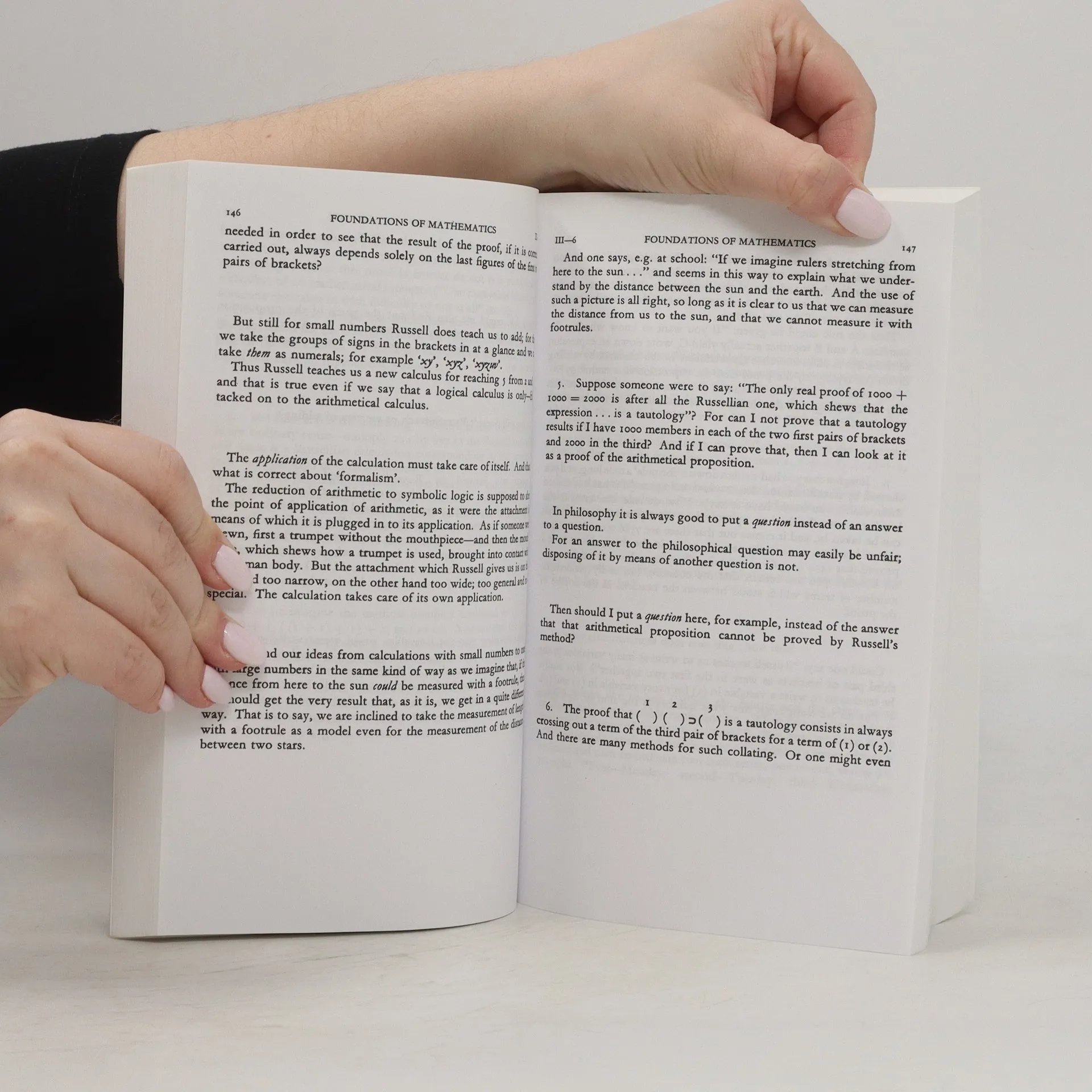
Wittgenstein's work remains, undeniably, now, that of one of those few philosophers who will be read by all future generations.The Remarks analyzes in depth such topics as logical compulsion (the “must”) and mathematical conviction; calculation as experiment; mathematical surprise, discovery, and invention; Russell's logic, Gödel's theorem, Cantor's diagonal procedure, Dedekind's cuts; the nature of proof and contradiction; and the role of mathematical propositions in the forming of concepts.Wittgenstein's later philosophy was much involved with the concept of “language-games,” of which mathematics was one. It was his feeling that a proper analysis of the use of language would clarify concepts and lead to the solution of (what seem to be) philosophical problems.Sometimes, Wittgenstein's expository method is pre-Socratic: a flow of disconnected statements, not unlike Heraclitean fragments, that range from clear aphorisms to cryptic oracles. Elsewhere, there are brief Socratic dialogues with imaginary persons, opponents of equally severe seriousness, representatives of the other half of Wittgenstein strove for total clarity of language as a means of solving philosophical problems, but some of his most meaningful statements here are expressed suggestively, subjectively, poetically.

Zakup książki
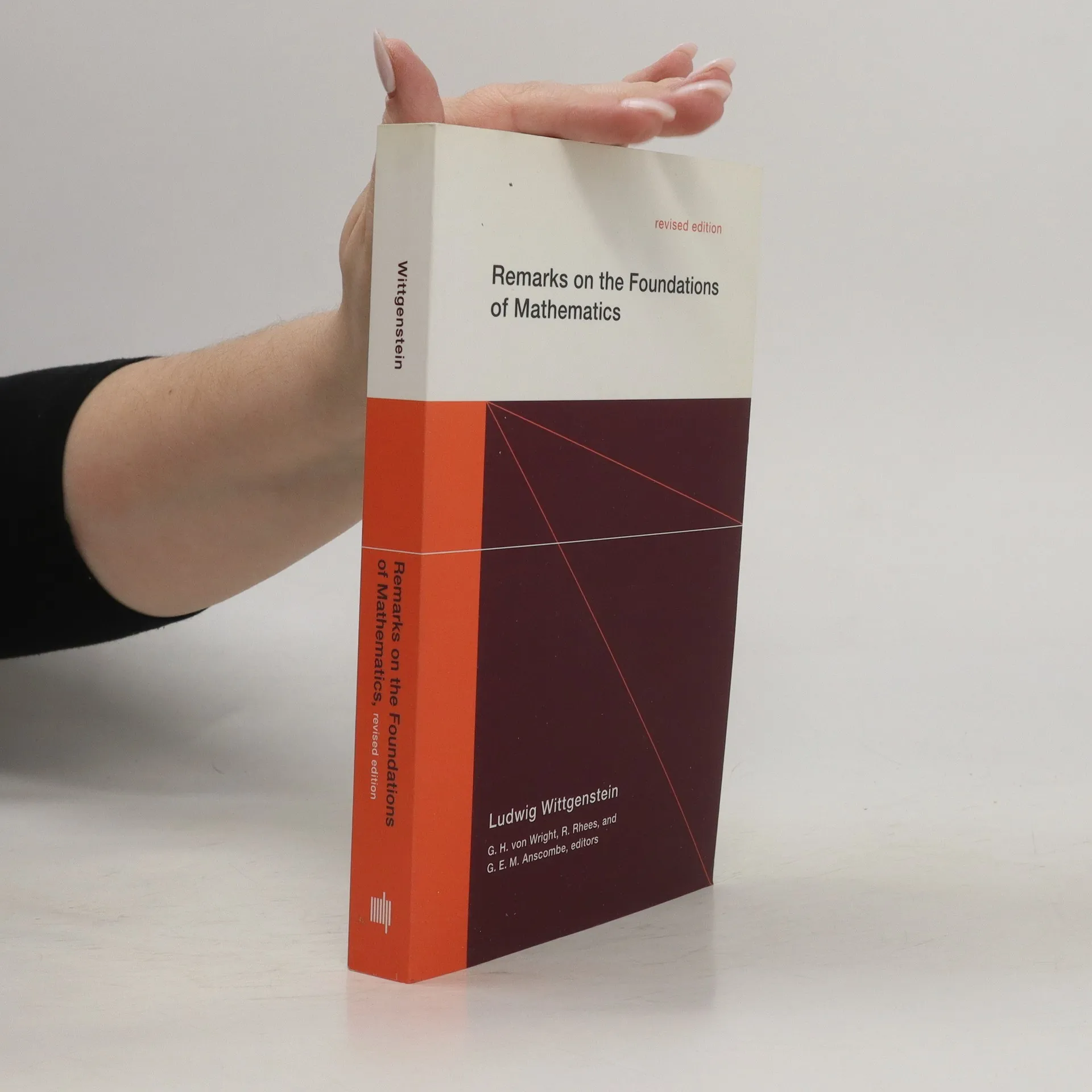
Remarks on the Foundations of Mathematics, Ludwig Wittgenstein
- Język

- Rok wydania
- 1983
- Oprawa
- (miękka)
Metody płatności
Brakuje nam tutaj Twojej recenzji.
- Tytuł
- Remarks on the Foundations of Mathematics
- Język
- angielski
- Autorzy
- Ludwig Wittgenstein
- Wydawca
- MIT Press
- Rok wydania
- 1983
- Oprawa
- miękka
- ISBN10
- 0262730677
- ISBN13
- 9780262730679
- Seria
- Ocena
- 4,1 z 5
- Opis
- Wittgenstein's work remains, undeniably, now, that of one of those few philosophers who will be read by all future generations.The Remarks analyzes in depth such topics as logical compulsion (the “must”) and mathematical conviction; calculation as experiment; mathematical surprise, discovery, and invention; Russell's logic, Gödel's theorem, Cantor's diagonal procedure, Dedekind's cuts; the nature of proof and contradiction; and the role of mathematical propositions in the forming of concepts.Wittgenstein's later philosophy was much involved with the concept of “language-games,” of which mathematics was one. It was his feeling that a proper analysis of the use of language would clarify concepts and lead to the solution of (what seem to be) philosophical problems.Sometimes, Wittgenstein's expository method is pre-Socratic: a flow of disconnected statements, not unlike Heraclitean fragments, that range from clear aphorisms to cryptic oracles. Elsewhere, there are brief Socratic dialogues with imaginary persons, opponents of equally severe seriousness, representatives of the other half of Wittgenstein strove for total clarity of language as a means of solving philosophical problems, but some of his most meaningful statements here are expressed suggestively, subjectively, poetically.