

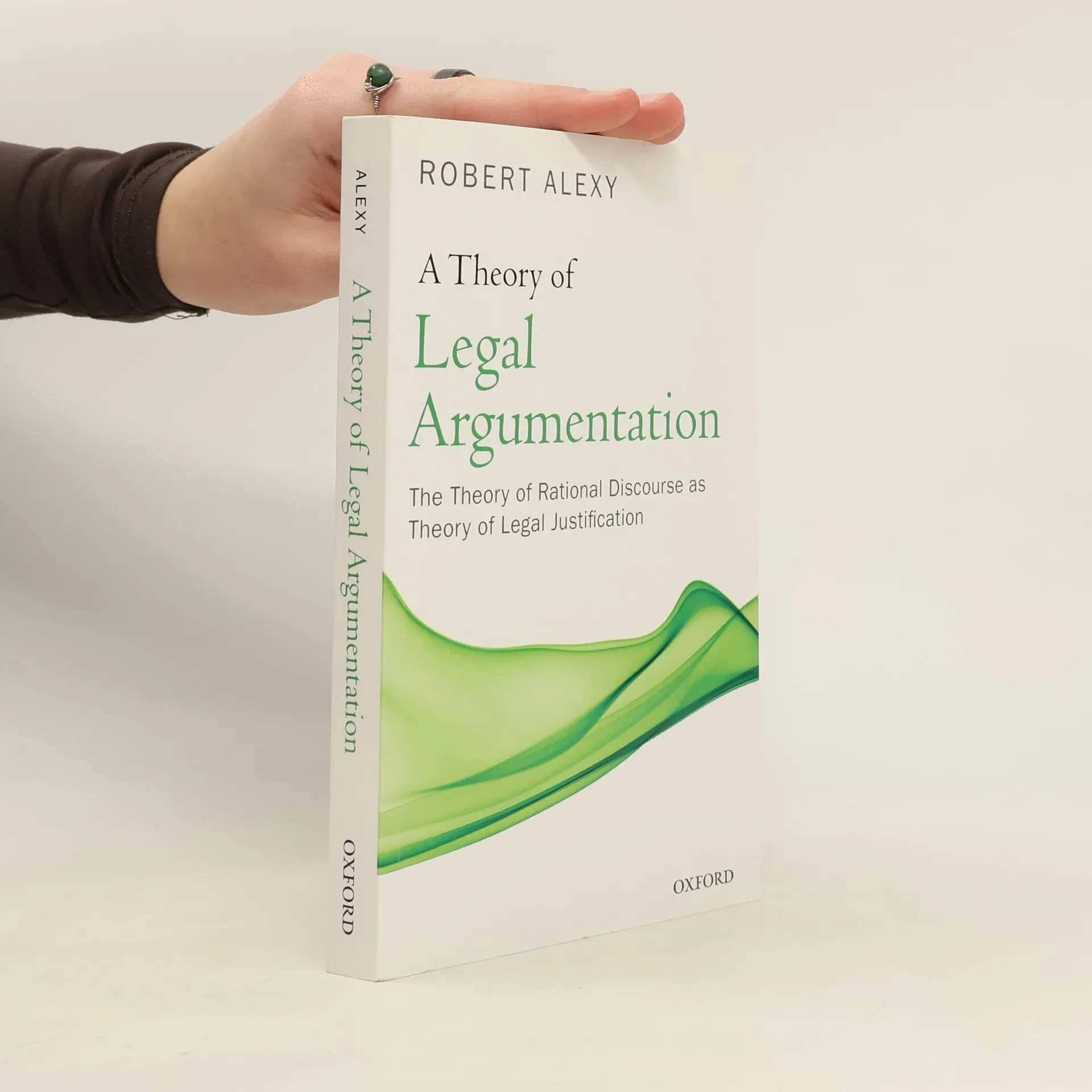

A theory of legal argumentation
the theory of rational discourse as theory of legal justification
Autorzy
Ocena książki
Parametry
- 323 strony
- 12 godzin czytania
Więcej o książce
What is to be understood by 'rational legal argument'? To what extent can legal reasoning be rational? Is the demand for rationality in legal affairs justified? And what are the criteria of rationality in legal reasoning? The answer to these questions is not only of interest to legal theorists and philosophers of law. They are pressing issues for practicing lawyers, and a matter of concern for every citizen active in the public arena. Not only the standing of academic law as a scientific discipline, but also the legitimacy of judicial decisions depends on the possibility of rational legal argumentation. A theory of legal reasoning which tries to answer these questions pre-supposes a theory of general practical reasoning. This theory is the subject matter of the first two parts of the book. The result is a theory of general practical discourse which rests on insights of both Anglo-Saxon and German philosophy. It forms the basis of the theory of rational legal discourse, which is developed in the third part of this book.
Zakup książki
A theory of legal argumentation, Robert Alexy
- Język

- Rok wydania
- 2010
- Oprawa
- (miękka)
Metody płatności
Brakuje nam tutaj Twojej recenzji.
- Tytuł
- A theory of legal argumentation
- Podtytuł
- the theory of rational discourse as theory of legal justification
- Język
- angielski
- Autorzy
- Robert Alexy
- Wydawca
- Oxford University Press
- Rok wydania
- 2010
- Oprawa
- miękka
- Liczba stron
- 323
- ISBN10
- 0199584222
- ISBN13
- 9780199584222
- Seria
- Tagi
- Tematy prawne
- Oryginalna nazwa
- Theorie der juristischen Argumentation
- Ocena
- 4,15 z 5
- Opis
- What is to be understood by 'rational legal argument'? To what extent can legal reasoning be rational? Is the demand for rationality in legal affairs justified? And what are the criteria of rationality in legal reasoning? The answer to these questions is not only of interest to legal theorists and philosophers of law. They are pressing issues for practicing lawyers, and a matter of concern for every citizen active in the public arena. Not only the standing of academic law as a scientific discipline, but also the legitimacy of judicial decisions depends on the possibility of rational legal argumentation. A theory of legal reasoning which tries to answer these questions pre-supposes a theory of general practical reasoning. This theory is the subject matter of the first two parts of the book. The result is a theory of general practical discourse which rests on insights of both Anglo-Saxon and German philosophy. It forms the basis of the theory of rational legal discourse, which is developed in the third part of this book.