


Parametry
Więcej o książce
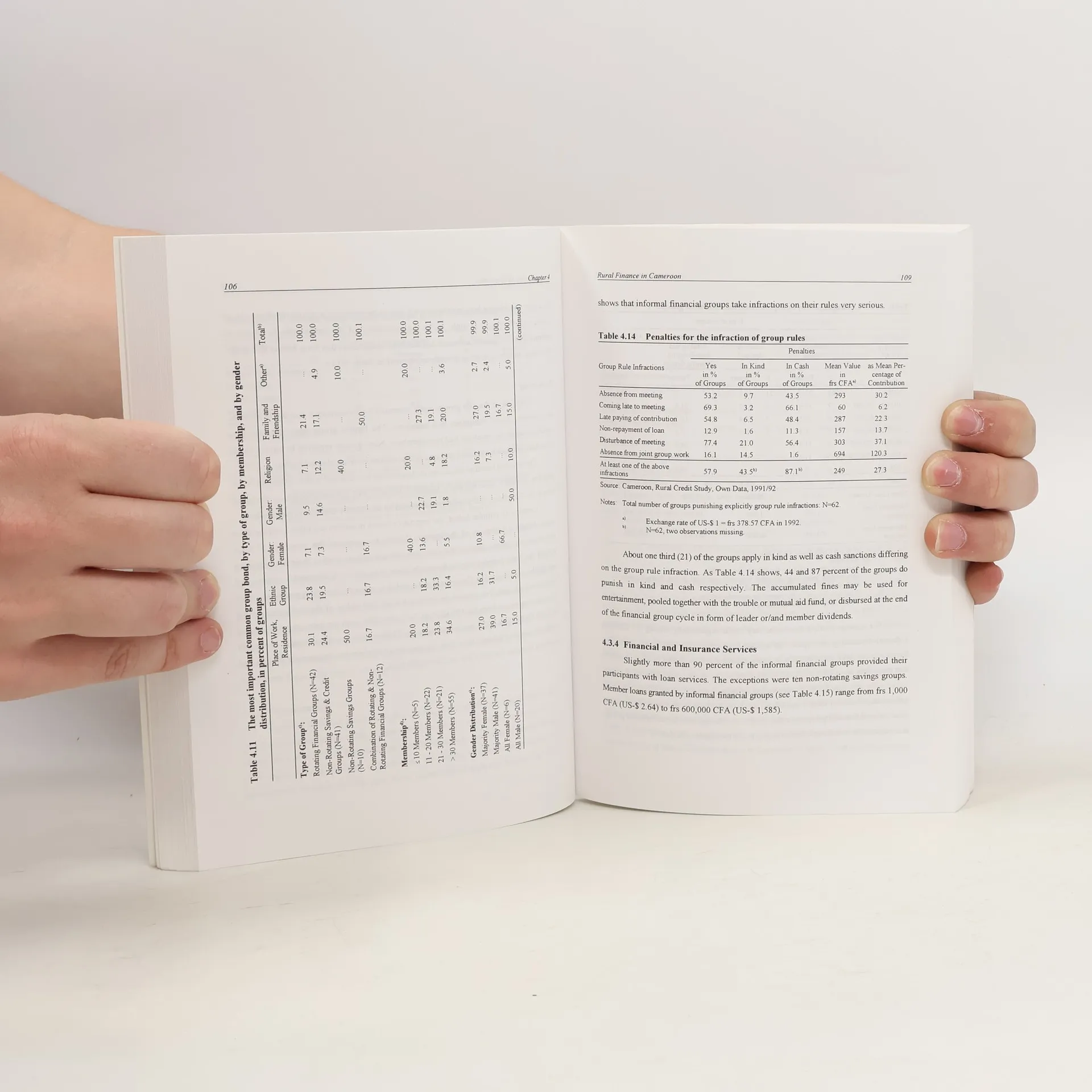
This volume has two general objectives. First, to identify and quantify the impact of rural financial markets on poor rural households' income and food security. Second, it attempts to give empirically controlled insight into the characteristics and requirements of innovative financial institutions and services that are particularly geared towards the rural poor's demands. Cameroon was chosen for this detailed micro-economic study because food insecurity and malnutrition are widespread in several regions and innovative rural financial institutions and programs can be studied in Cameroon. The results are that availability of savings facilities and access to credit increases income and calorie consumption. The positive income and food consumption effect is shown to be due to increased agricultural output and productivity. Also, complementary services and particularly education play a decisive role in fostering food security.
Zakup książki
The role of rural finance for food security of the poor in Cameroon, Gertrud Buchenrieder
- Język

- Rok wydania
- 1996
- Oprawa
- (miękka)
Metody płatności
Nikt jeszcze nie ocenił.
- Tytuł
- The role of rural finance for food security of the poor in Cameroon
- Język
- angielski
- Autorzy
- Gertrud Buchenrieder
- Wydawca
- Peter Lang
- Rok wydania
- 1996
- Oprawa
- miękka
- ISBN10
- 3631496206
- ISBN13
- 9783631496206
- Seria
- Kategorie
- Opis
- This volume has two general objectives. First, to identify and quantify the impact of rural financial markets on poor rural households' income and food security. Second, it attempts to give empirically controlled insight into the characteristics and requirements of innovative financial institutions and services that are particularly geared towards the rural poor's demands. Cameroon was chosen for this detailed micro-economic study because food insecurity and malnutrition are widespread in several regions and innovative rural financial institutions and programs can be studied in Cameroon. The results are that availability of savings facilities and access to credit increases income and calorie consumption. The positive income and food consumption effect is shown to be due to increased agricultural output and productivity. Also, complementary services and particularly education play a decisive role in fostering food security.