



Więcej o książce
This work examines agrarian development projects and programs executed by the state under PRONAMACHCS in the Peruvian Andes. Utilizing an interactive approach, the study views the state development project as a field of interaction among various participants. The project's functioning, achievements, and failures hinge on the nature of these interactions and the extent of joint action among different interest groups. To analyze the complexities of interaction and strategic interdependence within the project, the research employs theoretical frameworks from institutional analysis, including game theory, the principal-agent model, and collective action approaches. These theories are further enriched by insights from organizational, bureaucratic, and development theories, along with experiences in agrarian politics and extension programs. The methodology relies on qualitative research methods and interviews, focusing on the opinion-forming and decision-making processes of participants. This analysis aims to enhance existing evaluations of the project and contribute to discussions on the possibilities and limitations of state-led agrarian development and extension policies in contemporary Peru.
Zakup książki
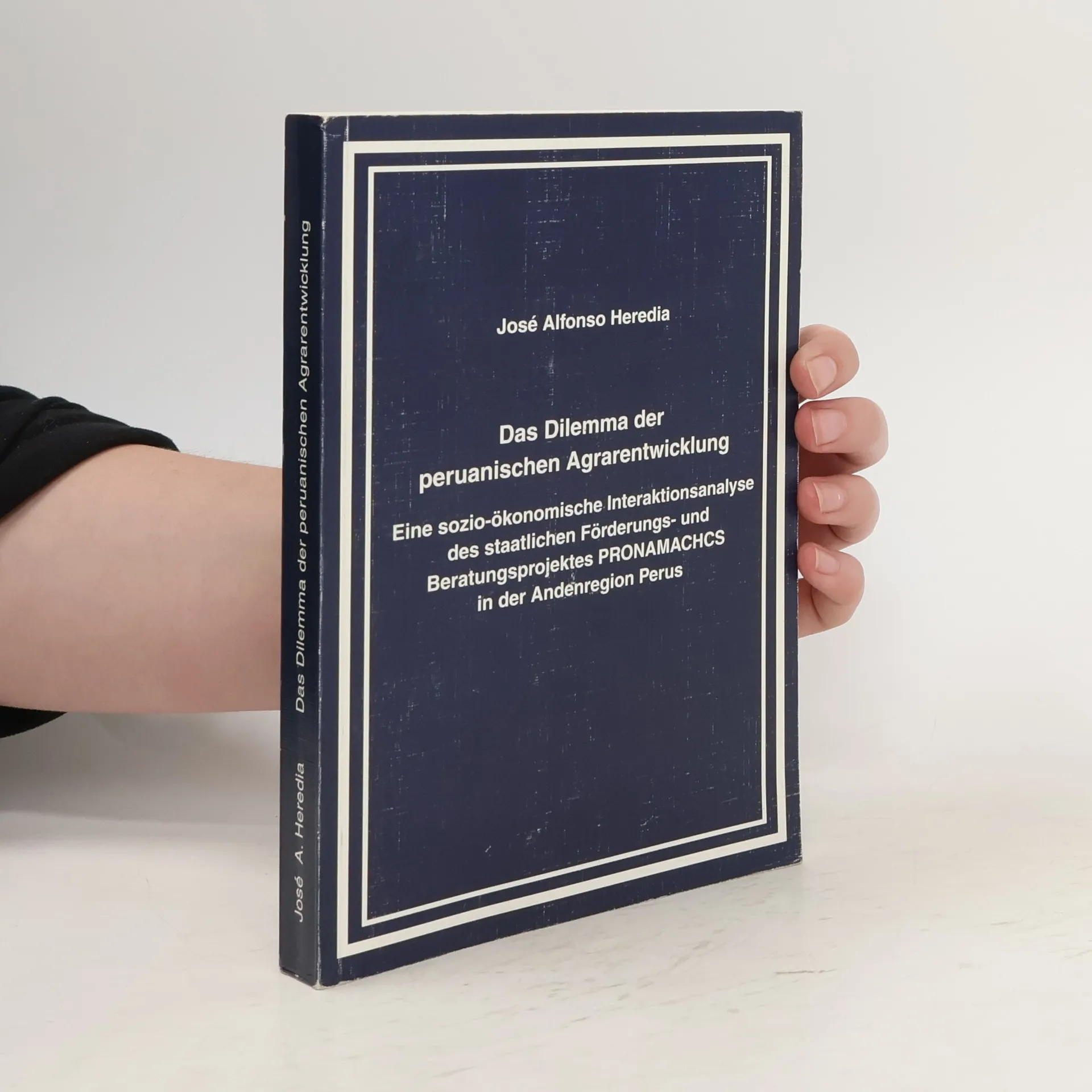
Das Dilemma der peruanischen Agrarentwicklung, José Alfonso Heredia
- Język

- Rok wydania
- 1997
- Oprawa
- (miękka)
Metody płatności
Nikt jeszcze nie ocenił.
- Tytuł
- Das Dilemma der peruanischen Agrarentwicklung
- Język
- niemiecki
- Autorzy
- José Alfonso Heredia
- Wydawca
- Köster
- Rok wydania
- 1997
- Oprawa
- miękka
- Liczba stron
- 321
- ISBN10
- 3895742430
- ISBN13
- 9783895742439
- Seria
- Kategorie
- Opis
- This work examines agrarian development projects and programs executed by the state under PRONAMACHCS in the Peruvian Andes. Utilizing an interactive approach, the study views the state development project as a field of interaction among various participants. The project's functioning, achievements, and failures hinge on the nature of these interactions and the extent of joint action among different interest groups. To analyze the complexities of interaction and strategic interdependence within the project, the research employs theoretical frameworks from institutional analysis, including game theory, the principal-agent model, and collective action approaches. These theories are further enriched by insights from organizational, bureaucratic, and development theories, along with experiences in agrarian politics and extension programs. The methodology relies on qualitative research methods and interviews, focusing on the opinion-forming and decision-making processes of participants. This analysis aims to enhance existing evaluations of the project and contribute to discussions on the possibilities and limitations of state-led agrarian development and extension policies in contemporary Peru.