



Więcej o książce
The two studies are devoted, respectively, to the Greek verb heáo ‘let (alone), allow’ and to two obscure Homeric nominals – the genitive plural substantive heáon ‘(of) good things’ and the apparent masculine genitive singular adnominal heêoz (whose meaning is one of the problems addressed). “All about he(w)áo” makes a new proposal about the shape of the underlying root, discusses some difficult forms of the verb and then suggests a new etymology for it. “Good for You” argues that heêoz is in origin an epithet meaning ‘goodly, well favored’; that it is both a kunstsprachlich creation of epic language and, in an important usage, a “substitute” – motivated by formulaic “inflection” – for a second person possessive in a particular set of Homeric expressions; and that Greek eu-, eu-, heêoz and heáon ‘good(s)’ can all be derived from a single reconstructed stem.
Zakup książki
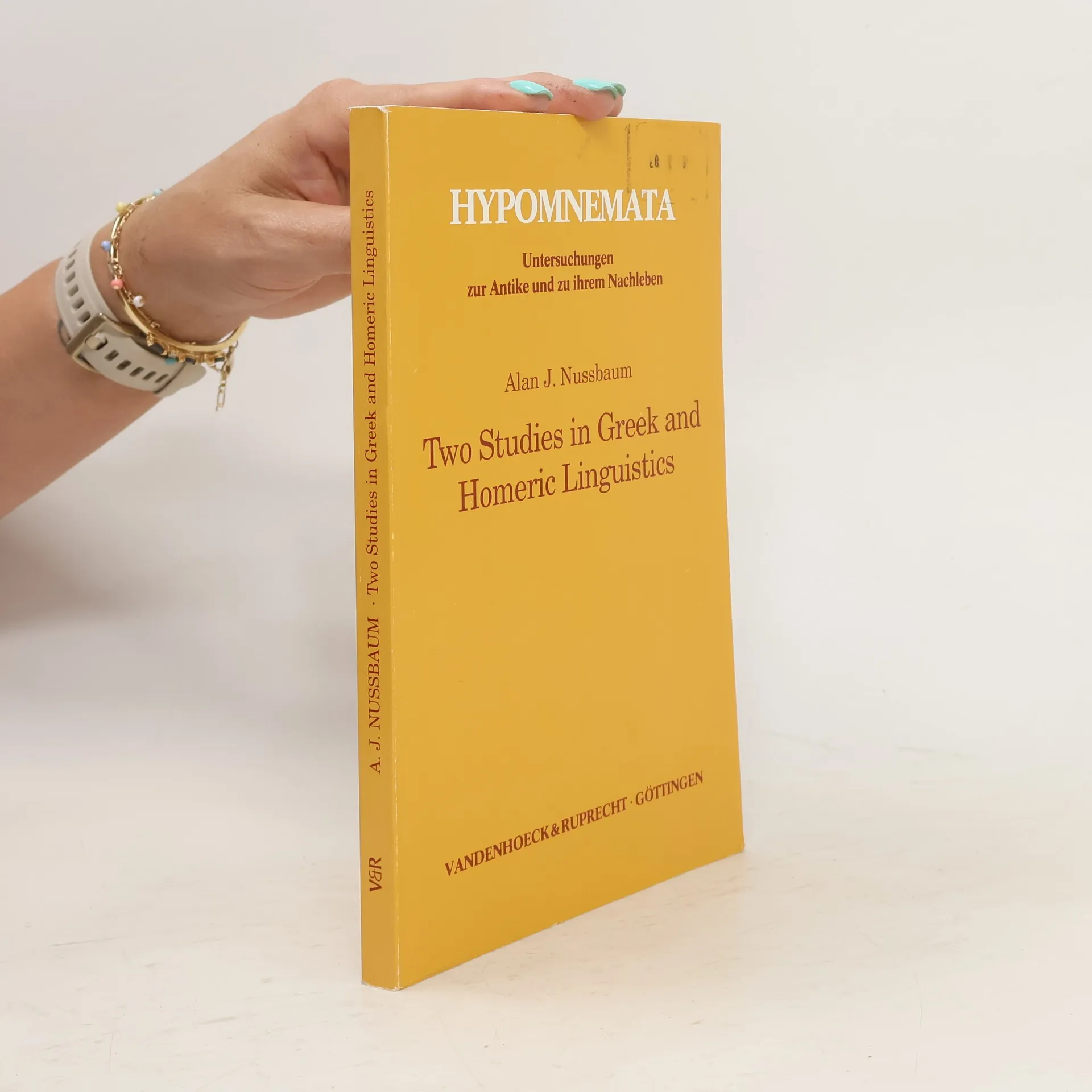
Two studies in Greek and Homeric linguistics, Alan J. Nussbaum
- Język

- Rok wydania
- 1998
- Oprawa
- (miękka)
Metody płatności
Nikt jeszcze nie ocenił.
- Tytuł
- Two studies in Greek and Homeric linguistics
- Język
- angielski
- Autorzy
- Alan J. Nussbaum
- Wydawca
- Vandenhoeck und Ruprecht
- Rok wydania
- 1998
- Oprawa
- miękka
- Liczba stron
- 177
- ISBN10
- 352525217X
- ISBN13
- 9783525252178
- Seria
- Kategorie
- Opis
- The two studies are devoted, respectively, to the Greek verb heáo ‘let (alone), allow’ and to two obscure Homeric nominals – the genitive plural substantive heáon ‘(of) good things’ and the apparent masculine genitive singular adnominal heêoz (whose meaning is one of the problems addressed). “All about he(w)áo” makes a new proposal about the shape of the underlying root, discusses some difficult forms of the verb and then suggests a new etymology for it. “Good for You” argues that heêoz is in origin an epithet meaning ‘goodly, well favored’; that it is both a kunstsprachlich creation of epic language and, in an important usage, a “substitute” – motivated by formulaic “inflection” – for a second person possessive in a particular set of Homeric expressions; and that Greek eu-, eu-, heêoz and heáon ‘good(s)’ can all be derived from a single reconstructed stem.