

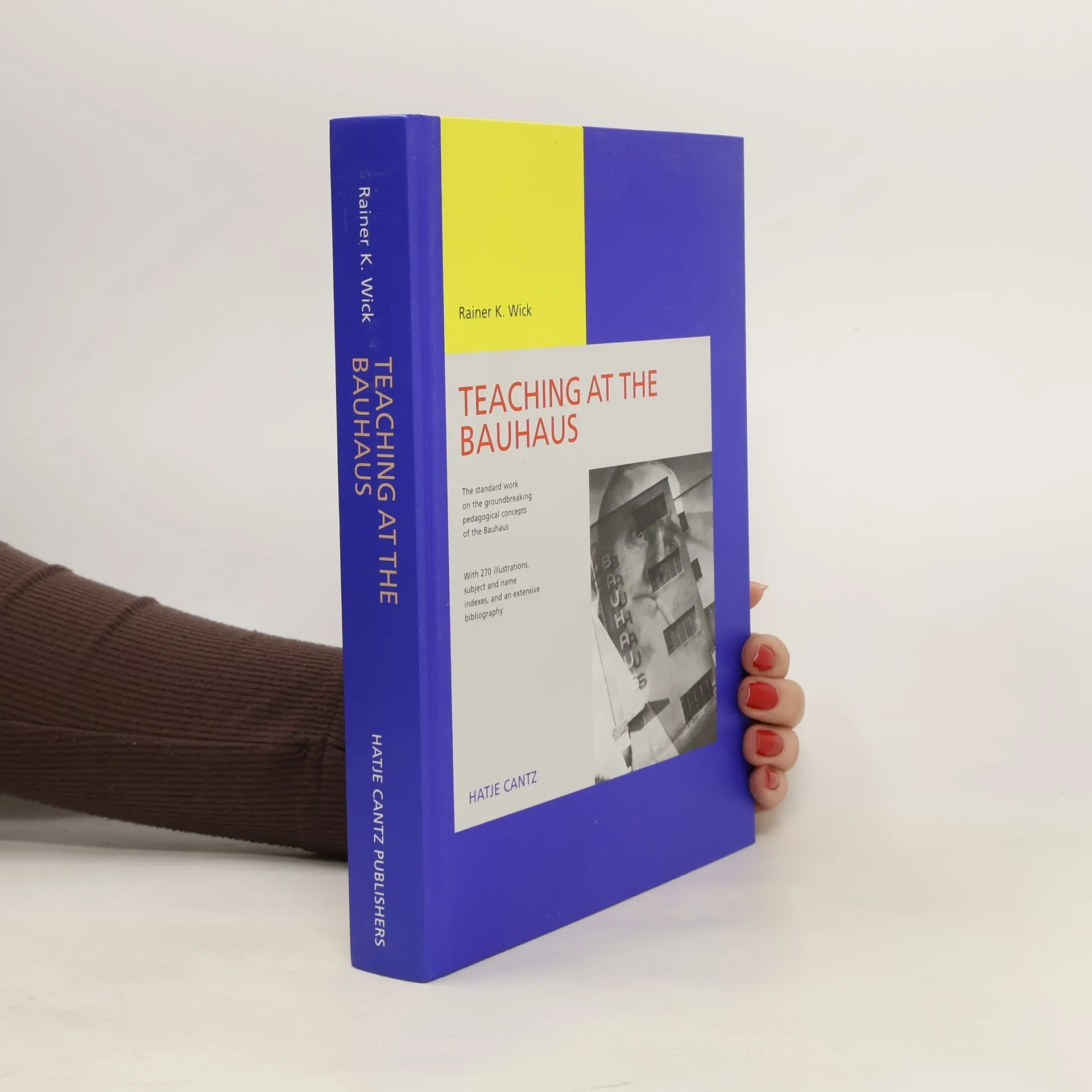


Więcej o książce
"Within the space of only 14 years, the Bauhaus permanently altered the course of modern design and Walter Gropius's pedagogical approach revolutionised art schools. Interest in the Bauhaus and Gropius's methods is as lively today as ever*in conscious and unconscious borrowings from his work, or in direct criticism of his ideas. This publication is the only comprehensive account of the main pedagogical concepts behind the work of the Bauhaus. Analytical essays illuminate the various approaches of individual staff members in the Bauhaus, which included Gropius, Hannes Meyer, Mies van der Rohe, Itten, Moholy-Nagy, Albers, Kandinsky, Klee, Schlemmer and Joost Schmidt. Additional chapters investigate the pre-history of the Bauhaus plus its predecessors in matters of art-training, outlining the development of the institution from 1919 to 1933 and the reception of Bauhaus methods in the Weimar Republic, in the 'Third Reich', in both Germanys after the Second World War, and the USA*drawing on otherwise widely-dispersed writings on the Bauhaus as well as on a wide variety of other archive materials."
Zakup książki
Teaching at the Bauhaus, Rainer K. Wick
- Język

- Rok wydania
- 2000
- Oprawa
- (twarda)
Metody płatności
Brakuje nam tutaj Twojej recenzji.
- Tytuł
- Teaching at the Bauhaus
- Język
- angielski
- Autorzy
- Rainer K. Wick
- Wydawca
- Hatje Cantz
- Rok wydania
- 2000
- Oprawa
- twarda
- Liczba stron
- 400
- ISBN10
- 3775708014
- ISBN13
- 9783775708012
- Seria
- Tagi
- Sztuki piękne
- Ocena
- 4,1 z 5
- Opis
- "Within the space of only 14 years, the Bauhaus permanently altered the course of modern design and Walter Gropius's pedagogical approach revolutionised art schools. Interest in the Bauhaus and Gropius's methods is as lively today as ever*in conscious and unconscious borrowings from his work, or in direct criticism of his ideas. This publication is the only comprehensive account of the main pedagogical concepts behind the work of the Bauhaus. Analytical essays illuminate the various approaches of individual staff members in the Bauhaus, which included Gropius, Hannes Meyer, Mies van der Rohe, Itten, Moholy-Nagy, Albers, Kandinsky, Klee, Schlemmer and Joost Schmidt. Additional chapters investigate the pre-history of the Bauhaus plus its predecessors in matters of art-training, outlining the development of the institution from 1919 to 1933 and the reception of Bauhaus methods in the Weimar Republic, in the 'Third Reich', in both Germanys after the Second World War, and the USA*drawing on otherwise widely-dispersed writings on the Bauhaus as well as on a wide variety of other archive materials."