



Więcej o książce
Scalable Vector Graphics (SVG) is an XML-based graphics standard from the W3C that enhances web documents by making them smaller, faster, and more interactive. This insightful guide covers the essentials of SVG, starting with simple line drawings and advancing to complex features like filters, transformations, and integration with Java, Perl, and XSLT. Unlike traditional bitmapped formats such as GIFs, JPEGs, or PNGs, SVG images are resolution- and device-independent, allowing them to scale seamlessly for any display, from PDAs to high-resolution printers. SVG files are smaller and quicker to download, and they can be styled with different CSS for various environments, making them adaptable across different bandwidths. SVG streamlines the design process by reducing the need for manual updates or custom code to create bitmap images. Although designed for the web, SVG has diverse applications beyond it. By emphasizing the markup foundational to SVG, this guide equips you to develop your own custom tools. It includes explanations of essential technical concepts like XML, matrix math, and scripting in appendixes, along with a reference to the SVG vocabulary. Whether you are a graphic designer exploring new tools or a programmer tackling graphic management, this resource empowers you to leverage SVG effectively.
Zakup książki
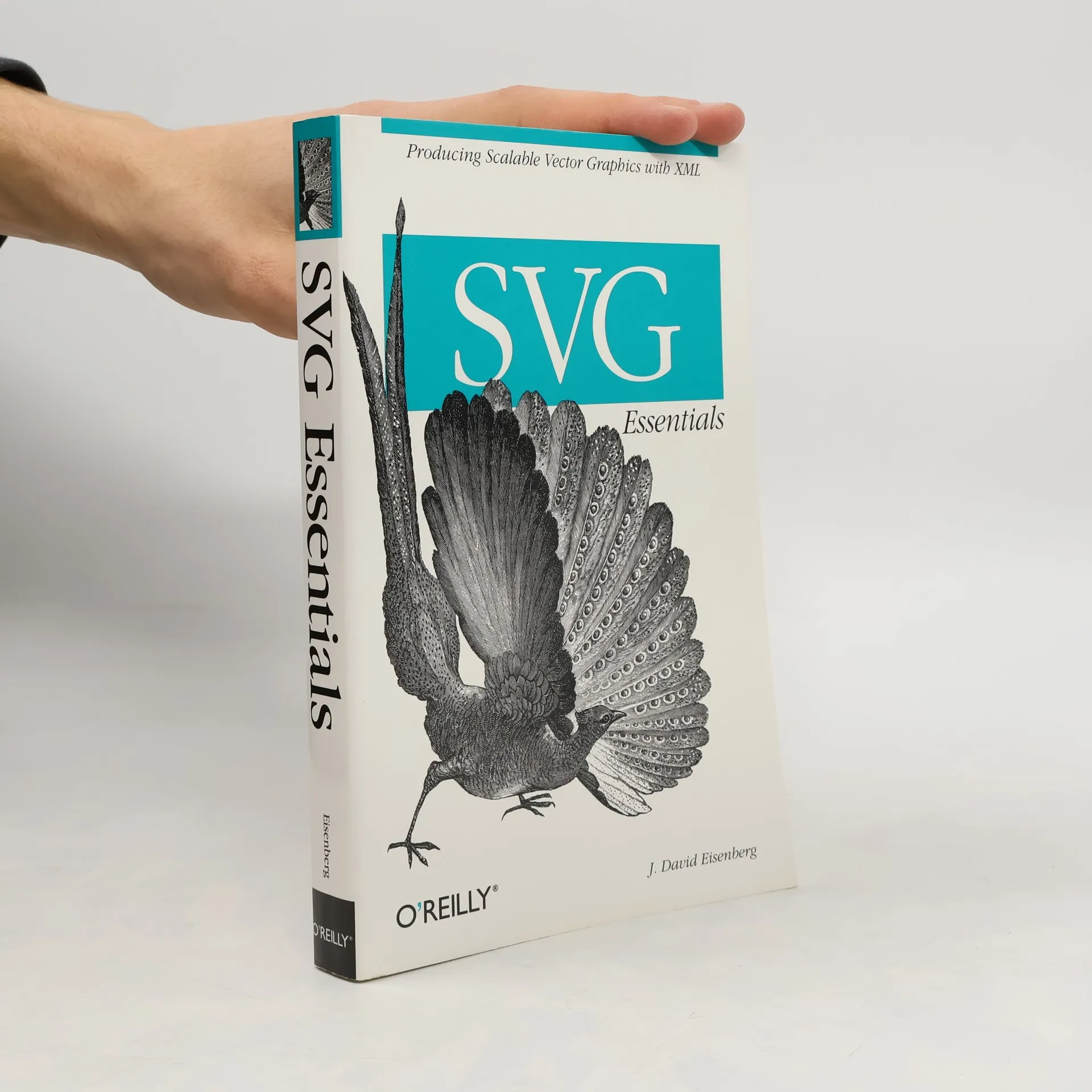
SVG essentials, J. David Eisenberg
- Język

- Rok wydania
- 2002
- Oprawa
- (miękka)
Metody płatności
Brakuje nam tutaj Twojej recenzji.
- Tytuł
- SVG essentials
- Język
- angielski
- Autorzy
- J. David Eisenberg
- Wydawca
- O'Reilly
- Rok wydania
- 2002
- Oprawa
- miękka
- Liczba stron
- 364
- ISBN10
- 0596002238
- ISBN13
- 9780596002237
- Seria
- Kategorie
- Ocena
- 3,5 z 5
- Opis
- Scalable Vector Graphics (SVG) is an XML-based graphics standard from the W3C that enhances web documents by making them smaller, faster, and more interactive. This insightful guide covers the essentials of SVG, starting with simple line drawings and advancing to complex features like filters, transformations, and integration with Java, Perl, and XSLT. Unlike traditional bitmapped formats such as GIFs, JPEGs, or PNGs, SVG images are resolution- and device-independent, allowing them to scale seamlessly for any display, from PDAs to high-resolution printers. SVG files are smaller and quicker to download, and they can be styled with different CSS for various environments, making them adaptable across different bandwidths. SVG streamlines the design process by reducing the need for manual updates or custom code to create bitmap images. Although designed for the web, SVG has diverse applications beyond it. By emphasizing the markup foundational to SVG, this guide equips you to develop your own custom tools. It includes explanations of essential technical concepts like XML, matrix math, and scripting in appendixes, along with a reference to the SVG vocabulary. Whether you are a graphic designer exploring new tools or a programmer tackling graphic management, this resource empowers you to leverage SVG effectively.