

Więcej o książce
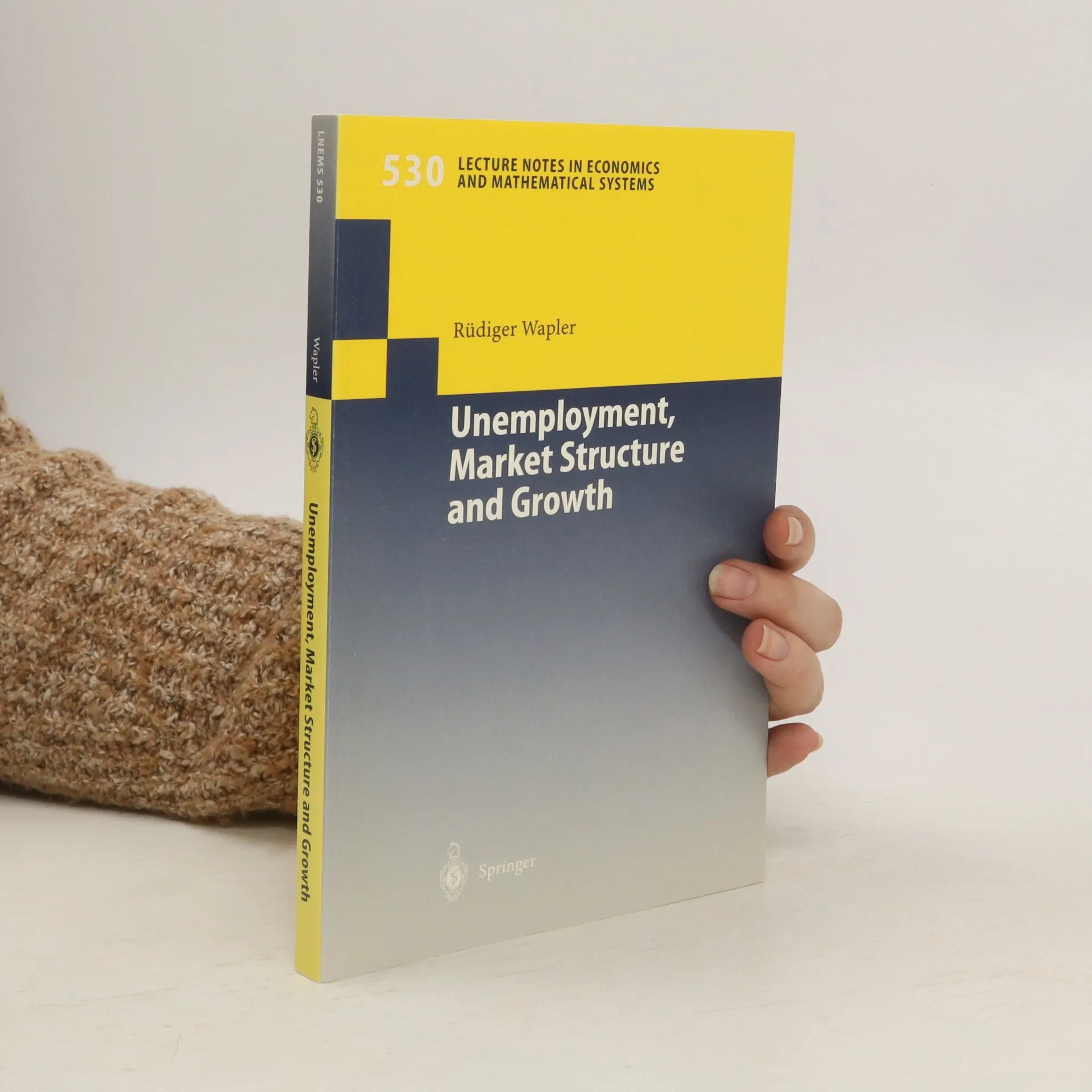
In his Ph.D. thesis, Rudiger Wapler explores the causes of persistently high unemployment rates, particularly in continental Europe. He emphasizes the roles of imperfect labor and product markets, as well as the connections between unemployment, innovation, and growth. Wapler's work significantly enhances the understanding of labor market development and growth dynamics. For readers with limited prior knowledge, he outlines key theories of unemployment: (1) trade-union models, where union bargaining power results in wages exceeding market-clearing levels; (2) efficiency-wage models, in which employers pay higher wages to motivate workers or reduce turnover; and (3) matching models, where unemployment arises from the ongoing turnover of jobs and workers. He also stresses the importance of recognizing labor heterogeneity, often overlooked in existing literature. By integrating these labor-market foundations with contemporary theories of innovation and growth, Wapler's approach becomes more relevant and plausible. His generalizations highlight the limitations of formal analysis, suggesting that increasing complexity in models may not yield additional useful insights due to the growing number of interdependencies.
Zakup książki
Unemployment, market structure and growth, Rüdiger Wapler
- Język

- Rok wydania
- 2003
- Oprawa
- (miękka)
Metody płatności
Nikt jeszcze nie ocenił.
- Tytuł
- Unemployment, market structure and growth
- Język
- angielski
- Autorzy
- Rüdiger Wapler
- Wydawca
- Springer
- Rok wydania
- 2003
- Oprawa
- miękka
- Liczba stron
- 207
- ISBN10
- 354040449X
- ISBN13
- 9783540404491
- Seria
- Tagi
- Biznes
- Opis
- In his Ph.D. thesis, Rudiger Wapler explores the causes of persistently high unemployment rates, particularly in continental Europe. He emphasizes the roles of imperfect labor and product markets, as well as the connections between unemployment, innovation, and growth. Wapler's work significantly enhances the understanding of labor market development and growth dynamics. For readers with limited prior knowledge, he outlines key theories of unemployment: (1) trade-union models, where union bargaining power results in wages exceeding market-clearing levels; (2) efficiency-wage models, in which employers pay higher wages to motivate workers or reduce turnover; and (3) matching models, where unemployment arises from the ongoing turnover of jobs and workers. He also stresses the importance of recognizing labor heterogeneity, often overlooked in existing literature. By integrating these labor-market foundations with contemporary theories of innovation and growth, Wapler's approach becomes more relevant and plausible. His generalizations highlight the limitations of formal analysis, suggesting that increasing complexity in models may not yield additional useful insights due to the growing number of interdependencies.