



Więcej o książce
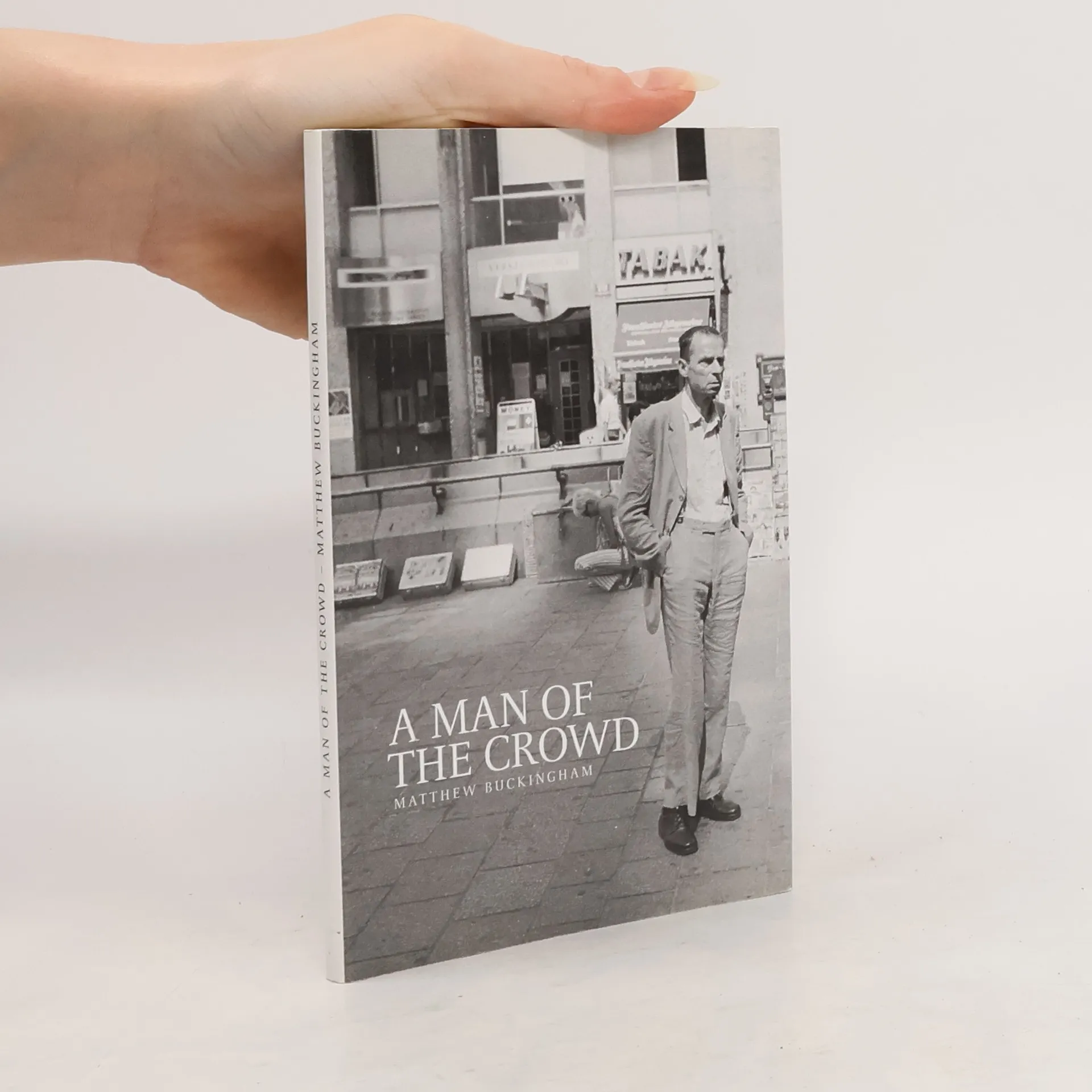
In Edgar Allan Poe's story, „The Man of the Crowd“ (1840), a young man secretly follows an enigmatic older man through London’s city streets for twenty-four hours, trying to discover something about him. The film loop installation and artist's book „A Man of the Crowd,“ locates the story in Vienna, a city that retains its nineteenth century plan and organization. „The Man…“ becomes „A Man…“: a film camera is introduced into Poe’s narrative and paradoxically becomes a “central character.” The installation spatializes the symmetry, doubling, and self-reflexivity of the Poe story: the 16mm film is projected through a freestanding two-way mirror that both echoes a window in the story and reflects and doubles the projected image in the exhibition space. The mirror also multiplies and displaces the viewer while framing other spectators in the space.
Zakup książki
A man of the crowd - Matthew Buckingham, Roger M. Buergel
- Język

- Rok wydania
- 2003
- Oprawa
- (miękka)
Metody płatności
Nikt jeszcze nie ocenił.
- Tytuł
- A man of the crowd - Matthew Buckingham
- Język
- angielski
- Autorzy
- Roger M. Buergel
- Wydawca
- MUMOK
- Rok wydania
- 2003
- Oprawa
- miękka
- Liczba stron
- 83
- ISBN10
- 390077692X
- ISBN13
- 9783900776923
- Seria
- Kategorie
- Tagi
- Katalogi wystaw
- Opis
- In Edgar Allan Poe's story, „The Man of the Crowd“ (1840), a young man secretly follows an enigmatic older man through London’s city streets for twenty-four hours, trying to discover something about him. The film loop installation and artist's book „A Man of the Crowd,“ locates the story in Vienna, a city that retains its nineteenth century plan and organization. „The Man…“ becomes „A Man…“: a film camera is introduced into Poe’s narrative and paradoxically becomes a “central character.” The installation spatializes the symmetry, doubling, and self-reflexivity of the Poe story: the 16mm film is projected through a freestanding two-way mirror that both echoes a window in the story and reflects and doubles the projected image in the exhibition space. The mirror also multiplies and displaces the viewer while framing other spectators in the space.