

Więcej o książce
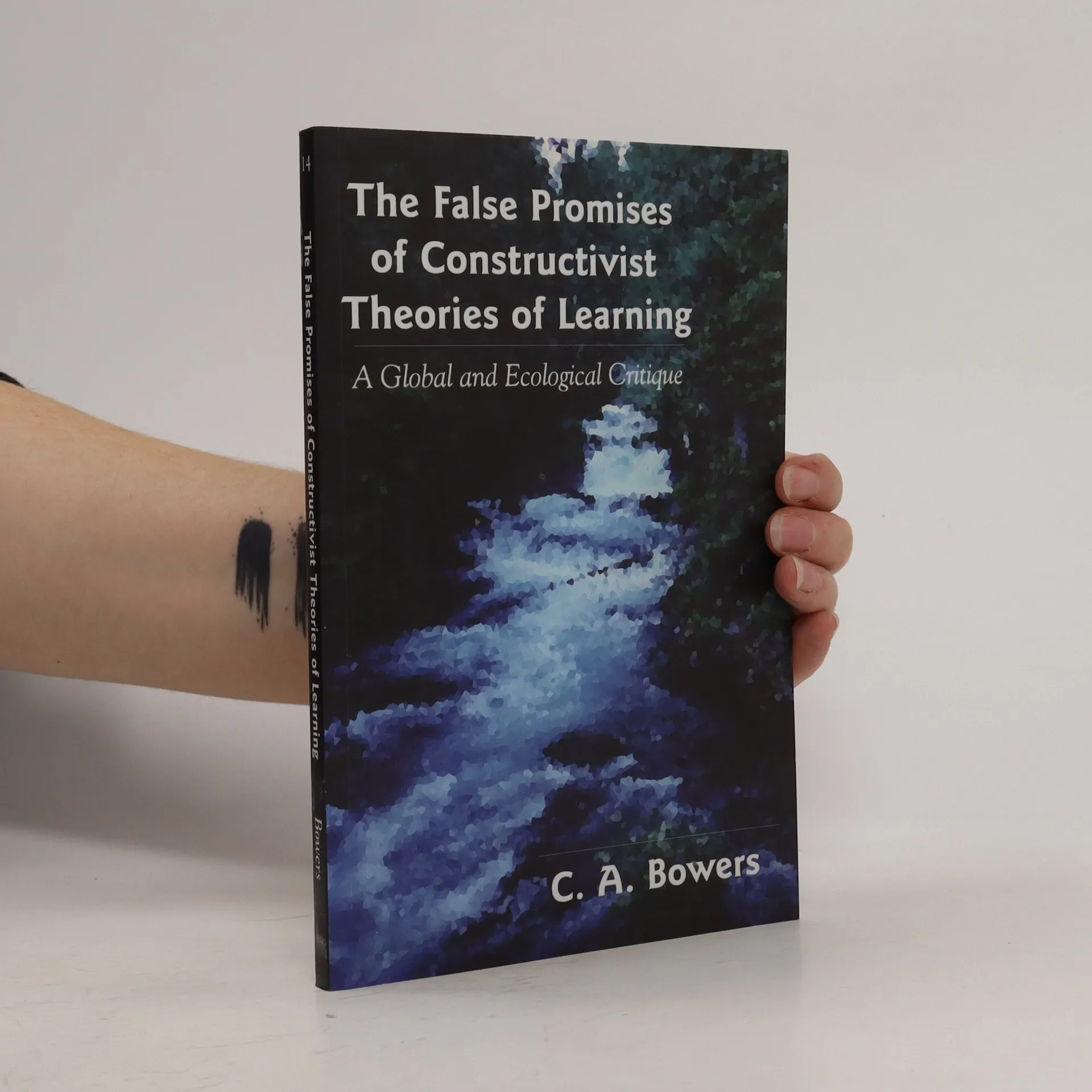
In The False Promises of Constructivist Theories of Learning: A Global and Ecological Critique, C. A. Bowers examines why constructivist-based educational reforms fail to take into account these current critical issues: the deepening ecological crisis, globalization, and undermining of the world's diverse cultural commons. Special attention is given to the ethnocentrism and Social Darwinism that created the foundations for the ideas of Dewey, Piaget, and Freire. Also considered is how the neo-liberal promoters of economic globalization share their taken-for-granted assumptions. Additionally, Bowers explains how teachers in different cultures can contribute to the revitalization of their cultural and environmental commons without engaging in the cultural imperialism that characterizes constructivist approaches to educational reform.
Zakup książki
The false promises of constructivist theories of learning, Chet A. Bowers
- Język

- Rok wydania
- 2005
- Oprawa
- (miękka)
Metody płatności
Brakuje nam tutaj Twojej recenzji.
- Tytuł
- The false promises of constructivist theories of learning
- Język
- angielski
- Autorzy
- Chet A. Bowers
- Wydawca
- Lang
- Rok wydania
- 2005
- Oprawa
- miękka
- Liczba stron
- 152
- ISBN10
- 0820478849
- ISBN13
- 9780820478845
- Seria
- Tagi
- Ocena
- 3 z 5
- Opis
- In The False Promises of Constructivist Theories of Learning: A Global and Ecological Critique, C. A. Bowers examines why constructivist-based educational reforms fail to take into account these current critical issues: the deepening ecological crisis, globalization, and undermining of the world's diverse cultural commons. Special attention is given to the ethnocentrism and Social Darwinism that created the foundations for the ideas of Dewey, Piaget, and Freire. Also considered is how the neo-liberal promoters of economic globalization share their taken-for-granted assumptions. Additionally, Bowers explains how teachers in different cultures can contribute to the revitalization of their cultural and environmental commons without engaging in the cultural imperialism that characterizes constructivist approaches to educational reform.