


Więcej o książce
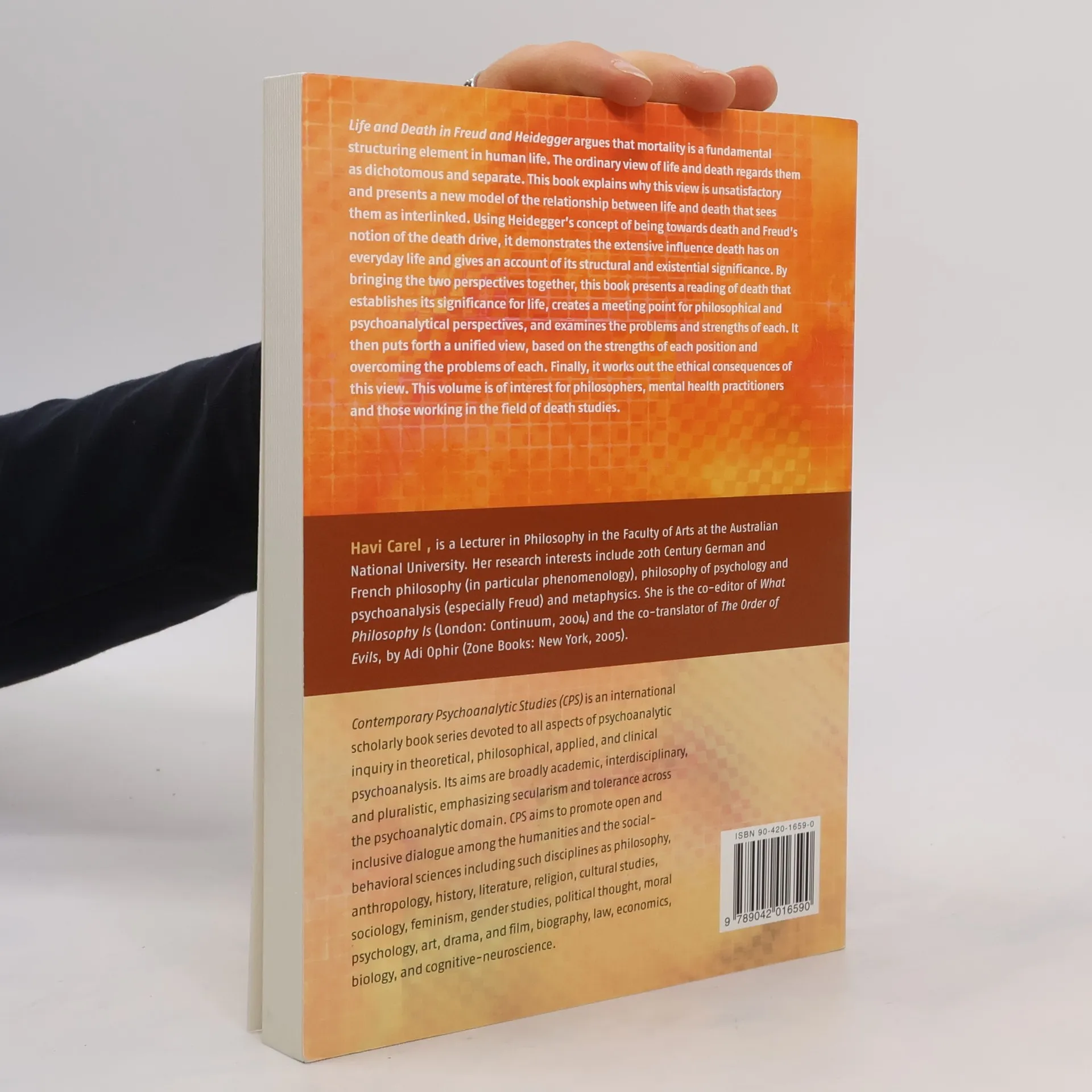
Life and Death in Freud and Heidegger argues that mortality is a fundamental structuring element in human life. The ordinary view of life and death regards them as dichotomous and separate. This book explains why this view is unsatisfactory and presents a new model of the relationship between life and death that sees them as interlinked. Using Heidegger's concept of being towards death and Freud's notion of the death drive, it demonstrates the extensive influence death has on everyday life and gives an account of its structural and existential significance. By bringing the two perspectives together, this book presents a reading of death that establishes its significance for life, creates a meeting point for philosophical and psychoanalytical perspectives, and examines the problems and strengths of each. It then puts forth a unified view, based on the strengths of each position and overcoming the problems of each. Finally, it works out the ethical consequences of this view. This volume is of interest for philosophers, mental health practitioners and those working in the field of death studies.
Zakup książki
Life and death in Freud and Heidegger, Havi Carel
- Język

- Rok wydania
- 2006
- Oprawa
- (miękka)
Metody płatności
Brakuje nam tutaj Twojej recenzji.
- Tytuł
- Life and death in Freud and Heidegger
- Język
- angielski
- Autorzy
- Havi Carel
- Wydawca
- Rodopi
- Rok wydania
- 2006
- Oprawa
- miękka
- Liczba stron
- 237
- ISBN10
- 9042016590
- ISBN13
- 9789042016590
- Seria
- Ocena
- 3 z 5
- Opis
- Life and Death in Freud and Heidegger argues that mortality is a fundamental structuring element in human life. The ordinary view of life and death regards them as dichotomous and separate. This book explains why this view is unsatisfactory and presents a new model of the relationship between life and death that sees them as interlinked. Using Heidegger's concept of being towards death and Freud's notion of the death drive, it demonstrates the extensive influence death has on everyday life and gives an account of its structural and existential significance. By bringing the two perspectives together, this book presents a reading of death that establishes its significance for life, creates a meeting point for philosophical and psychoanalytical perspectives, and examines the problems and strengths of each. It then puts forth a unified view, based on the strengths of each position and overcoming the problems of each. Finally, it works out the ethical consequences of this view. This volume is of interest for philosophers, mental health practitioners and those working in the field of death studies.