


Więcej o książce
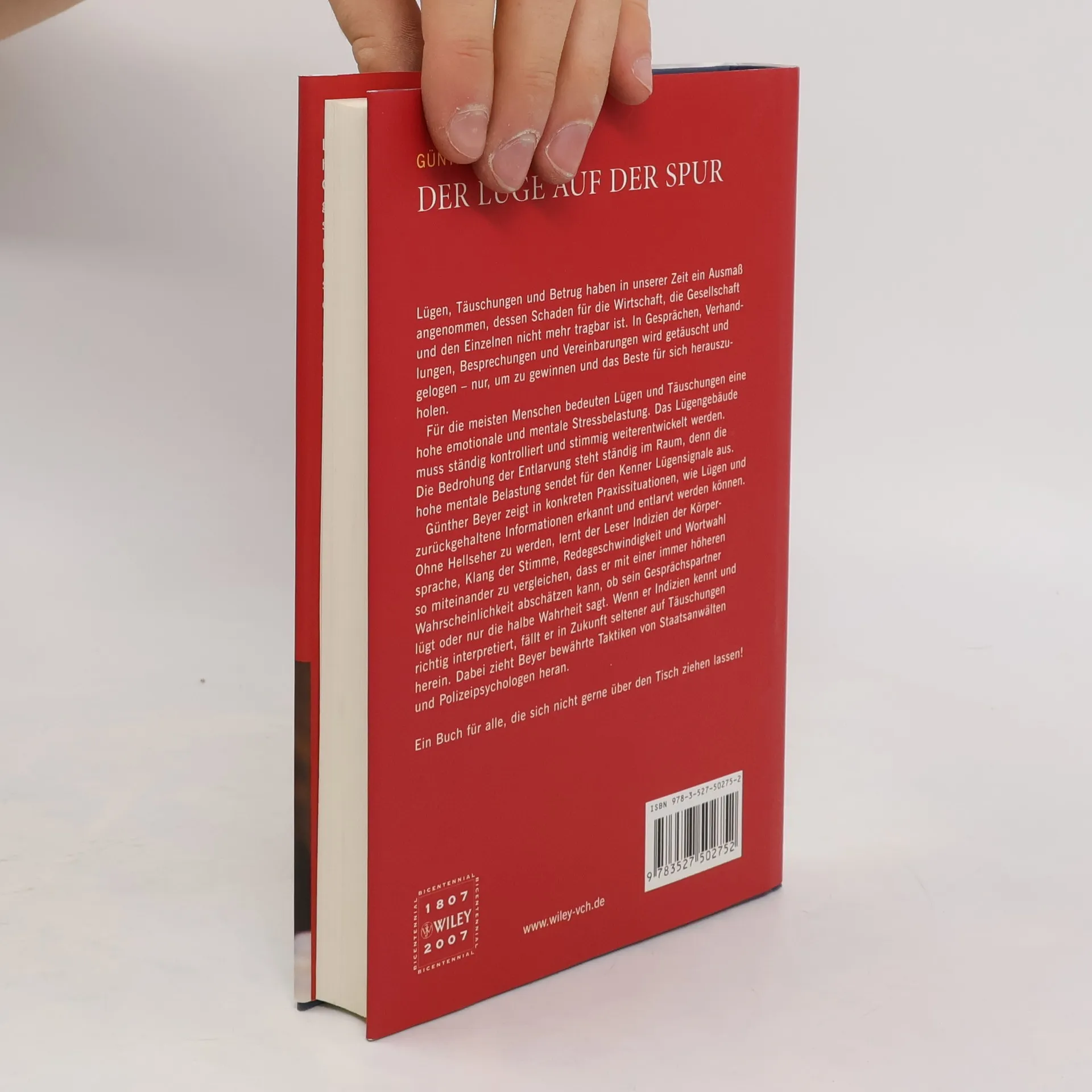
Business etiquette has become rougher in the last few years. Deception and lies are the norm in conversation, negotiations, meetings and agreements - just so as to win and gain an advantage. Those who are honest are stupid and the losers. For most people lies and deceit represent a high emotional and mental stress. The fabrication of lies has to be constantly checked and consistently further developed. There is always the threat of exposure. Günther Beyer shows in concrete situations how lies and withheld information can be recognized and exposed. Without having to become clairvoyant, readers learn how to compare the signs of body language, voice, speed of talking and choice of words so as to deduce with increasing probability whether their opposite partners are lying or only telling half the truth. Once readers know the signs and how to interpret them, they will be less susceptible to deceit in future. To illustrate this, Beyer uses tried and tested tactics practiced by prosecutors and police psychologists. A book for anyone who does not like being deceived...
Zakup książki
Der Lüge auf der Spur, Günther Beyer
- Język

- Rok wydania
- 2007
- Oprawa
- (twarda)
Metody płatności
Nikt jeszcze nie ocenił.
- Tytuł
- Der Lüge auf der Spur
- Język
- niemiecki
- Autorzy
- Günther Beyer
- Wydawca
- Wiley-VCH
- Rok wydania
- 2007
- Oprawa
- twarda
- Liczba stron
- 203
- ISBN10
- 3527502750
- ISBN13
- 9783527502752
- Seria
- Opis
- Business etiquette has become rougher in the last few years. Deception and lies are the norm in conversation, negotiations, meetings and agreements - just so as to win and gain an advantage. Those who are honest are stupid and the losers. For most people lies and deceit represent a high emotional and mental stress. The fabrication of lies has to be constantly checked and consistently further developed. There is always the threat of exposure. Günther Beyer shows in concrete situations how lies and withheld information can be recognized and exposed. Without having to become clairvoyant, readers learn how to compare the signs of body language, voice, speed of talking and choice of words so as to deduce with increasing probability whether their opposite partners are lying or only telling half the truth. Once readers know the signs and how to interpret them, they will be less susceptible to deceit in future. To illustrate this, Beyer uses tried and tested tactics practiced by prosecutors and police psychologists. A book for anyone who does not like being deceived...