

Więcej o książce
What does this book contribute to education? For the English speaking reader Mimesis, Poiesis, and Performativity in Education is a surprising title. What does it mean, what is its focus? The book assumes that mimetic, poietic, and performative ways of world making play an essential role in education. Mimetic processes refer to one way of world making, to the once-again-making of reality and have the creation of a relationship with somebody as prerequisite; they are mostly fictional and are often, but not necessarily characterized by creative imitation. Poietic processes are a second way of world making in which human beings produce a real world. Performative action can be understood as a third way of world making, in which the focus is on actions and interactions, on the mise-en-scène and the staging of body based interactive human practices. Any given culture and society can be analyzed as how these different ways of world making are interconnected. In educational processes there is an overlap of mimetic, poietic, and performative ways of world making, which often can only be analytically differentiated. These ways of world making do not conceive human practices as instances of rules or laws; the individual is represented not as rule-following, but as rule-producing. This position is at the core critical of rationality, without however surrendering the claim of reason to the irrational.
Zakup książki
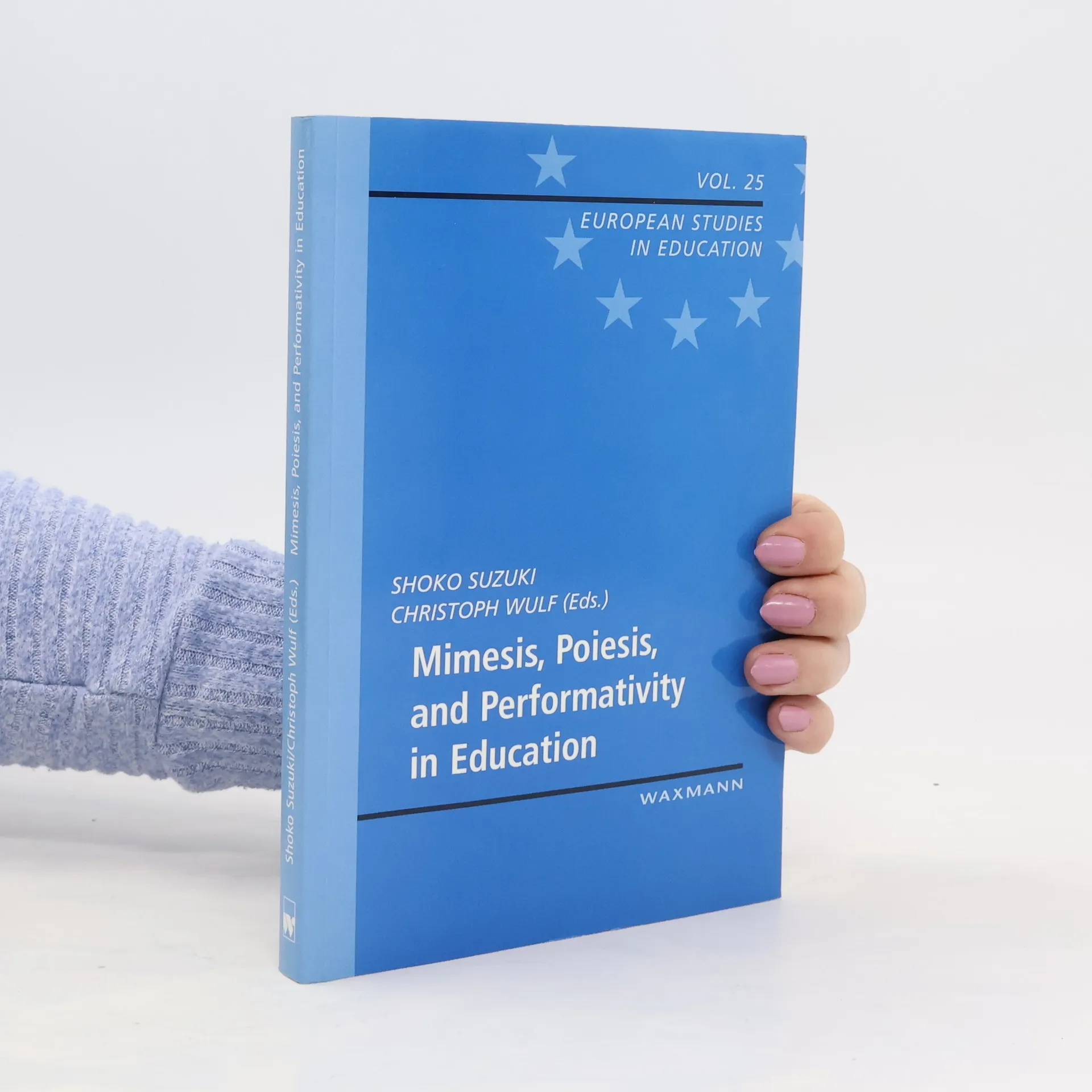
Mimesis, poiesis and performativity in education, Shōko Suzuki
- Język

- Rok wydania
- 2007
- Oprawa
- (miękka)
Metody płatności
Nikt jeszcze nie ocenił.
- Tytuł
- Mimesis, poiesis and performativity in education
- Język
- angielski
- Autorzy
- Shōko Suzuki
- Wydawca
- Waxmann Verlag Gmbh
- Rok wydania
- 2007
- Oprawa
- miękka
- Liczba stron
- 216
- ISBN10
- 3830919212
- ISBN13
- 9783830919216
- Seria
- Tagi
- Opis
- What does this book contribute to education? For the English speaking reader Mimesis, Poiesis, and Performativity in Education is a surprising title. What does it mean, what is its focus? The book assumes that mimetic, poietic, and performative ways of world making play an essential role in education. Mimetic processes refer to one way of world making, to the once-again-making of reality and have the creation of a relationship with somebody as prerequisite; they are mostly fictional and are often, but not necessarily characterized by creative imitation. Poietic processes are a second way of world making in which human beings produce a real world. Performative action can be understood as a third way of world making, in which the focus is on actions and interactions, on the mise-en-scène and the staging of body based interactive human practices. Any given culture and society can be analyzed as how these different ways of world making are interconnected. In educational processes there is an overlap of mimetic, poietic, and performative ways of world making, which often can only be analytically differentiated. These ways of world making do not conceive human practices as instances of rules or laws; the individual is represented not as rule-following, but as rule-producing. This position is at the core critical of rationality, without however surrendering the claim of reason to the irrational.