

Parametry
Więcej o książce
When King George III experienced his first episode of alleged insanity in late 1788, his status as the responsible 'father' of his people was dramatically transformed. The nation's most prominent figure was suddenly equated with those marginalized individuals whose humanity was often questioned: the mad. This shift coincided with the tumultuous events of the French Revolution, which reinforced conservative fears of a spreading madness, while radical thinkers, including young Romantic poets, viewed it as the beginning of a new era of individual rights and creative expression. This study surveys the significant period from approximately 1790 to 1815, juxtaposing the discourses of medicine, politics, and literature to explore their interpretations of madness. It uncovers surprising intersections that highlight how the discourse of madness serves as a crucial indicator of major shifts in knowledge during the late eighteenth and early nineteenth centuries. Key themes include the elusive search for depth, the development of individualized case histories, and the complex interplay between humaneness and moral conditioning, all of which characterize the evolving nature of these discourses and, by extension, modern thought itself.
Zakup książki
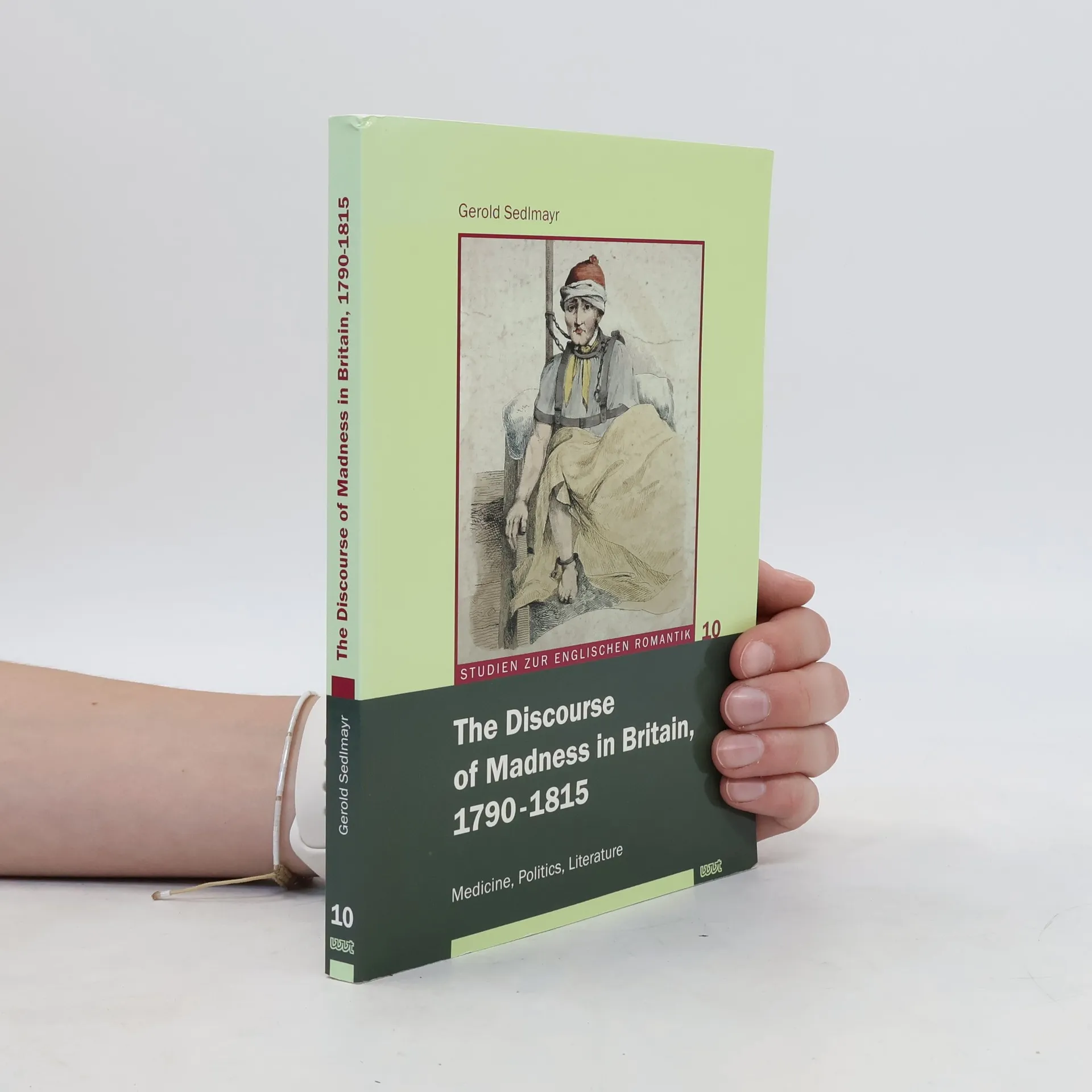
The discourse of madness in Britain, 1790 - 1815, Gerold Sedlmayr
- Język

- Rok wydania
- 2011
- Oprawa
- (miękka)
Metody płatności
Nikt jeszcze nie ocenił.
- Tytuł
- The discourse of madness in Britain, 1790 - 1815
- Język
- angielski
- Autorzy
- Gerold Sedlmayr
- Wydawca
- Wiss. Verl. Trier
- Rok wydania
- 2011
- Oprawa
- miękka
- ISBN10
- 3868213112
- ISBN13
- 9783868213119
- Seria
- Kategorie
- Opis
- When King George III experienced his first episode of alleged insanity in late 1788, his status as the responsible 'father' of his people was dramatically transformed. The nation's most prominent figure was suddenly equated with those marginalized individuals whose humanity was often questioned: the mad. This shift coincided with the tumultuous events of the French Revolution, which reinforced conservative fears of a spreading madness, while radical thinkers, including young Romantic poets, viewed it as the beginning of a new era of individual rights and creative expression. This study surveys the significant period from approximately 1790 to 1815, juxtaposing the discourses of medicine, politics, and literature to explore their interpretations of madness. It uncovers surprising intersections that highlight how the discourse of madness serves as a crucial indicator of major shifts in knowledge during the late eighteenth and early nineteenth centuries. Key themes include the elusive search for depth, the development of individualized case histories, and the complex interplay between humaneness and moral conditioning, all of which characterize the evolving nature of these discourses and, by extension, modern thought itself.