


Więcej o książce
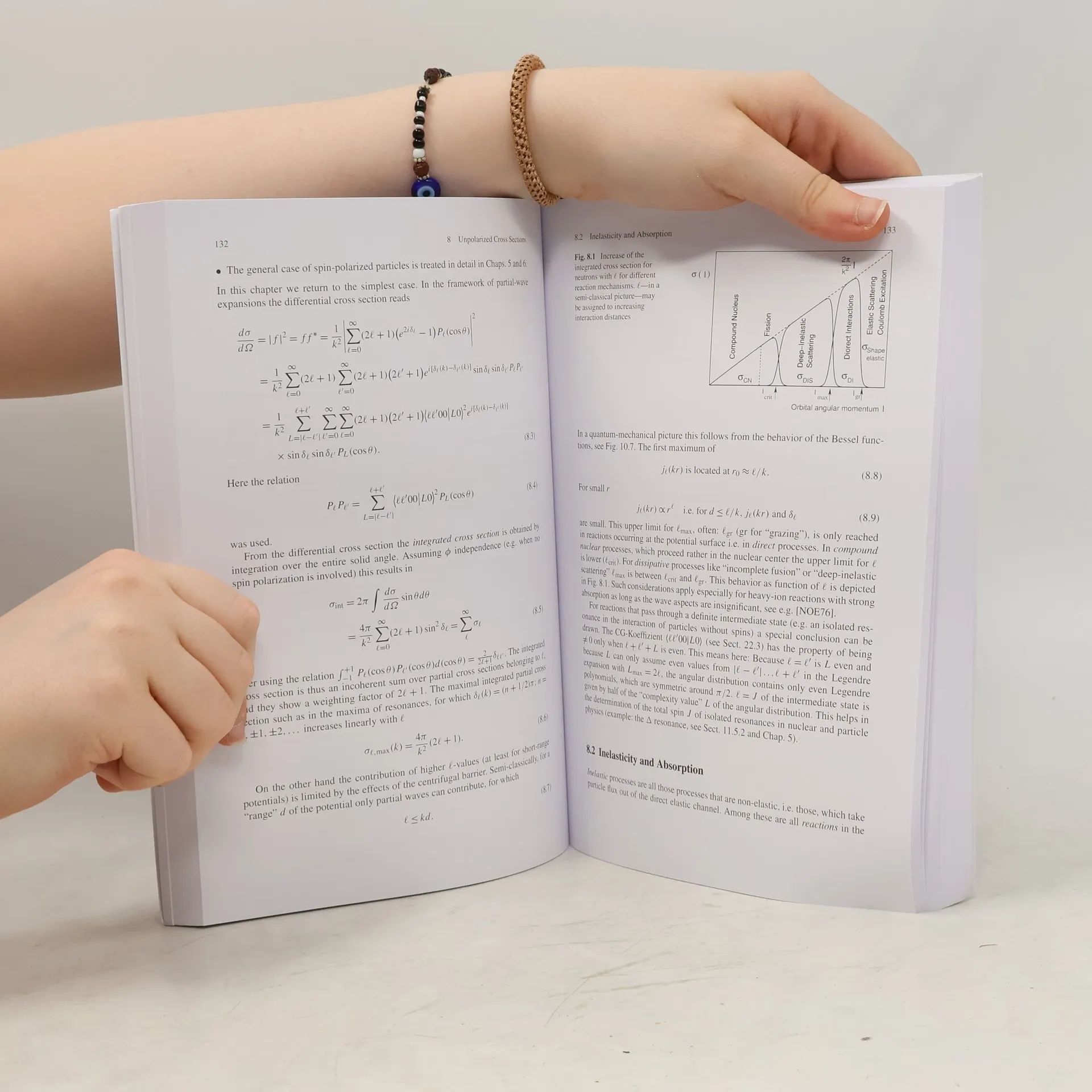
Nuclei and nuclear reactions provide a unique framework for exploring the fundamental forces of nature. Through scattering experiments with electrons, muons, and neutrinos, it has been revealed that nuclei are complex structures composed of quarks, gluons, sea-quarks, and clouds of virtual mesons, which facilitate nucleon-nucleon interactions. The balance between the attractive hadronic nucleon-nucleon force and the repulsive Coulomb force underpins the existence and stability of nuclei, as reflected in the chart of nuclides and their diverse interactions. Despite the achievements of classical nuclear models and ab-initio methods, ongoing theoretical and experimental advancements are necessary, particularly with the introduction of sophisticated three-body interactions for a more accurate depiction of nuclear phenomena. Interestingly, the internal structure of nucleons has minimal impact on their behavior within nuclei, establishing nuclear physics as a distinct scientific field. This text compiles essential lecture notes from nuclear physics courses at the University of Cologne, integrating experimental facts and methods with theoretical foundations. It emphasizes spin, orbital angular momentum, and the operational definition of observables, while end-of-chapter problems enhance understanding of key concepts. A background in quantum mechanics and kinematics is assumed for readers to grasp nuclear reactions and their links to
Zakup książki
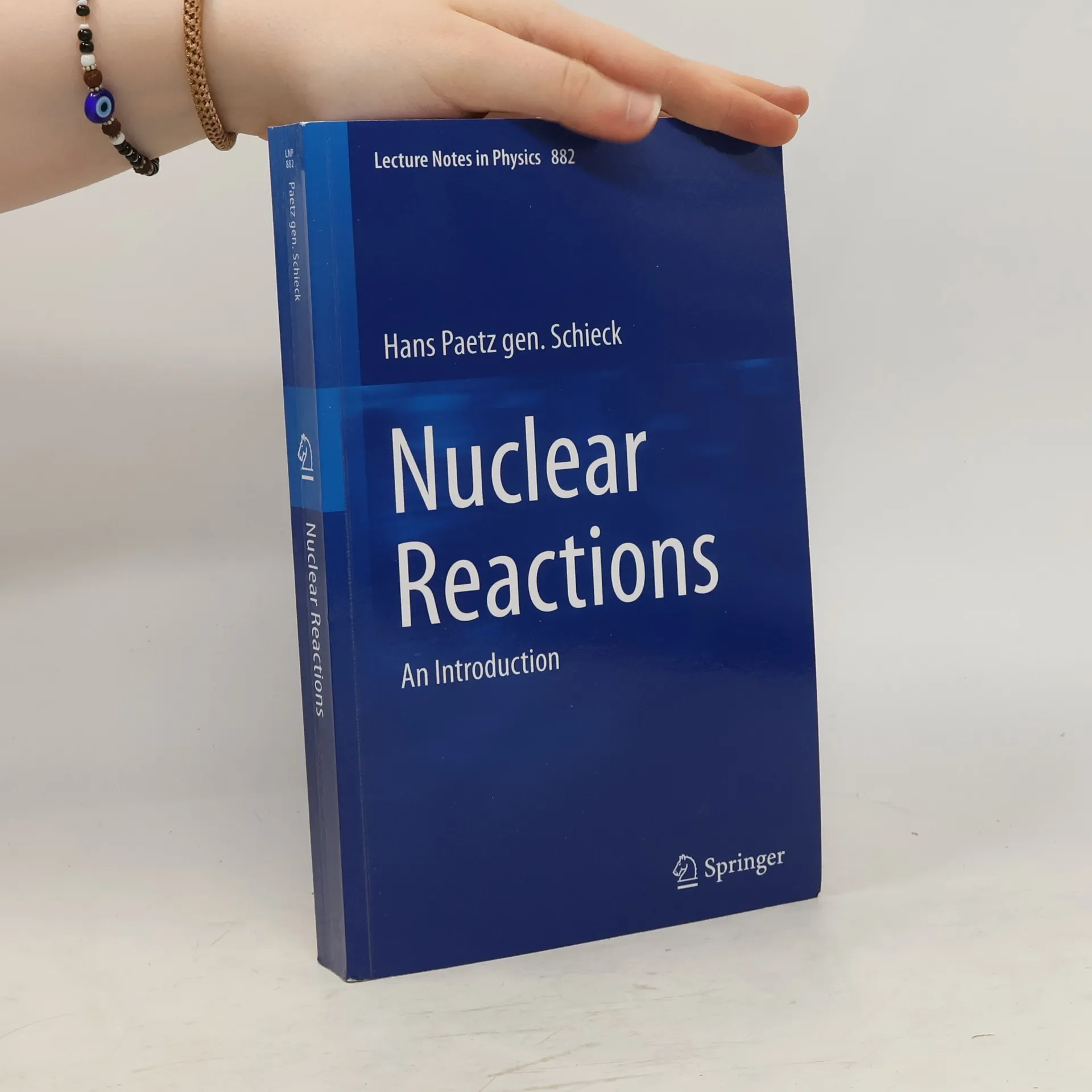
Nuclear reactions, Hans Paetz gen. Schieck
- Język

- Rok wydania
- 2014
- Oprawa
- (miękka)
Metody płatności
Nikt jeszcze nie ocenił.
- Tytuł
- Nuclear reactions
- Podtytuł
- An Introduction
- Język
- angielski
- Autorzy
- Hans Paetz gen. Schieck
- Wydawca
- Springer
- Rok wydania
- 2014
- Oprawa
- miękka
- Liczba stron
- 390
- ISBN10
- 3642539858
- ISBN13
- 9783642539855
- Seria
- Opis
- Nuclei and nuclear reactions provide a unique framework for exploring the fundamental forces of nature. Through scattering experiments with electrons, muons, and neutrinos, it has been revealed that nuclei are complex structures composed of quarks, gluons, sea-quarks, and clouds of virtual mesons, which facilitate nucleon-nucleon interactions. The balance between the attractive hadronic nucleon-nucleon force and the repulsive Coulomb force underpins the existence and stability of nuclei, as reflected in the chart of nuclides and their diverse interactions. Despite the achievements of classical nuclear models and ab-initio methods, ongoing theoretical and experimental advancements are necessary, particularly with the introduction of sophisticated three-body interactions for a more accurate depiction of nuclear phenomena. Interestingly, the internal structure of nucleons has minimal impact on their behavior within nuclei, establishing nuclear physics as a distinct scientific field. This text compiles essential lecture notes from nuclear physics courses at the University of Cologne, integrating experimental facts and methods with theoretical foundations. It emphasizes spin, orbital angular momentum, and the operational definition of observables, while end-of-chapter problems enhance understanding of key concepts. A background in quantum mechanics and kinematics is assumed for readers to grasp nuclear reactions and their links to