

Więcej o książce
In view of the present level of computer techniques and the undoubted improvements in them which lie ahead, the finite methods of mechanics are and will remain the most universal tool for solving the dynamic problems of structures in civil and mechanical engineering and other applications. The aim of this volume is to create a unified system classifying the finite methods on the basis of their common features. A feature is found which is common to all known finite methods, and this feature is then formulated as a prerequisite for all known and unknown procedures. On the basis of this prerequisite, symptoms and factors of discretization are formulated; their combinations result in systems of factors denoting various finite models and the methods corresponding to them. Among the procedures obtained in this way are the existing methods and some new methods: some formulations of methods previously defined only in a stricter sense are also obtained. Various new and generalized existing methods are elaborated in practical applications. Some principles of mechanics are proposed for formulating the equations of motion of various finite models and they are applied to practical examples.
Zakup książki
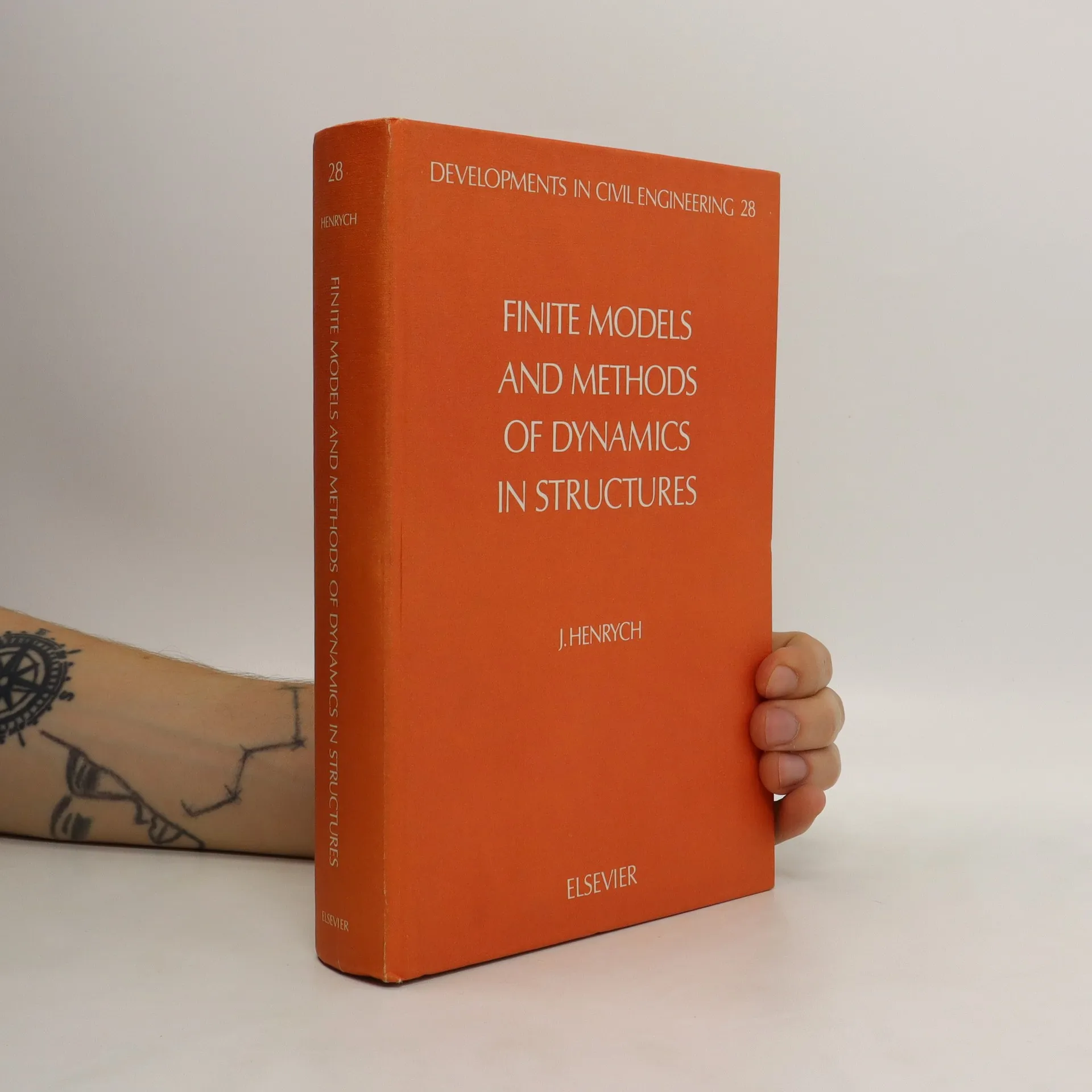
Finite models and methods of dynamics in structures, Josef Henrych
- Język

- Rok wydania
- 1990
- Oprawa
- (twarda)
Metody płatności
Nikt jeszcze nie ocenił.
- Tytuł
- Finite models and methods of dynamics in structures
- Język
- angielski
- Autorzy
- Josef Henrych
- Wydawca
- Academia ; Elsevier
- Rok wydania
- 1990
- Oprawa
- twarda
- Liczba stron
- 541
- ISBN10
- 0444988130
- ISBN13
- 9780444988133
- Seria
- Tagi
- Opis
- In view of the present level of computer techniques and the undoubted improvements in them which lie ahead, the finite methods of mechanics are and will remain the most universal tool for solving the dynamic problems of structures in civil and mechanical engineering and other applications. The aim of this volume is to create a unified system classifying the finite methods on the basis of their common features. A feature is found which is common to all known finite methods, and this feature is then formulated as a prerequisite for all known and unknown procedures. On the basis of this prerequisite, symptoms and factors of discretization are formulated; their combinations result in systems of factors denoting various finite models and the methods corresponding to them. Among the procedures obtained in this way are the existing methods and some new methods: some formulations of methods previously defined only in a stricter sense are also obtained. Various new and generalized existing methods are elaborated in practical applications. Some principles of mechanics are proposed for formulating the equations of motion of various finite models and they are applied to practical examples.