



Parametry
Więcej o książce
From Diogenes to Appiah, Ovid to Shakespeare, from Jacobean to Edwardian England, from gender approaches to revising theories of identity: The Bachelor’s and Master’s theses collected in this volume are concerned with changes in various forms. Some chart the transmutation of a literary idea or motif into a different time or genre, others transfer concepts to new surroundings and test their uses. The papers are not restricted to literary topics but cover a broad range of cultural products and contexts, and they are often complementary: While Kirstin Runge charts the transformation of the Adonis story from Ovid to Shakespeare, discussing the functions of the poem for Shakespeare’s reputation, Anika Droste looks at the practices and representations of violence in Elizabethan and Jacobean England, noting how various Shakespearean plays depict an unstable society by picking up public concerns common to the time. In similar ways, von Blanckenburg’s and Glowsky’s contributions look at nineteenth-century literature, while Schlink and Helm consider various cultural theories in a very modern context. Together, these papers present change from diverse perspectives, political as well as cultural, textual as well as theoretical, and provide the reader with a new insight into literary concepts and ideas throughout the centuries.
Zakup książki
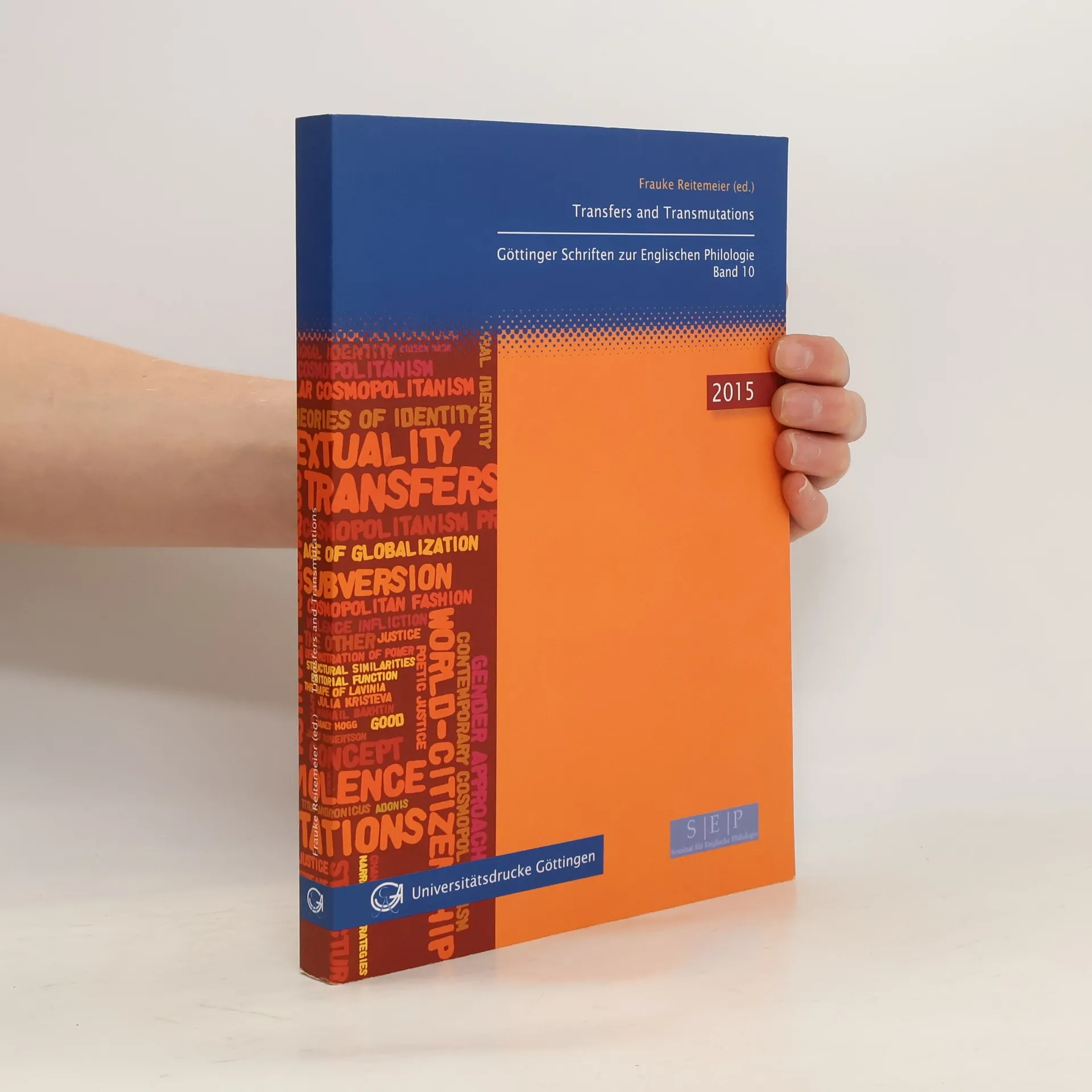
Transfers and Transmutations, Frauke Reitemeier
- Język

- Rok wydania
- 2015
Metody płatności
Nikt jeszcze nie ocenił.
- Tytuł
- Transfers and Transmutations
- Język
- angielski
- Autorzy
- Frauke Reitemeier
- Rok wydania
- 2015
- ISBN10
- 3863952448
- ISBN13
- 9783863952440
- Seria
- Kategorie
- Opis
- From Diogenes to Appiah, Ovid to Shakespeare, from Jacobean to Edwardian England, from gender approaches to revising theories of identity: The Bachelor’s and Master’s theses collected in this volume are concerned with changes in various forms. Some chart the transmutation of a literary idea or motif into a different time or genre, others transfer concepts to new surroundings and test their uses. The papers are not restricted to literary topics but cover a broad range of cultural products and contexts, and they are often complementary: While Kirstin Runge charts the transformation of the Adonis story from Ovid to Shakespeare, discussing the functions of the poem for Shakespeare’s reputation, Anika Droste looks at the practices and representations of violence in Elizabethan and Jacobean England, noting how various Shakespearean plays depict an unstable society by picking up public concerns common to the time. In similar ways, von Blanckenburg’s and Glowsky’s contributions look at nineteenth-century literature, while Schlink and Helm consider various cultural theories in a very modern context. Together, these papers present change from diverse perspectives, political as well as cultural, textual as well as theoretical, and provide the reader with a new insight into literary concepts and ideas throughout the centuries.