



Parametry
- 320 stron
- 12 godzin czytania
Więcej o książce
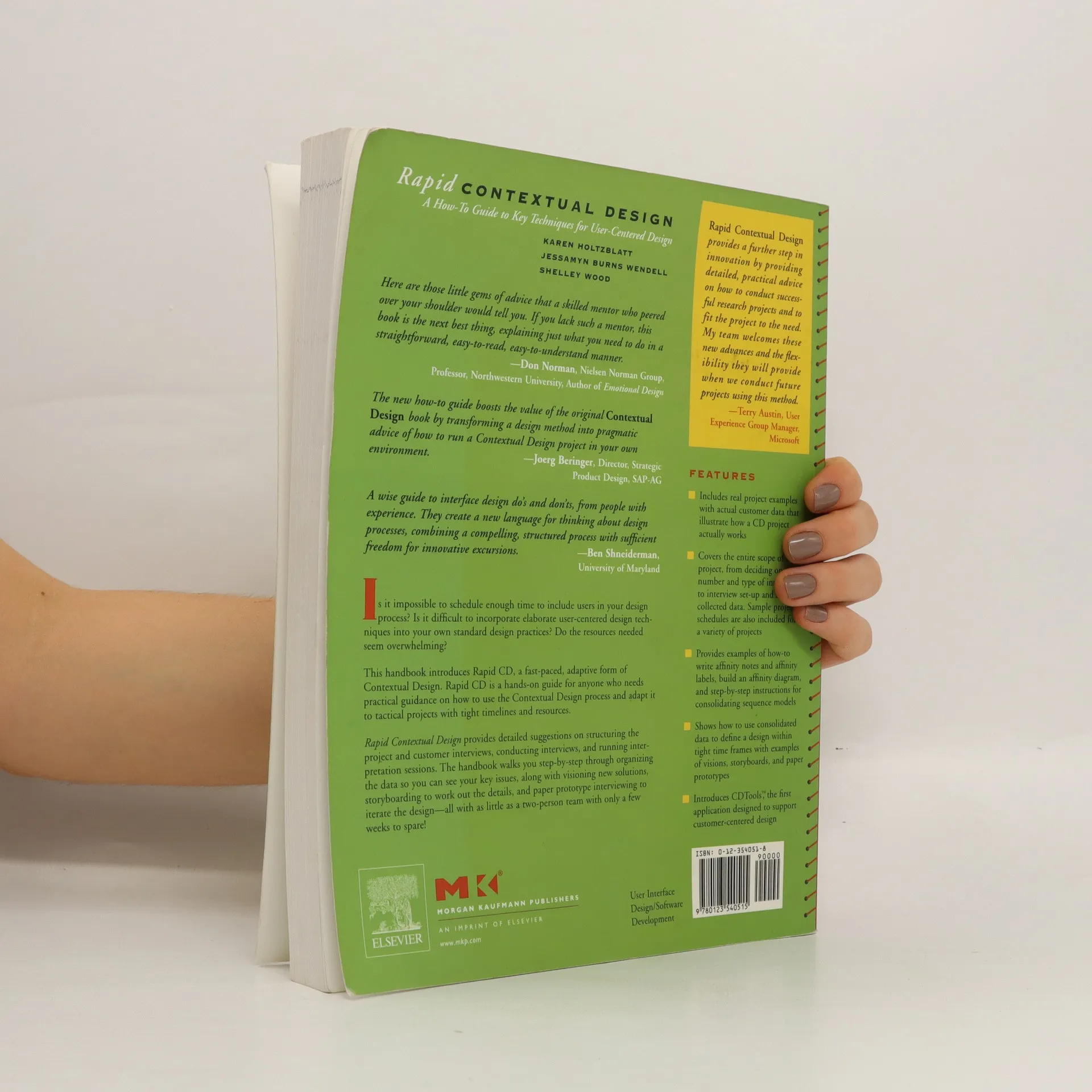
Is it challenging to include users in your design process or to adopt user-centered design techniques due to limited resources? It serves as a practical guide for those needing to implement Contextual Design in tactical projects with tight timelines. The handbook offers detailed advice on structuring projects and customer interviews, conducting interviews, and leading interpretation sessions. It guides you step-by-step in organizing data to identify key issues, visioning solutions, storyboarding, and conducting paper prototype interviews, all achievable with a small team in just a few weeks. Real project examples with actual customer data illustrate the application of the process. The handbook covers the entire project scope, from determining interview types to analyzing collected data, and includes sample schedules for various project types. It provides instructions for writing affinity notes and labels, building affinity diagrams, and consolidating sequence models. Additionally, it demonstrates how to leverage consolidated data to define designs within tight timeframes, featuring examples of visions, storyboards, and paper prototypes. The introduction of CDTools, an application designed to support customer-centered design, further enhances the process.
Zakup książki
Rapid contextual design a how-to guide to key techniques for user-centered design, Karen Holtzblatt, Jessamyn Burns Wendell, Shelley Wood, Inc ebrary
- Język

- Rok wydania
- 2005
- Oprawa
- (miękka)
Metody płatności
Brakuje nam tutaj Twojej recenzji.
- Tytuł
- Rapid contextual design a how-to guide to key techniques for user-centered design
- Język
- angielski
- Rok wydania
- 2005
- Oprawa
- miękka
- Liczba stron
- 320
- ISBN10
- 0123540518
- ISBN13
- 9780123540515
- Seria
- Kategorie
- Tagi
- Biznes, Badania naukowe
- Ocena
- 3,6 z 5
- Opis
- Is it challenging to include users in your design process or to adopt user-centered design techniques due to limited resources? It serves as a practical guide for those needing to implement Contextual Design in tactical projects with tight timelines. The handbook offers detailed advice on structuring projects and customer interviews, conducting interviews, and leading interpretation sessions. It guides you step-by-step in organizing data to identify key issues, visioning solutions, storyboarding, and conducting paper prototype interviews, all achievable with a small team in just a few weeks. Real project examples with actual customer data illustrate the application of the process. The handbook covers the entire project scope, from determining interview types to analyzing collected data, and includes sample schedules for various project types. It provides instructions for writing affinity notes and labels, building affinity diagrams, and consolidating sequence models. Additionally, it demonstrates how to leverage consolidated data to define designs within tight timeframes, featuring examples of visions, storyboards, and paper prototypes. The introduction of CDTools, an application designed to support customer-centered design, further enhances the process.