



Parametry
Więcej o książce
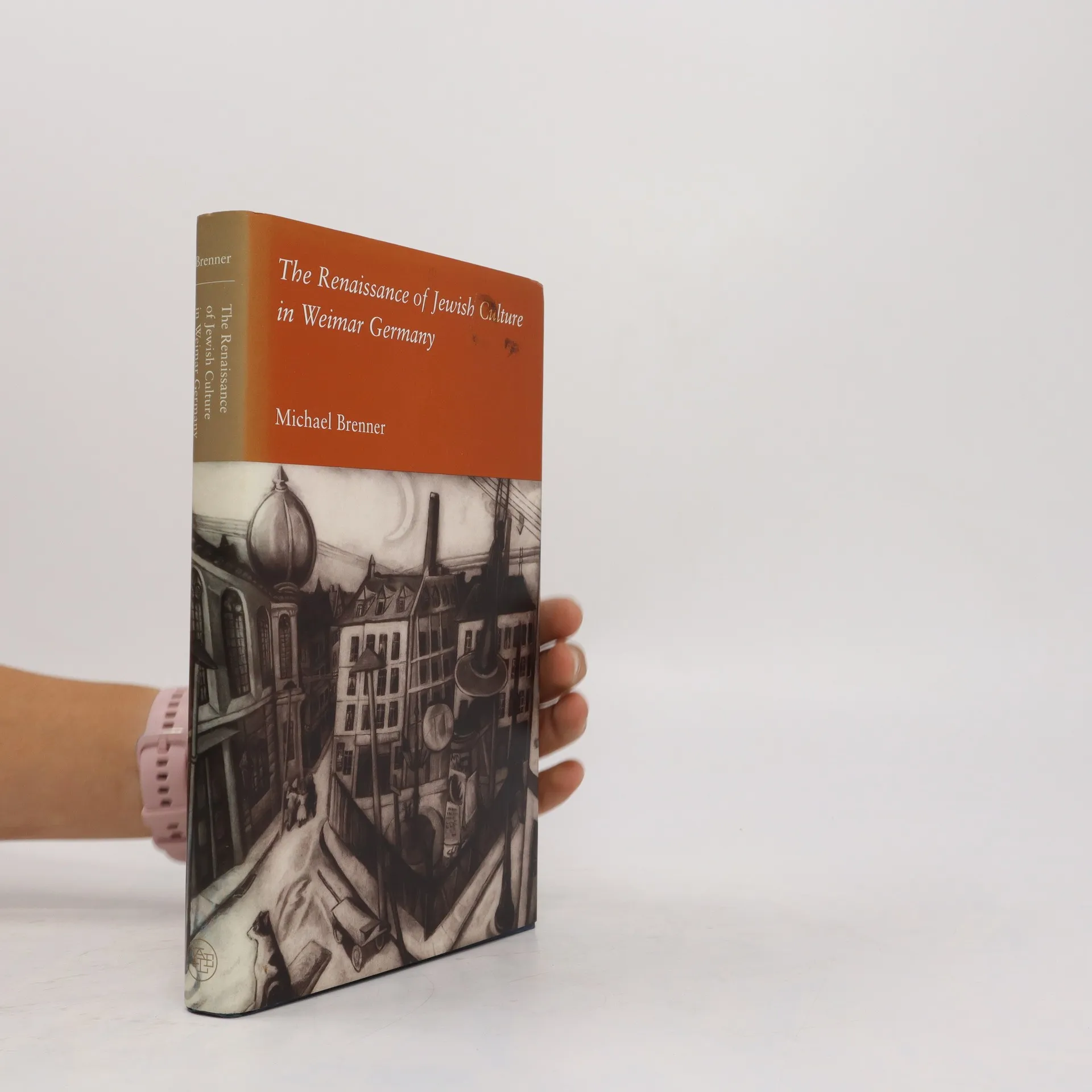
Although Jewish participation in German society increased after World War I, Jews did not completely assimilate into that society. In fact, says Michael Brenner in this intriguing book, the Jewish population of Welmar Germany became more aware of its Jewishness and created new forms of German-Jewish culture in literature, music, fine arts, education , and scholarship. Brenner presents the first in-depth study of this culture, drawing a fascinating portrait of people in the midst of redefining themselves. The Weimar Jews chose neither a radical break with the past nor a return to the past but instead dressed Jewish traditions in the garb of modern forms of cultural expression. Brenner describes, for example, how modern translations made classic Jewish texts accessible, Jewish museums displayed ceremonial artifacts in a secular framework, musical arrangements transformed synagogue liturgy for concert audiences, and popular novels recalled aspects of the Jewish past. Brenner's work, while bringing this significant historical period to life, illuminates contemporary and even enhancement of Jewish distinctiveness, combined with the seemingly successful participation of Jews in a secular, non-Jewish society, offer fresh insight into modern questions of Jewish existence, identity, and integration into other cultures.
Zakup książki
The renaissance of Jewish culture in Weimar Germany, Michael A. Meyer
- Język

- Rok wydania
- 1996
- Oprawa
- (twarda)
Metody płatności
Brakuje nam tutaj Twojej recenzji.
- Tytuł
- The renaissance of Jewish culture in Weimar Germany
- Język
- angielski
- Autorzy
- Michael A. Meyer
- Wydawca
- Yale Univ. Press
- Rok wydania
- 1996
- Oprawa
- twarda
- ISBN10
- 0300062621
- ISBN13
- 9780300062625
- Seria
- Tagi
- Tematy historyczne, Niemcy, XX wiek, Żydzi, Historia kultury, Historia Niemiec, Literatura Żydowska, Republika Weimarska
- Ocena
- 5 z 5
- Opis
- Although Jewish participation in German society increased after World War I, Jews did not completely assimilate into that society. In fact, says Michael Brenner in this intriguing book, the Jewish population of Welmar Germany became more aware of its Jewishness and created new forms of German-Jewish culture in literature, music, fine arts, education , and scholarship. Brenner presents the first in-depth study of this culture, drawing a fascinating portrait of people in the midst of redefining themselves. The Weimar Jews chose neither a radical break with the past nor a return to the past but instead dressed Jewish traditions in the garb of modern forms of cultural expression. Brenner describes, for example, how modern translations made classic Jewish texts accessible, Jewish museums displayed ceremonial artifacts in a secular framework, musical arrangements transformed synagogue liturgy for concert audiences, and popular novels recalled aspects of the Jewish past. Brenner's work, while bringing this significant historical period to life, illuminates contemporary and even enhancement of Jewish distinctiveness, combined with the seemingly successful participation of Jews in a secular, non-Jewish society, offer fresh insight into modern questions of Jewish existence, identity, and integration into other cultures.