


Więcej o książce
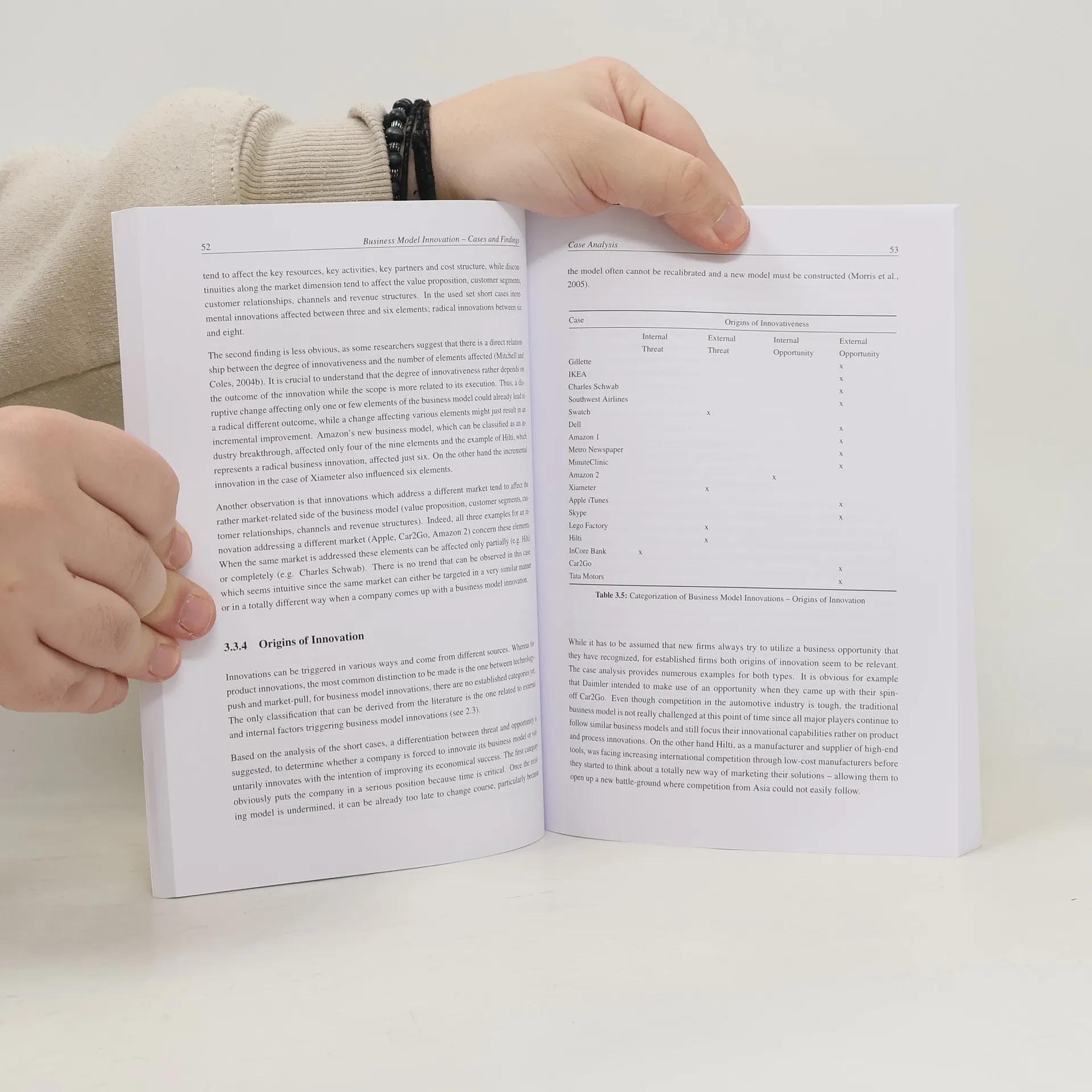
Business model innovation has emerged as a crucial source of competitive advantage, necessitating a shift in how companies operate, as differentiation through products and services alone becomes increasingly challenging. Successful examples like Amazon, Hilti, and IKEA illustrate how adopting new business models can lead to superior performance. However, systematic business model innovation remains uncommon in practice, and research in this area is still developing, lacking consensus and consistent definitions. There are no established process models to guide practitioners, which hampers both practical implementation and scientific evaluation. This work aims to enhance business model innovation through a structured approach, developed as a process model grounded in applied research principles. The model draws on current knowledge from business models and innovation management, designed to be versatile across various industries. To address the theoretical gaps, short case studies are analyzed, applying insights from innovation management. The model's practical applicability is evaluated through workshops with different companies, leading to the formulation of guidelines based on the results. The primary contribution is the creation of a theoretically informed and practically useful model that assists companies in navigating challenges and seizing opportunities, while also advancing the research field of business model innovati
Zakup książki
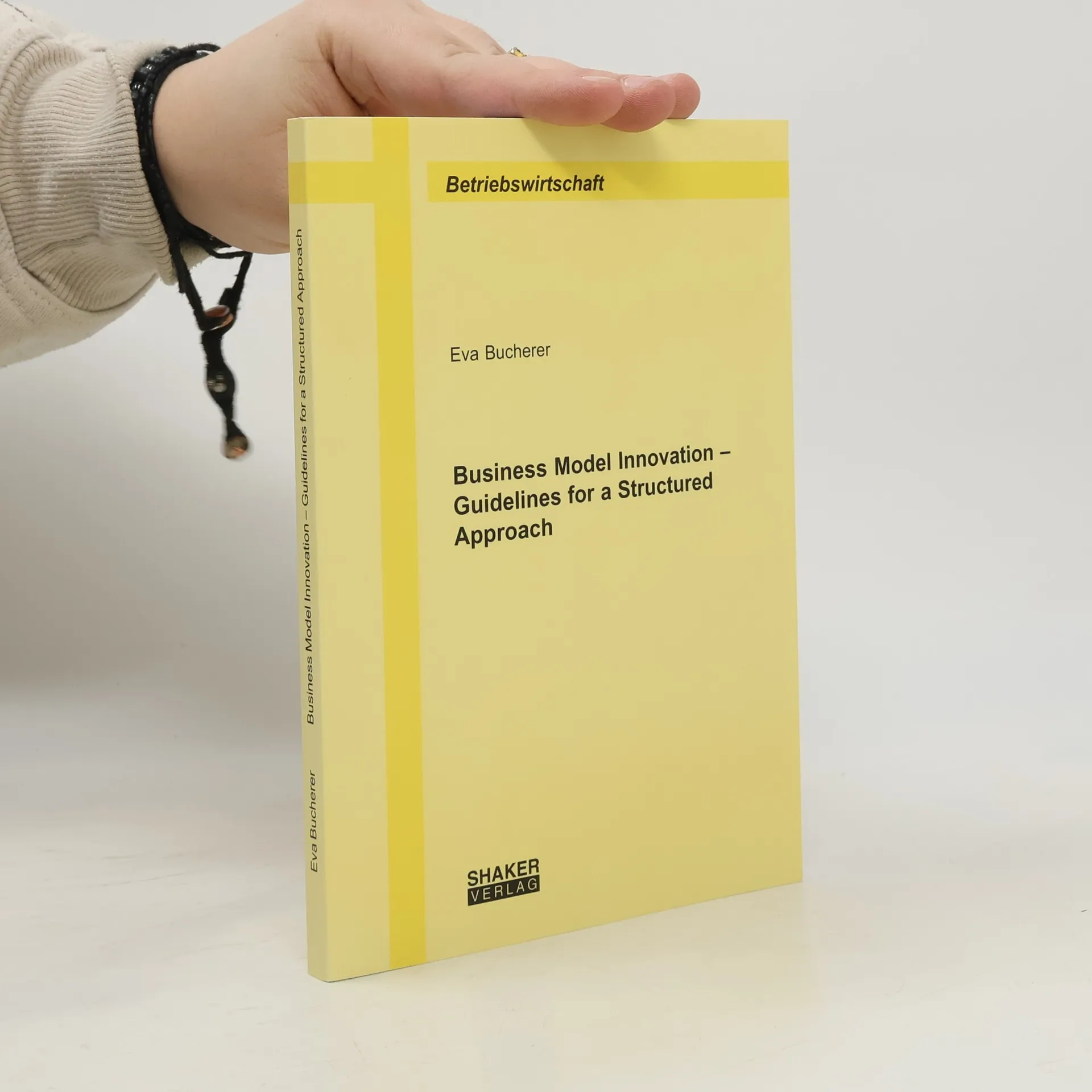
Business model innovation – guidelines for a structured approach, Eva Bucherer
- Język

- Rok wydania
- 2010
- Oprawa
- (miękka)
Metody płatności
Nikt jeszcze nie ocenił.
- Tytuł
- Business model innovation – guidelines for a structured approach
- Język
- angielski
- Autorzy
- Eva Bucherer
- Wydawca
- Shaker
- Rok wydania
- 2010
- Oprawa
- miękka
- Liczba stron
- 161
- ISBN10
- 3832296638
- ISBN13
- 9783832296636
- Seria
- Kategorie
- Opis
- Business model innovation has emerged as a crucial source of competitive advantage, necessitating a shift in how companies operate, as differentiation through products and services alone becomes increasingly challenging. Successful examples like Amazon, Hilti, and IKEA illustrate how adopting new business models can lead to superior performance. However, systematic business model innovation remains uncommon in practice, and research in this area is still developing, lacking consensus and consistent definitions. There are no established process models to guide practitioners, which hampers both practical implementation and scientific evaluation. This work aims to enhance business model innovation through a structured approach, developed as a process model grounded in applied research principles. The model draws on current knowledge from business models and innovation management, designed to be versatile across various industries. To address the theoretical gaps, short case studies are analyzed, applying insights from innovation management. The model's practical applicability is evaluated through workshops with different companies, leading to the formulation of guidelines based on the results. The primary contribution is the creation of a theoretically informed and practically useful model that assists companies in navigating challenges and seizing opportunities, while also advancing the research field of business model innovati