

Parametry
Więcej o książce
"Examining ideas ranging from world systems theory to postmodernism, Jonathan Friedman investigates the relations between the global and the local, to show how cultural fragmentation and modernist homogenization are equally constitutive trends of global reality. With examples taken from a rich variety of theoretical sources, ethnographic accounts and historical eras, the analysis ranges across the cultural formations of ancient Greece, contemporary processes of Hawaiian cultural identification and Congolese beauty cults. Throughout, the author examines the interdependency of the world market and local cultural transformations, and demonstrates the complex interrelations between globally structured social processes and the organization of identity." "Jonathan Friedman also documents the development and significance of a global perspective in an anthropology that illuminates a wide variety of domains from prehistory to world hegemony. In so doing, he interrogates the emergence of the concept of culture and suggests that anthropology itself is best understood within the trajectory of modernity."--Jacket
Zakup książki
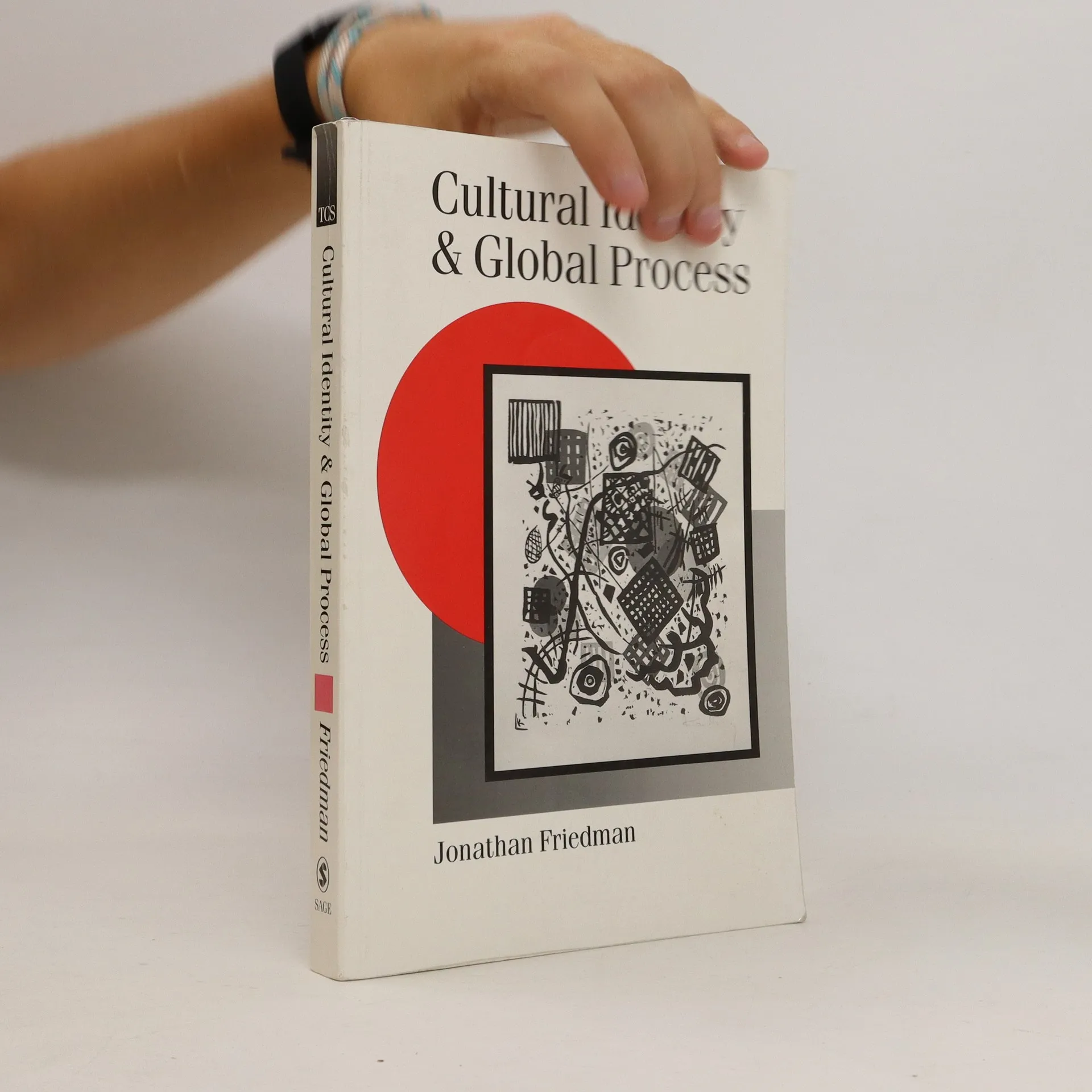
Cultural identity and global process, Jonathan Friedman
- Język

- Rok wydania
- 1994
- Oprawa
- (miękka)
Metody płatności
Nikt jeszcze nie ocenił.
- Tytuł
- Cultural identity and global process
- Język
- angielski
- Autorzy
- Jonathan Friedman
- Wydawca
- SAGE Publications
- Rok wydania
- 1994
- Oprawa
- miękka
- ISBN10
- 0803986378
- ISBN13
- 9780803986374
- Seria
- Tagi
- Opis
- "Examining ideas ranging from world systems theory to postmodernism, Jonathan Friedman investigates the relations between the global and the local, to show how cultural fragmentation and modernist homogenization are equally constitutive trends of global reality. With examples taken from a rich variety of theoretical sources, ethnographic accounts and historical eras, the analysis ranges across the cultural formations of ancient Greece, contemporary processes of Hawaiian cultural identification and Congolese beauty cults. Throughout, the author examines the interdependency of the world market and local cultural transformations, and demonstrates the complex interrelations between globally structured social processes and the organization of identity." "Jonathan Friedman also documents the development and significance of a global perspective in an anthropology that illuminates a wide variety of domains from prehistory to world hegemony. In so doing, he interrogates the emergence of the concept of culture and suggests that anthropology itself is best understood within the trajectory of modernity."--Jacket