

Więcej o książce
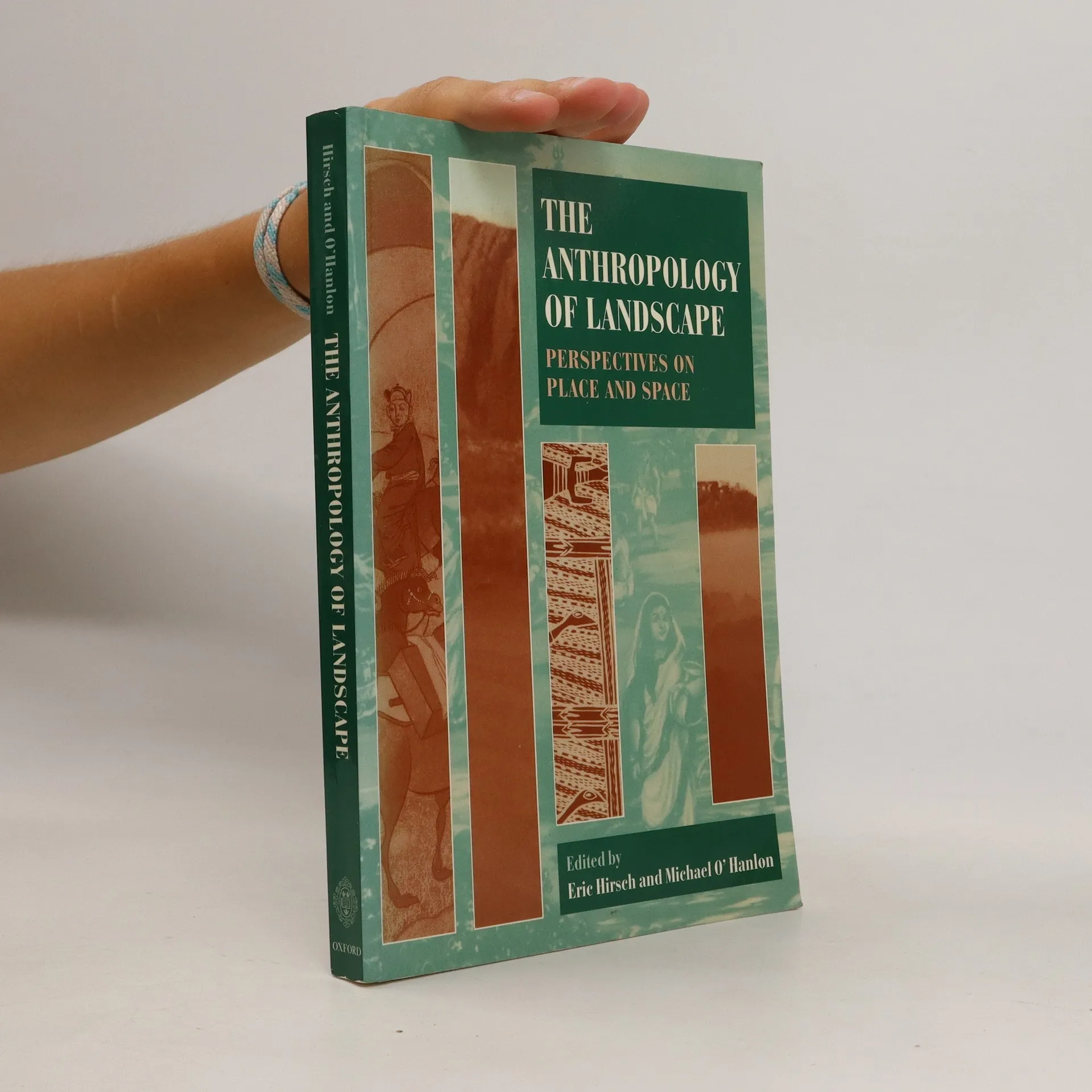
Landscape has long had a submerged presence within anthropology, both as a framing device which informs the way the anthropologist brings his or her study into 'view', and as the meaning imputed by local people to their cultural and physical surroundings. A principal aim of this volume follows from these interconnected ways of considering the conventional, Western notion of 'landscape' may be used as productive point of departure from which to explore analgous ideas; local ideas can in turn reflexively by used to interrogate the Western construct.The Introduction argues that landscape should be conceptualized as a cultural a process located between place and space, inside and outside, image and representation. In the chapters that follow, nine noted anthropologists and an art historian exemplify this approach, drawing on a diverse set of case studies. These range from an analysis of Indian calendar art to an account of Israeli nature tourism, and from the creation of a metropolitan "gaze" in nineteenth-century Paris to the soundscapes particular to the Papua New Guinea rainforests. The anthropological perspectives developed here are of cross-disciplinary relevance; geographers, art historians, and archaeologists will be no less interested than anthropologists in this re-envisaging of the notion of landscape.
Zakup książki
The Anthropology of Landscape, Eric Hirsch, Michael O. Hanlon
- Język

- Rok wydania
- 1995
- Oprawa
- (miękka)
Metody płatności
Brakuje nam tutaj Twojej recenzji.
- Tytuł
- The Anthropology of Landscape
- Język
- angielski
- Autorzy
- Eric Hirsch, Michael O. Hanlon
- Wydawca
- Oxford University Press
- Rok wydania
- 1995
- Oprawa
- miękka
- Liczba stron
- 280
- ISBN10
- 0198280106
- ISBN13
- 9780198280101
- Seria
- Tagi
- Ocena
- 3,65 z 5
- Opis
- Landscape has long had a submerged presence within anthropology, both as a framing device which informs the way the anthropologist brings his or her study into 'view', and as the meaning imputed by local people to their cultural and physical surroundings. A principal aim of this volume follows from these interconnected ways of considering the conventional, Western notion of 'landscape' may be used as productive point of departure from which to explore analgous ideas; local ideas can in turn reflexively by used to interrogate the Western construct.The Introduction argues that landscape should be conceptualized as a cultural a process located between place and space, inside and outside, image and representation. In the chapters that follow, nine noted anthropologists and an art historian exemplify this approach, drawing on a diverse set of case studies. These range from an analysis of Indian calendar art to an account of Israeli nature tourism, and from the creation of a metropolitan "gaze" in nineteenth-century Paris to the soundscapes particular to the Papua New Guinea rainforests. The anthropological perspectives developed here are of cross-disciplinary relevance; geographers, art historians, and archaeologists will be no less interested than anthropologists in this re-envisaging of the notion of landscape.