




Więcej o książce
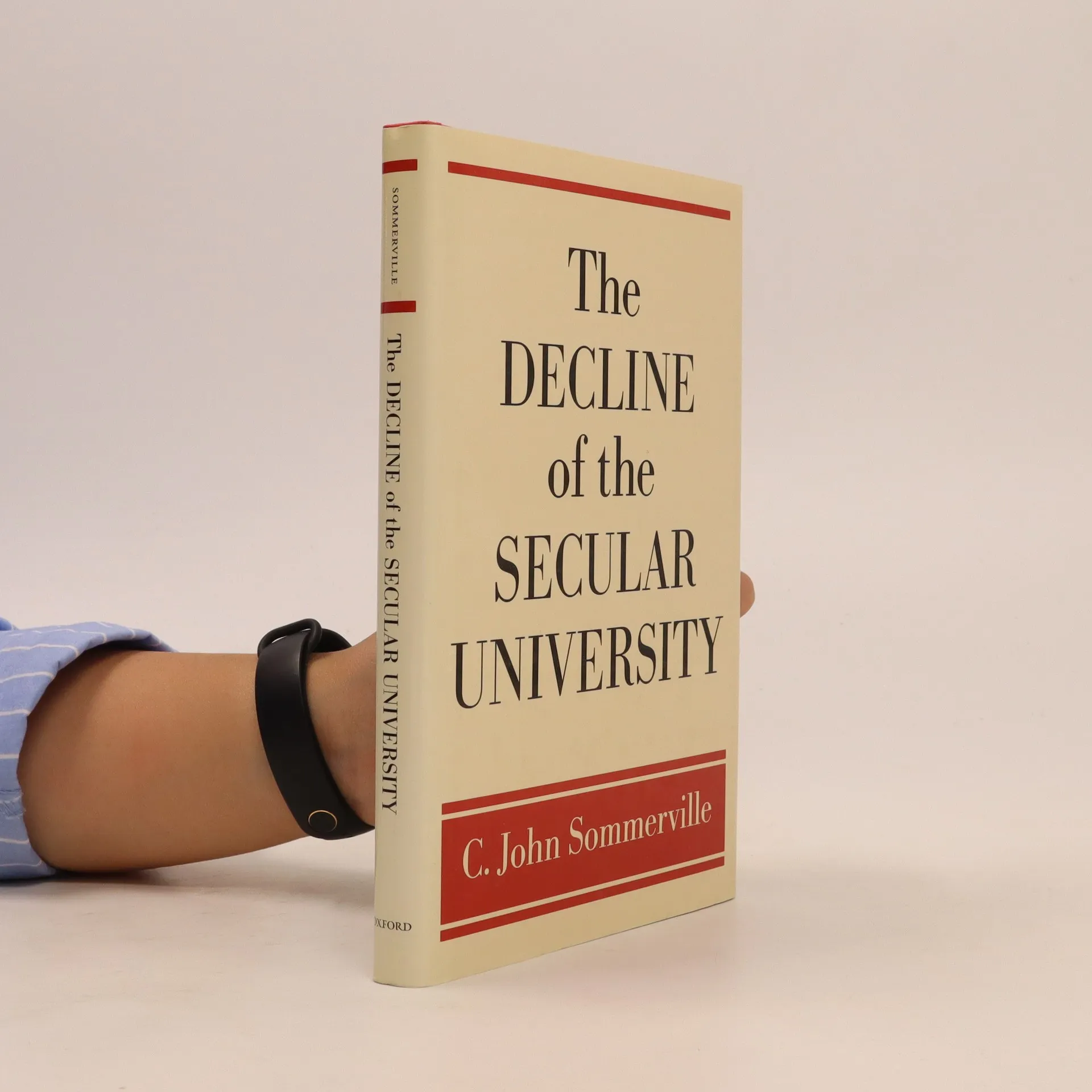
The American university's thorough secularism increasingly marginalizes it in a society with high religious belief. This secularization, intended as a liberating force, has led to the university's failure to provide leadership in political, cultural, social, and scientific realms. In examining this decline, C. John Sommerville highlights how the secular university trivializes religion and neglects the essential task of defining what it means to be human, critical for professional education. He points out the challenges posed by the prevailing secular divide between "facts" and "values" and argues that the absence of religious perspectives limits the university's understanding of our post-Cold War world. Sommerville suggests that recognizing the intellectual resources of religion could enhance discussions on crucial topics, including our disconnection from history, the critique of secularism, the evaluation of religions, the peculiarities of academic moralizing, and the complexities of science at its boundaries. He encourages readers to envision a university where religion is embraced as a legitimate voice, fostering a more inclusive and dynamic academic environment. His thought-provoking arguments are likely to spark debate and reflection both within and beyond academic circles.
Zakup książki
The decline of the secular university, C. John Sommerville
- Język

- Rok wydania
- 2006
- Oprawa
- (twarda)
Metody płatności
Brakuje nam tutaj Twojej recenzji.
- Tytuł
- The decline of the secular university
- Język
- angielski
- Autorzy
- C. John Sommerville
- Wydawca
- Oxford University Press
- Rok wydania
- 2006
- Oprawa
- twarda
- Liczba stron
- 147
- ISBN10
- 0195306953
- ISBN13
- 9780195306958
- Seria
- Ocena
- 4 z 5
- Opis
- The American university's thorough secularism increasingly marginalizes it in a society with high religious belief. This secularization, intended as a liberating force, has led to the university's failure to provide leadership in political, cultural, social, and scientific realms. In examining this decline, C. John Sommerville highlights how the secular university trivializes religion and neglects the essential task of defining what it means to be human, critical for professional education. He points out the challenges posed by the prevailing secular divide between "facts" and "values" and argues that the absence of religious perspectives limits the university's understanding of our post-Cold War world. Sommerville suggests that recognizing the intellectual resources of religion could enhance discussions on crucial topics, including our disconnection from history, the critique of secularism, the evaluation of religions, the peculiarities of academic moralizing, and the complexities of science at its boundaries. He encourages readers to envision a university where religion is embraced as a legitimate voice, fostering a more inclusive and dynamic academic environment. His thought-provoking arguments are likely to spark debate and reflection both within and beyond academic circles.