




Więcej o książce
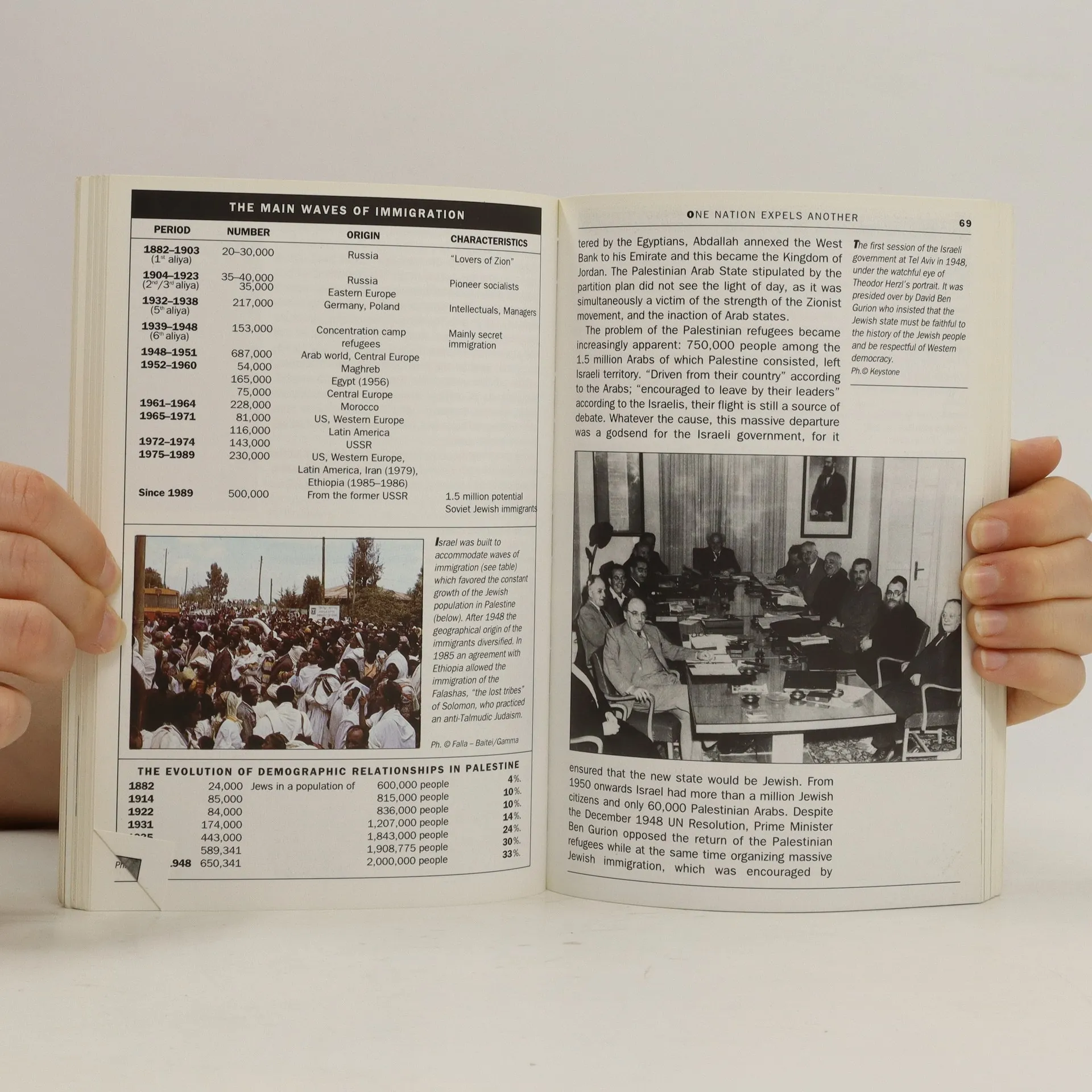
The Middle East — a region of historic significance to the rest of the world — contains immeasurable spiritual and intellectual wealth set amidst grinding poverty. It is a land of economic contrasts and a wide diversity of countries, experiencing a bewildering array of religious, national and social conflicts. It is a region that has rarely been at peace. The post-World War I colonial division of the Arab world stands at the root of many of today's conflicts. From Syria and Lebanon to Iraq and Kuwait, states were established with arbitrary borders that continue to spark conflicts. The establishment of Israel one world war later and the expulsion of hundreds of thousands of Palestinian Arabs from their ancestral homes set the stage for a continuing region-wide cycle of occupation and resistance. In the second half of the 20th Century, the enormous oil reserves of the Arab Gulf states transformed the region, but tensions between oil-rich and oil-poor remain deep. Efforts by unpopular Arab regimes to merge their economies into the globalization schemes of the late 20th Century have spawned new Islamist movements determined to reject Western "solutions" to endemic poverty, powerlessness and injustice.
Zakup książki
Middle East Conflicts, Francois Massoulie
- Język

- Rok wydania
- 2003
- Oprawa
- (miękka)
Metody płatności
Brakuje nam tutaj Twojej recenzji.
- Tytuł
- Middle East Conflicts
- Język
- angielski
- Autorzy
- Francois Massoulie
- Wydawca
- Interlink Publishing Group
- Rok wydania
- 2003
- Oprawa
- miękka
- Liczba stron
- 160
- ISBN10
- 1566562376
- ISBN13
- 9781566562379
- Seria
- Ocena
- 3,35 z 5
- Opis
- The Middle East — a region of historic significance to the rest of the world — contains immeasurable spiritual and intellectual wealth set amidst grinding poverty. It is a land of economic contrasts and a wide diversity of countries, experiencing a bewildering array of religious, national and social conflicts. It is a region that has rarely been at peace. The post-World War I colonial division of the Arab world stands at the root of many of today's conflicts. From Syria and Lebanon to Iraq and Kuwait, states were established with arbitrary borders that continue to spark conflicts. The establishment of Israel one world war later and the expulsion of hundreds of thousands of Palestinian Arabs from their ancestral homes set the stage for a continuing region-wide cycle of occupation and resistance. In the second half of the 20th Century, the enormous oil reserves of the Arab Gulf states transformed the region, but tensions between oil-rich and oil-poor remain deep. Efforts by unpopular Arab regimes to merge their economies into the globalization schemes of the late 20th Century have spawned new Islamist movements determined to reject Western "solutions" to endemic poverty, powerlessness and injustice.