

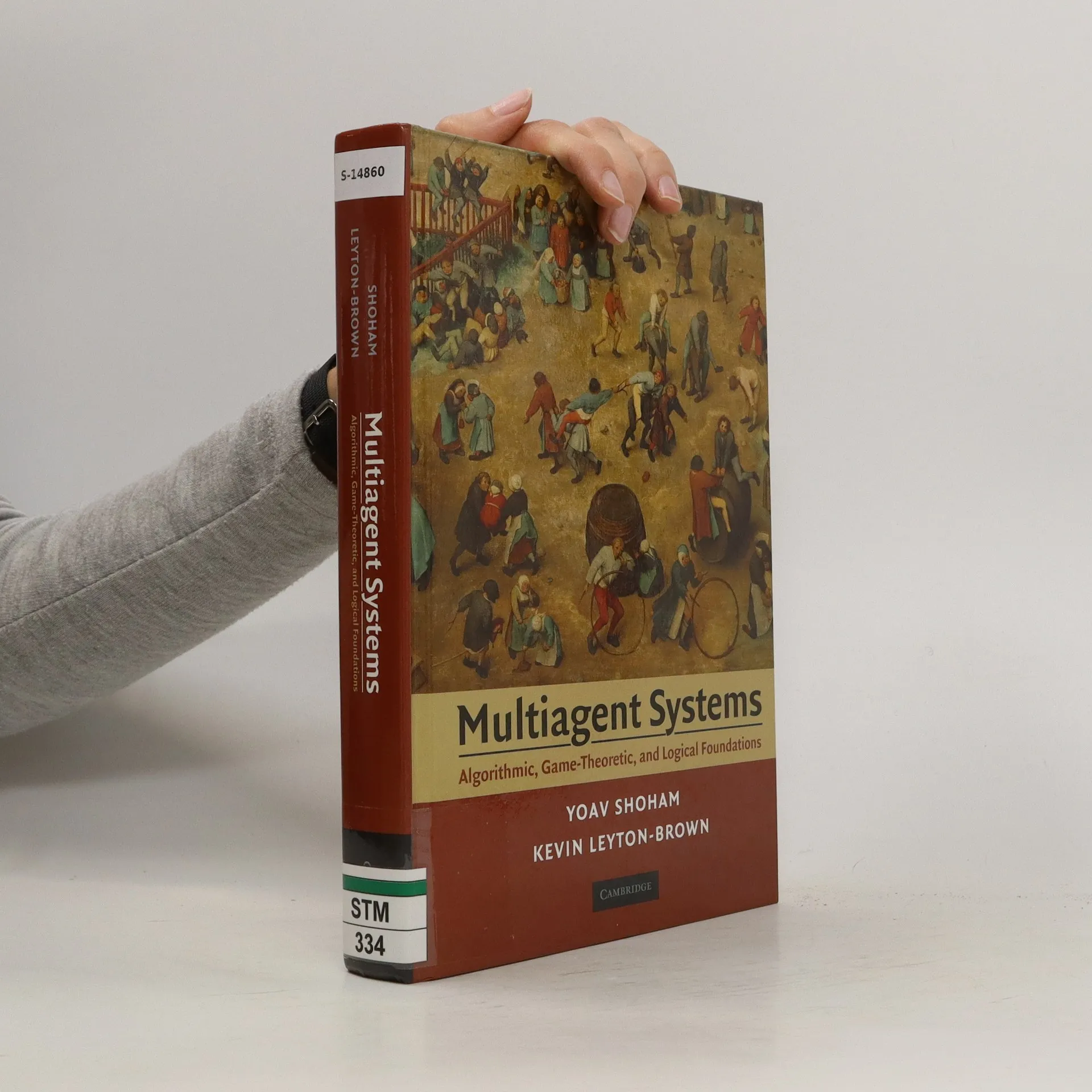
Parametry
- 504 strony
- 18 godzin czytania
Więcej o książce
This exciting and pioneering new overview of multiagent systems, which are online systems composed of multiple interacting intelligent agents, i.e., online trading, offers a newly seen computer science perspective on multiagent systems, while integrating ideas from operations research, game theory, economics, logic, and even philosophy and linguistics. The authors emphasize foundations to create a broad and rigorous treatment of their subject, with thorough presentations of distributed problem solving, game theory, multiagent communication and learning, social choice, mechanism design, auctions, cooperative game theory, and modal logics of knowledge and belief. For each topic, basic concepts are introduced, examples are given, proofs of key results are offered, and algorithmic considerations are examined. An appendix covers background material in probability theory, classical logic, Markov decision processes and mathematical programming. Written by two of the leading researchers of this engaging field, this book will surely serve as THE reference for researchers in the fastest-growing area of computer science, and be used as a text for advanced undergraduate or graduate courses.
Zakup książki
Multiagent Systems: Algorithmic, Game-Theoretic, and Logical Foundations, Kevin Leyton-Brown, Yoav Shoham
- Język

- Rok wydania
- 2008
- Oprawa
- (twarda)
Metody płatności
Brakuje nam tutaj Twojej recenzji.
- Tytuł
- Multiagent Systems: Algorithmic, Game-Theoretic, and Logical Foundations
- Język
- angielski
- Autorzy
- Kevin Leyton-Brown, Yoav Shoham
- Wydawca
- Cambridge University Press
- Rok wydania
- 2008
- Oprawa
- twarda
- Liczba stron
- 504
- ISBN10
- 0521899435
- ISBN13
- 9780521899437
- Seria
- Kategorie
- Ocena
- 3,75 z 5
- Opis
- This exciting and pioneering new overview of multiagent systems, which are online systems composed of multiple interacting intelligent agents, i.e., online trading, offers a newly seen computer science perspective on multiagent systems, while integrating ideas from operations research, game theory, economics, logic, and even philosophy and linguistics. The authors emphasize foundations to create a broad and rigorous treatment of their subject, with thorough presentations of distributed problem solving, game theory, multiagent communication and learning, social choice, mechanism design, auctions, cooperative game theory, and modal logics of knowledge and belief. For each topic, basic concepts are introduced, examples are given, proofs of key results are offered, and algorithmic considerations are examined. An appendix covers background material in probability theory, classical logic, Markov decision processes and mathematical programming. Written by two of the leading researchers of this engaging field, this book will surely serve as THE reference for researchers in the fastest-growing area of computer science, and be used as a text for advanced undergraduate or graduate courses.