

Więcej o książce
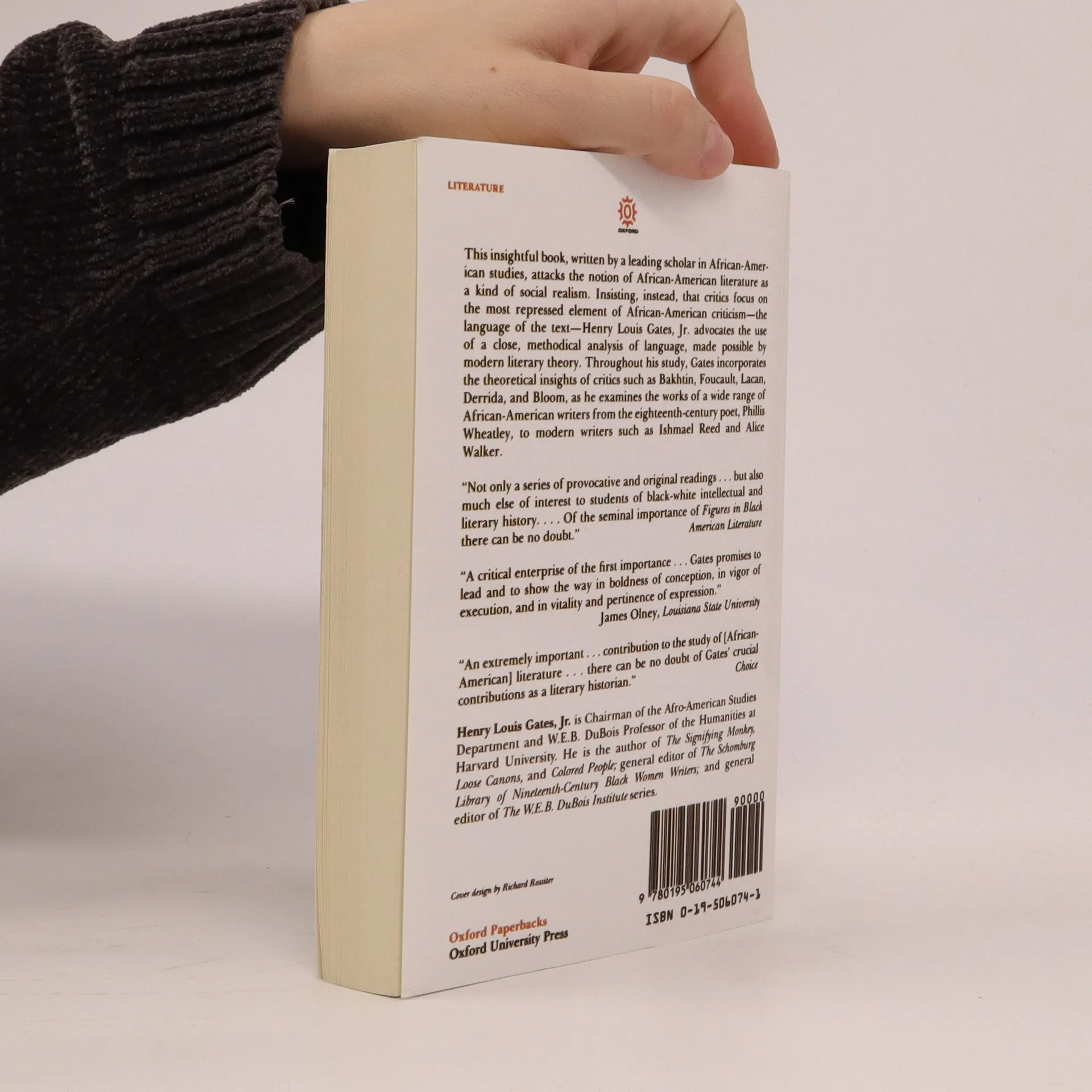
For over two centuries, critics and the black community have tended to approach African-American literature as simply one more front in the important war against racism, valuing slave narratives and twentieth-century works alike, primarily for their political impact.In this volume, Henry Louis Gates, Jr., a leading scholar in African-American studies, attacks the notion of African-American literature as a kind of social realism. Insisting, instead, that critics focus on the most repressed element of African-American criticism--the language of the text--Gates advocates the use of a close, methodical analysis of language, made possible by modern literary theory. Throughout his study, Gates incorporates the theoretical insights of critics such as Bakhtin, Foucault, Lacan, Derrida, and Bloom, as he examines the modes of representation that define black art and analyzes the unspoken assumptions made in judging this literature since its inception.Ranging from the eighteenth-century poet, Phillis Wheatley, to modern writers, Ishmael Reed and Alice Walker, Gates seeks to redefine literary criticism itself, moving away from a Eurocentric notion of a hierarchical canon--mostly white, Western, and male--to foster a truly comparative and pluralistic notion of literature.
Zakup książki
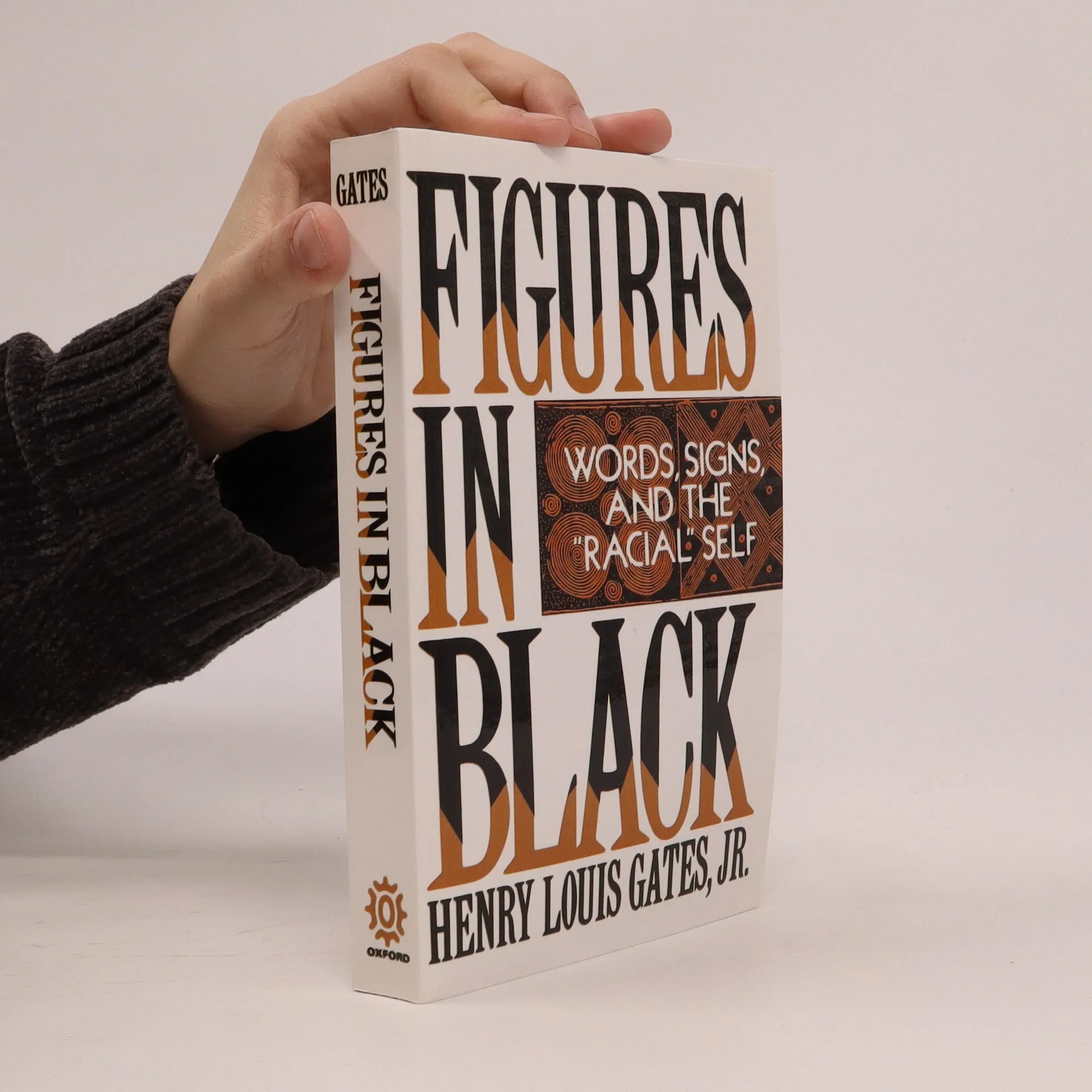
Figures in black: Words, Signs, and the "Racial" Self, Henry Louis Jr Gates
- Język

- Rok wydania
- 1989
- Oprawa
- (miękka)
Metody płatności
Brakuje nam tutaj Twojej recenzji.
- Tytuł
- Figures in black: Words, Signs, and the "Racial" Self
- Język
- angielski
- Autorzy
- Henry Louis Jr Gates
- Wydawca
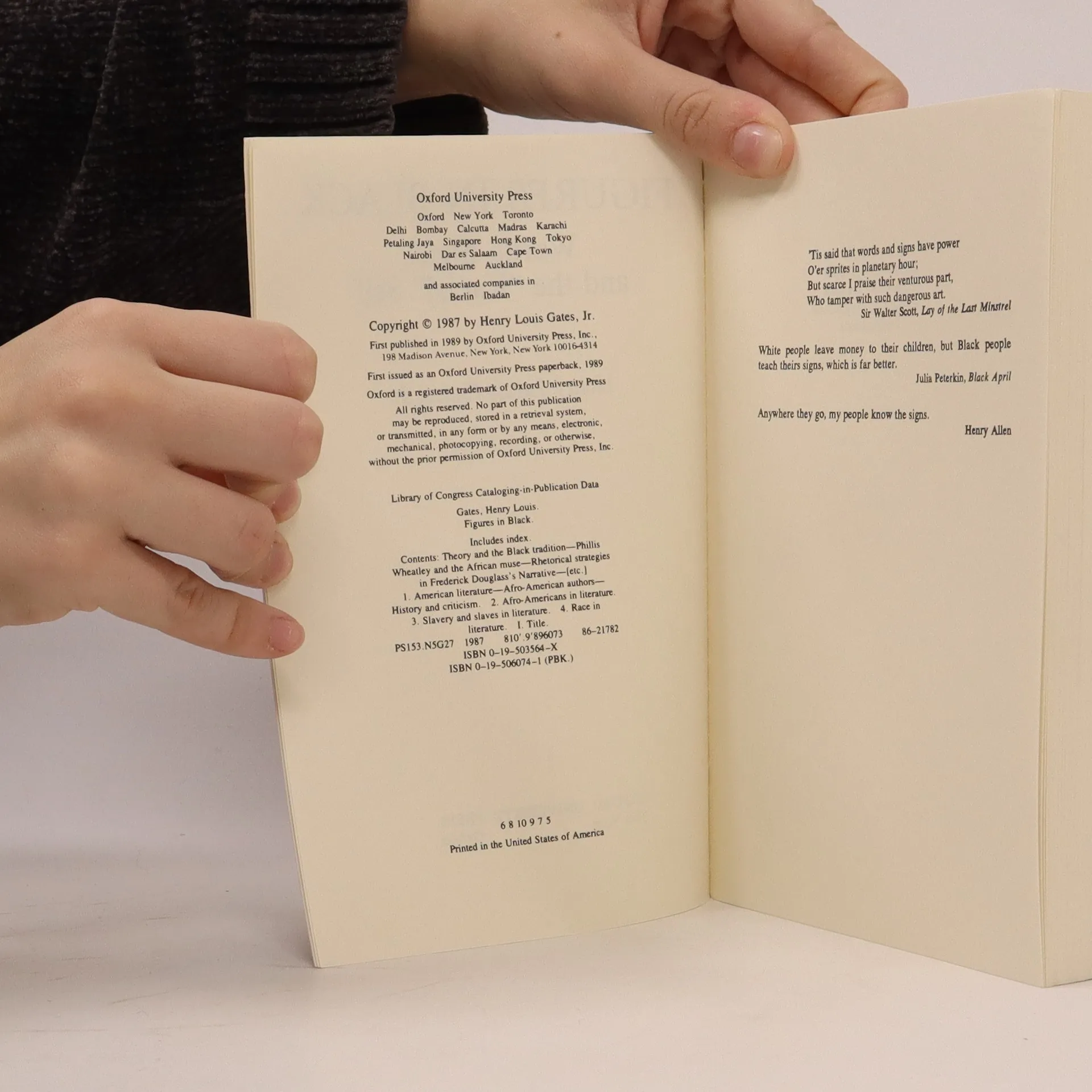
- Oxford University Press
- Rok wydania
- 1989
- Oprawa
- miękka
- Liczba stron
- 348
- ISBN10
- 0195060741
- ISBN13
- 9780195060744
- Seria
- Kategorie
- Ocena
- 4,05 z 5
- Opis
- For over two centuries, critics and the black community have tended to approach African-American literature as simply one more front in the important war against racism, valuing slave narratives and twentieth-century works alike, primarily for their political impact.In this volume, Henry Louis Gates, Jr., a leading scholar in African-American studies, attacks the notion of African-American literature as a kind of social realism. Insisting, instead, that critics focus on the most repressed element of African-American criticism--the language of the text--Gates advocates the use of a close, methodical analysis of language, made possible by modern literary theory. Throughout his study, Gates incorporates the theoretical insights of critics such as Bakhtin, Foucault, Lacan, Derrida, and Bloom, as he examines the modes of representation that define black art and analyzes the unspoken assumptions made in judging this literature since its inception.Ranging from the eighteenth-century poet, Phillis Wheatley, to modern writers, Ishmael Reed and Alice Walker, Gates seeks to redefine literary criticism itself, moving away from a Eurocentric notion of a hierarchical canon--mostly white, Western, and male--to foster a truly comparative and pluralistic notion of literature.