



Więcej o książce
The past two decades have brought significant advancements in corporate finance, expanding its focus from merely financing corporations—equity, debt, and valuation—to encompass governance, liquidity, risk management, and the macroeconomic effects of corporations. However, this evolution has resulted in a confusing array of concepts and models that challenge students' understanding. A leading economist presents a clear, unified introduction to modern corporate finance theory, centered around a single model utilizing incentive or contract theory. This work fills a critical gap, serving as an essential resource for graduate and advanced undergraduate students, as well as researchers in corporate finance, industrial organization, political economy, development, and macroeconomics. The author outlines the fundamental principles that guide the analysis of contemporary management and public policy issues, including corporate governance reform, the roles of private equity and financial markets, and the effective management of leverage, dividends, liquidity, and risk. Empirical studies are integrated into the theoretical framework, and the corporation is examined within its broader microeconomic and macroeconomic contexts, highlighting the interaction between corporate environments and institutions. This text sets a new standard in the field and is poised to be a definitive resource for years to come.
Zakup książki
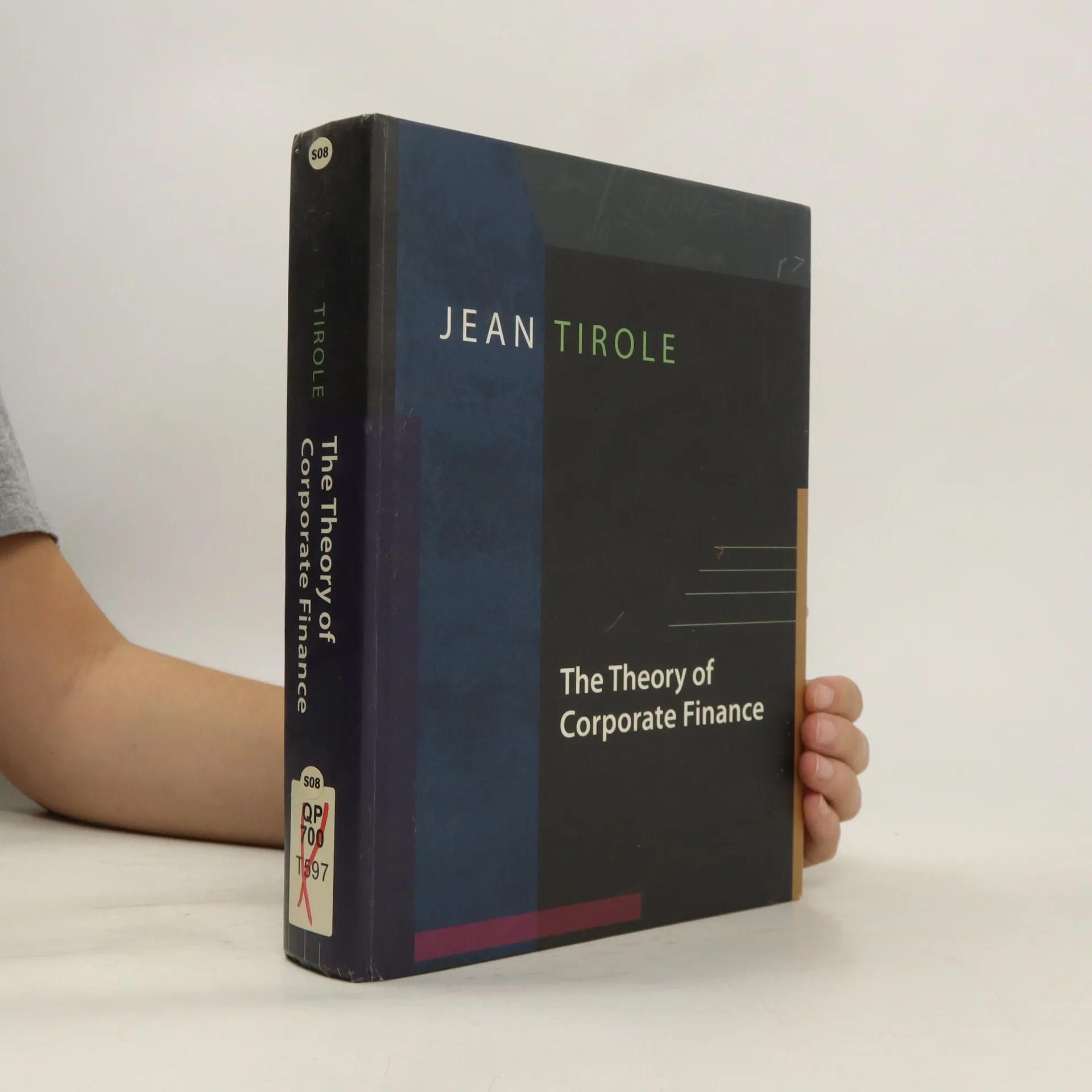
The Theory of Corporate Finance, Jean Tirole
- Język

- Rok wydania
- 2006
- Oprawa
- (twarda)
Metody płatności
Brakuje nam tutaj Twojej recenzji.
- Tytuł
- The Theory of Corporate Finance
- Język
- angielski
- Autorzy
- Jean Tirole
- Wydawca
- Princeton University Press
- Rok wydania
- 2006
- Oprawa
- twarda
- ISBN10
- 0691125562
- ISBN13
- 9780691125565
- Seria
- Ocena
- 4,55 z 5
- Opis
- The past two decades have brought significant advancements in corporate finance, expanding its focus from merely financing corporations—equity, debt, and valuation—to encompass governance, liquidity, risk management, and the macroeconomic effects of corporations. However, this evolution has resulted in a confusing array of concepts and models that challenge students' understanding. A leading economist presents a clear, unified introduction to modern corporate finance theory, centered around a single model utilizing incentive or contract theory. This work fills a critical gap, serving as an essential resource for graduate and advanced undergraduate students, as well as researchers in corporate finance, industrial organization, political economy, development, and macroeconomics. The author outlines the fundamental principles that guide the analysis of contemporary management and public policy issues, including corporate governance reform, the roles of private equity and financial markets, and the effective management of leverage, dividends, liquidity, and risk. Empirical studies are integrated into the theoretical framework, and the corporation is examined within its broader microeconomic and macroeconomic contexts, highlighting the interaction between corporate environments and institutions. This text sets a new standard in the field and is poised to be a definitive resource for years to come.