


Więcej o książce
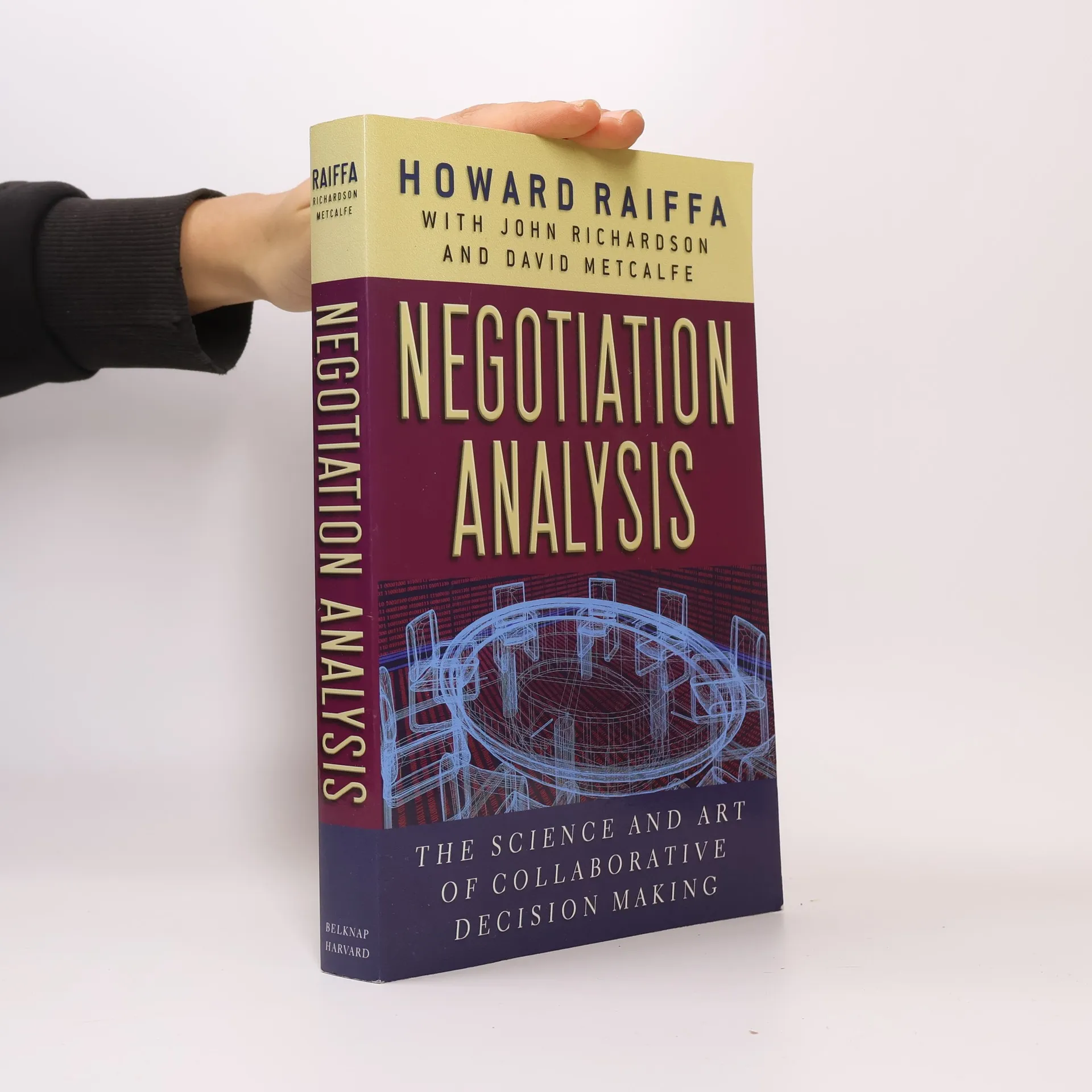
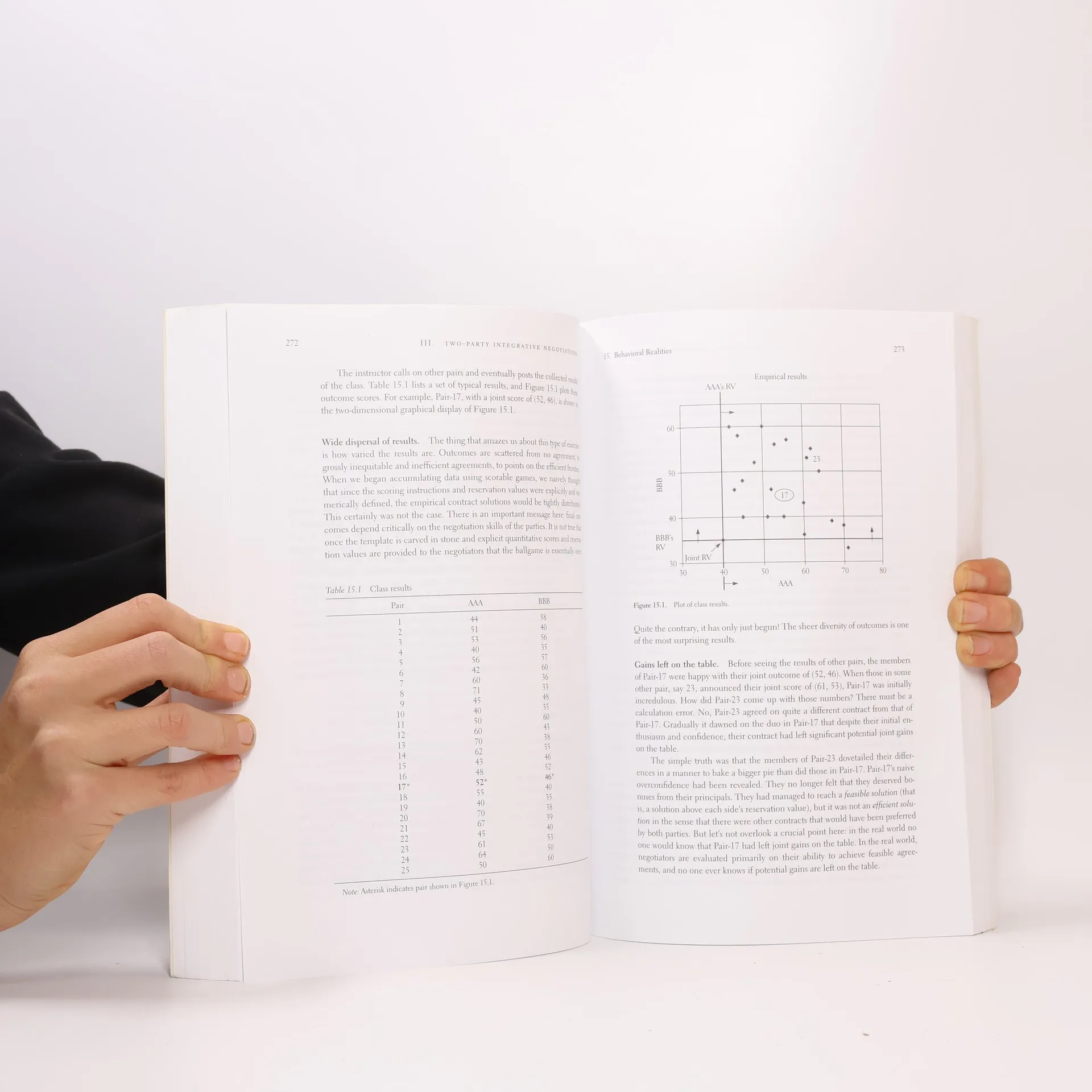
This masterly book substantially extends Howard Raiffa's earlier classic, The Art and Science of Negotiation . It does so by incorporating three additional supporting strands of inquiry: individual decision analysis, judgmental decision making, and game theory. Each strand is introduced and used in analyzing negotiations.The book starts by considering how analytically minded parties can generate joint gains and distribute them equitably by negotiating with full, open, truthful exchanges. The book then examines models that disengage step by step from that ideal. It also shows how a neutral outsider (intervenor) can help all negotiators by providing joint, neutral analysis of their problem.Although analytical in its approach--building from simple hypothetical examples--the book can be understood by those with only a high school background in mathematics. It therefore will have a broad relevance for both the theory and practice of negotiation analysis as it is applied to disputes that range from those between family members, business partners, and business competitors to those involving labor and management, environmentalists and developers, and nations.
Zakup książki
Negotiation Analysis, Howard Raiffa
- Język

- Rok wydania
- 2007
- Oprawa
- (miękka)
Metody płatności
Brakuje nam tutaj Twojej recenzji.
- Tytuł
- Negotiation Analysis
- Język
- angielski
- Autorzy
- Howard Raiffa
- Wydawca
- Harvard University Press
- Rok wydania
- 2007
- Oprawa
- miękka
- Liczba stron
- 548
- ISBN10
- 0674024141
- ISBN13
- 9780674024144
- Seria
- Tagi
- Ocena
- 4,1 z 5
- Opis
- This masterly book substantially extends Howard Raiffa's earlier classic, The Art and Science of Negotiation . It does so by incorporating three additional supporting strands of inquiry: individual decision analysis, judgmental decision making, and game theory. Each strand is introduced and used in analyzing negotiations.The book starts by considering how analytically minded parties can generate joint gains and distribute them equitably by negotiating with full, open, truthful exchanges. The book then examines models that disengage step by step from that ideal. It also shows how a neutral outsider (intervenor) can help all negotiators by providing joint, neutral analysis of their problem.Although analytical in its approach--building from simple hypothetical examples--the book can be understood by those with only a high school background in mathematics. It therefore will have a broad relevance for both the theory and practice of negotiation analysis as it is applied to disputes that range from those between family members, business partners, and business competitors to those involving labor and management, environmentalists and developers, and nations.