


Więcej o książce
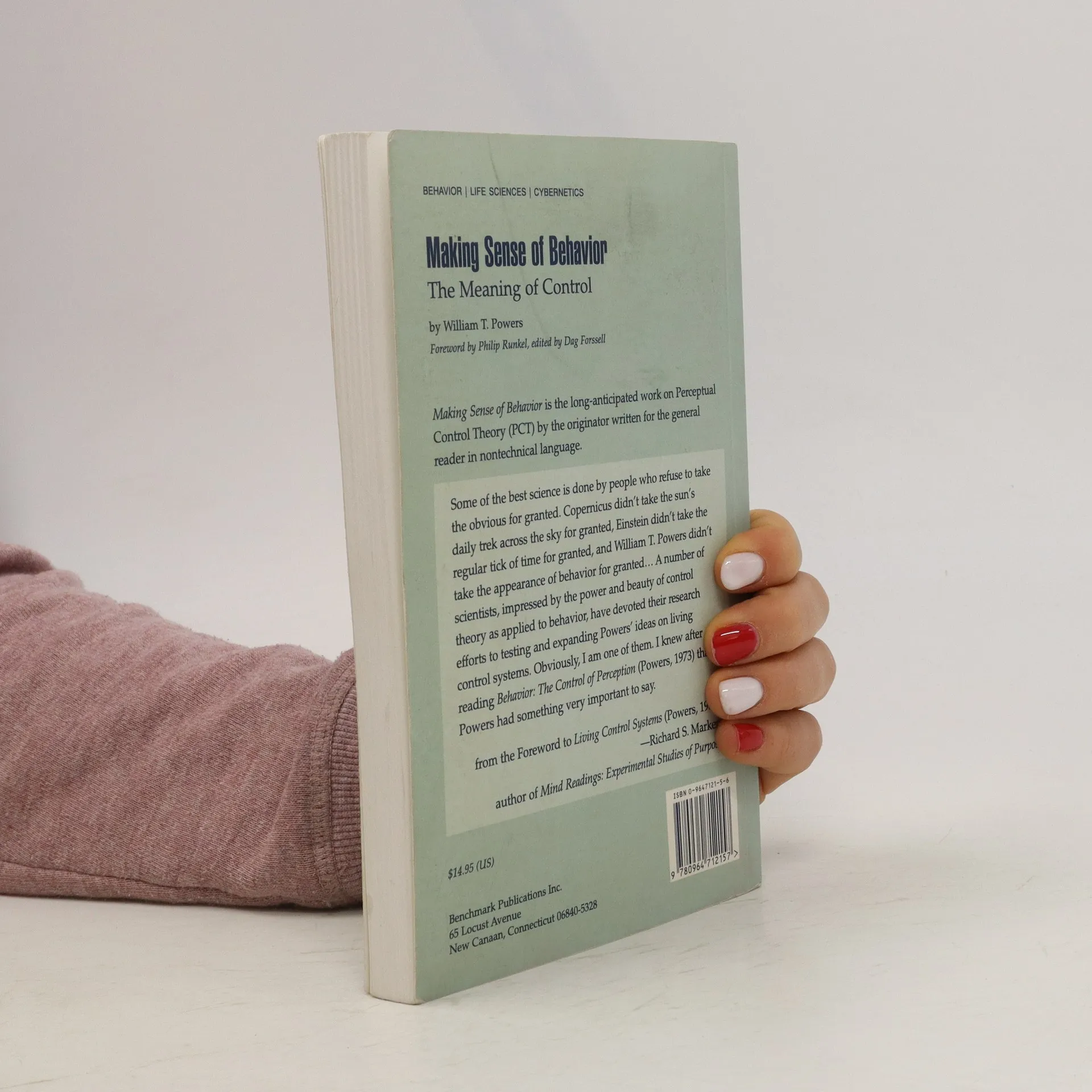
The along-anticipated work on Perceptual Control Theory (PCT) by the originator of this system of ideas, written for the general public in nontechnical language. Back cover copy by Richard S. Marken, Senior Behavior Scientist, The RAND Corporation. "Some of the best science is done by people who refust to take the obvious for granted. Copernicuss didn't take the sun's daily trek across the sky for granted, Einstein didn't take the regular tick of time for granted, and William T. Powers didn't take the appearance of behavior for granted...A number of scientsts, impressed by the power and beauty of control theory as applied to behavior, have devoted their research efforts to testing and expanding Powers' ideas on living control systems. Obviously, I am one of them. I knew after reading Behavior: the Control of Perception (Powers, 1973) that Powers had something very important to say.
Zakup książki
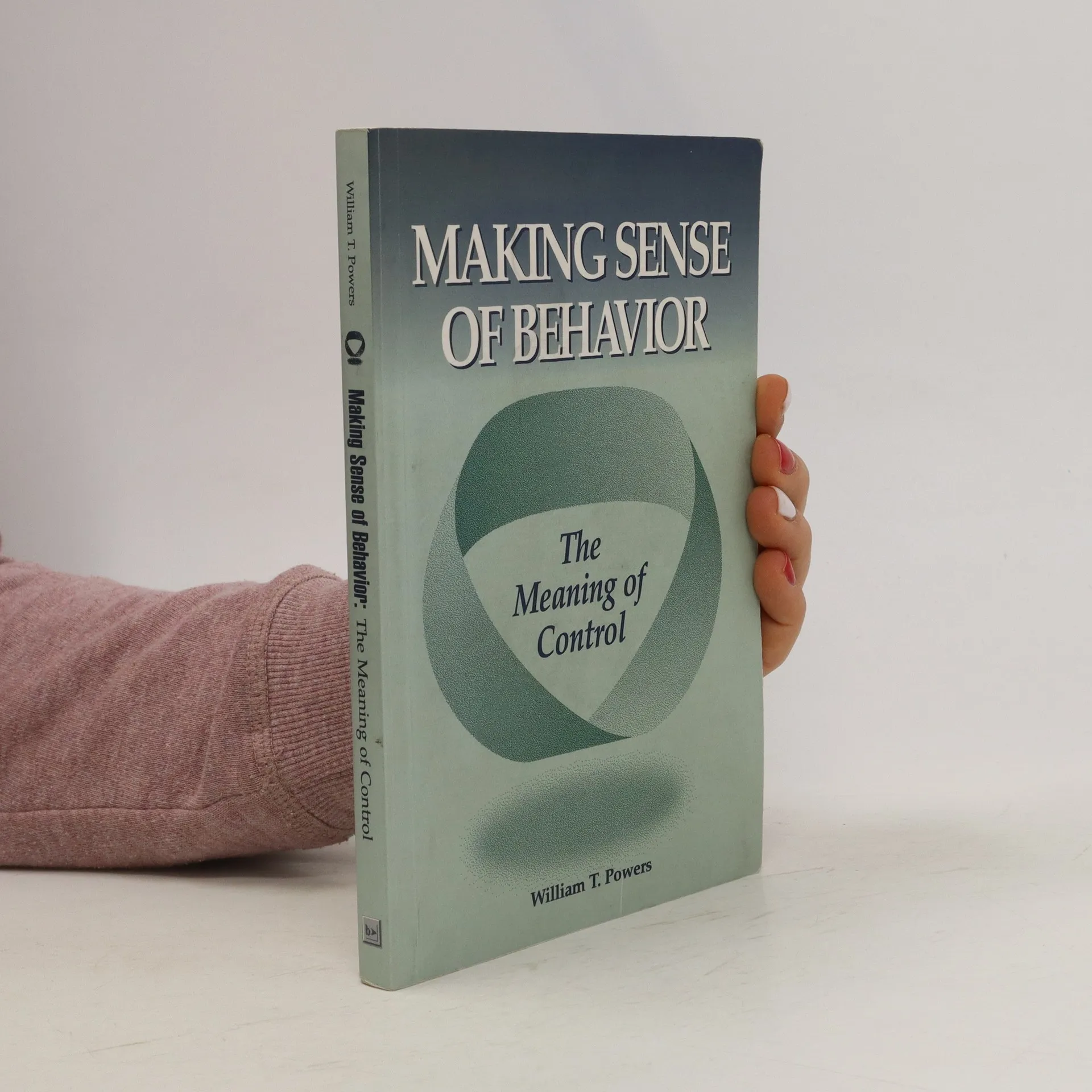
Making Sense of Behavior: The Meaning of Control, William T. Powers
- Język

- Rok wydania
- 1998
- Oprawa
- (miękka)
Metody płatności
Brakuje nam tutaj Twojej recenzji.
- Tytuł
- Making Sense of Behavior: The Meaning of Control
- Język
- angielski
- Autorzy
- William T. Powers
- Wydawca
- Benchmark Publications
- Rok wydania
- 1998
- Oprawa
- miękka
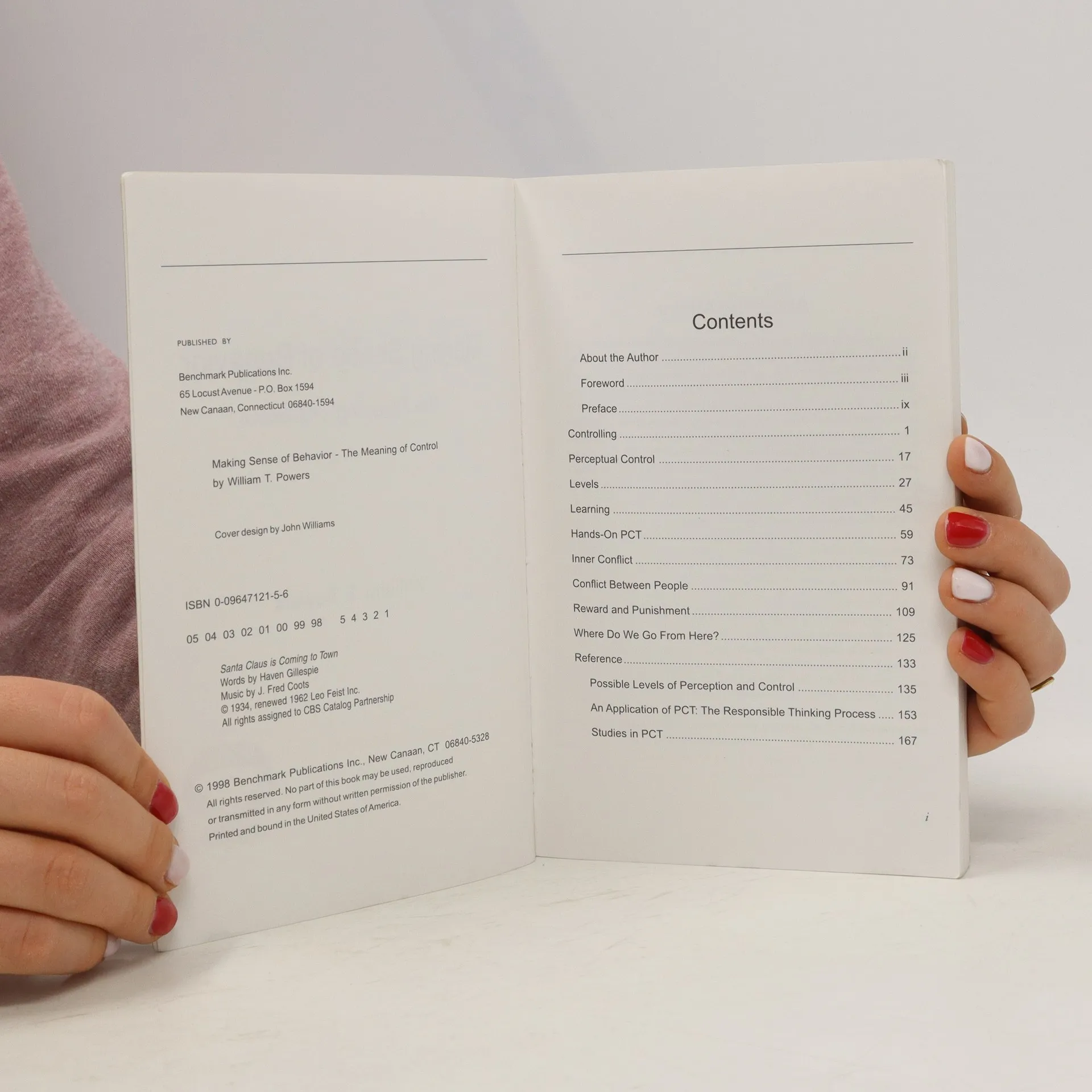
- Liczba stron
- 180
- ISBN10
- 0964712156
- ISBN13
- 9780964712157
- Seria
- Ocena
- 4 z 5
- Opis
- The along-anticipated work on Perceptual Control Theory (PCT) by the originator of this system of ideas, written for the general public in nontechnical language. Back cover copy by Richard S. Marken, Senior Behavior Scientist, The RAND Corporation. "Some of the best science is done by people who refust to take the obvious for granted. Copernicuss didn't take the sun's daily trek across the sky for granted, Einstein didn't take the regular tick of time for granted, and William T. Powers didn't take the appearance of behavior for granted...A number of scientsts, impressed by the power and beauty of control theory as applied to behavior, have devoted their research efforts to testing and expanding Powers' ideas on living control systems. Obviously, I am one of them. I knew after reading Behavior: the Control of Perception (Powers, 1973) that Powers had something very important to say.