



Więcej o książce
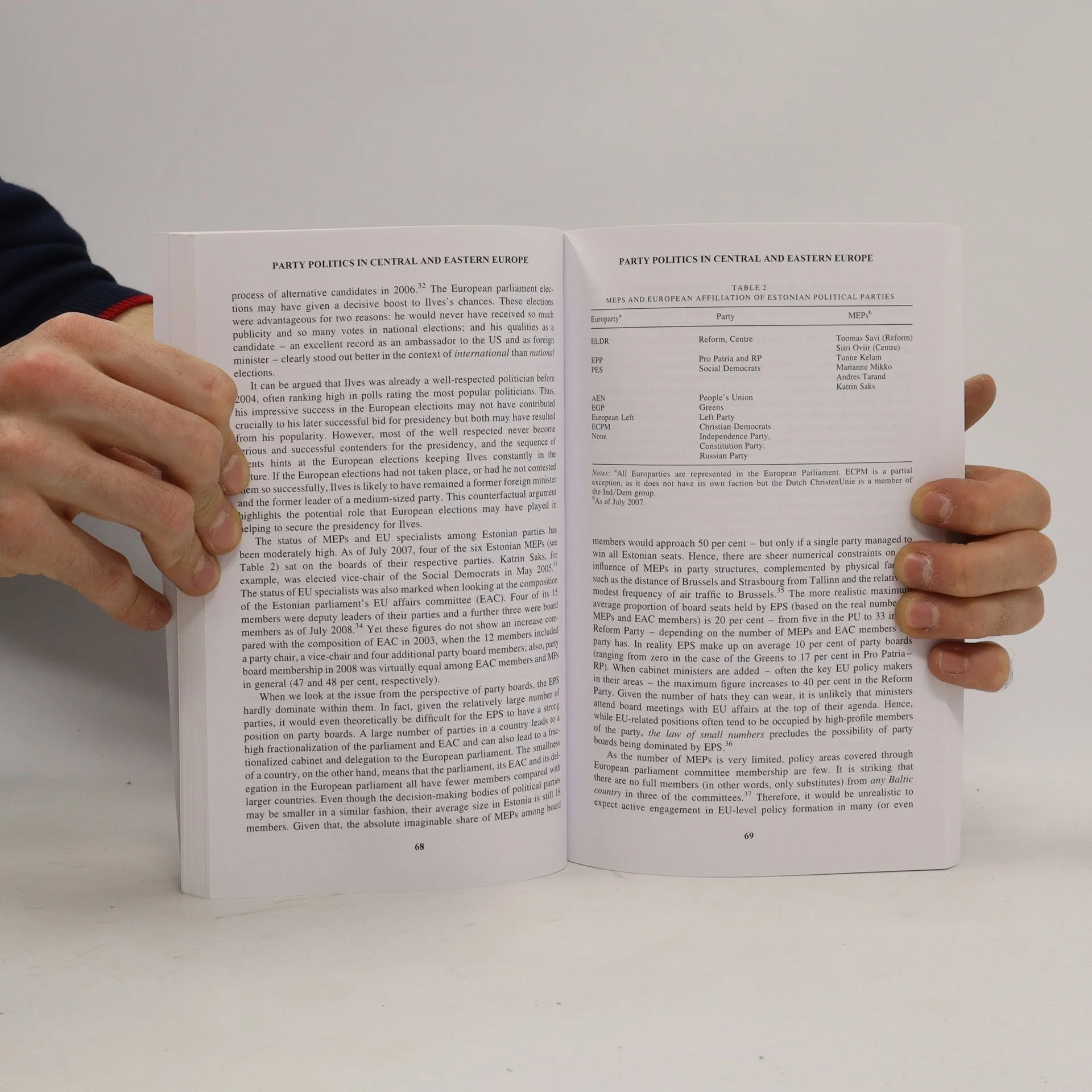
What impact has EU membership had on party politics in Central and Eastern Europe? Although there is an emerging body of literature on the Europeanization of political parties, most of these accounts focus exclusively on Western Europe. Drawing on a range of qualitative and quantitative approaches including detailed studies of party programmes and manifestos, analysis of the media, semi-structured interviews and expert surveys, this collection provides not just conceptually informed, but also empirically rooted analyses of party politics in Central and Eastern Europe during the first four years of EU membership. In particular, the contributions assess the impact of EU membership on parties' internal balance of power, the use of European issues in inter-party competition, the role of transnational party federations and the broader role the EU plays in party politics. The findings not only shed light on the impact of EU membership on party organization and programmes, they also inform broader debates concerning the dynamics, fluidity and motors of party politics in Central and Eastern Europe. This book was based on a special issue of Journal of Communist Studies and Transition Politics.
Zakup książki
Party politics in central and eastern Europe : does EU mebership matter?, Timothy Haughton
- Język

- Rok wydania
- 2011
- Oprawa
- (miękka)
Metody płatności
Nikt jeszcze nie ocenił.
- Tytuł
- Party politics in central and eastern Europe : does EU mebership matter?
- Język
- angielski
- Autorzy
- Timothy Haughton
- Rok wydania
- 2011
- Oprawa
- miękka
- Liczba stron
- 192
- ISBN10
- 0415849829
- ISBN13
- 9780415849821
- Seria
- Tagi
- Opis
- What impact has EU membership had on party politics in Central and Eastern Europe? Although there is an emerging body of literature on the Europeanization of political parties, most of these accounts focus exclusively on Western Europe. Drawing on a range of qualitative and quantitative approaches including detailed studies of party programmes and manifestos, analysis of the media, semi-structured interviews and expert surveys, this collection provides not just conceptually informed, but also empirically rooted analyses of party politics in Central and Eastern Europe during the first four years of EU membership. In particular, the contributions assess the impact of EU membership on parties' internal balance of power, the use of European issues in inter-party competition, the role of transnational party federations and the broader role the EU plays in party politics. The findings not only shed light on the impact of EU membership on party organization and programmes, they also inform broader debates concerning the dynamics, fluidity and motors of party politics in Central and Eastern Europe. This book was based on a special issue of Journal of Communist Studies and Transition Politics.