



Więcej o książce
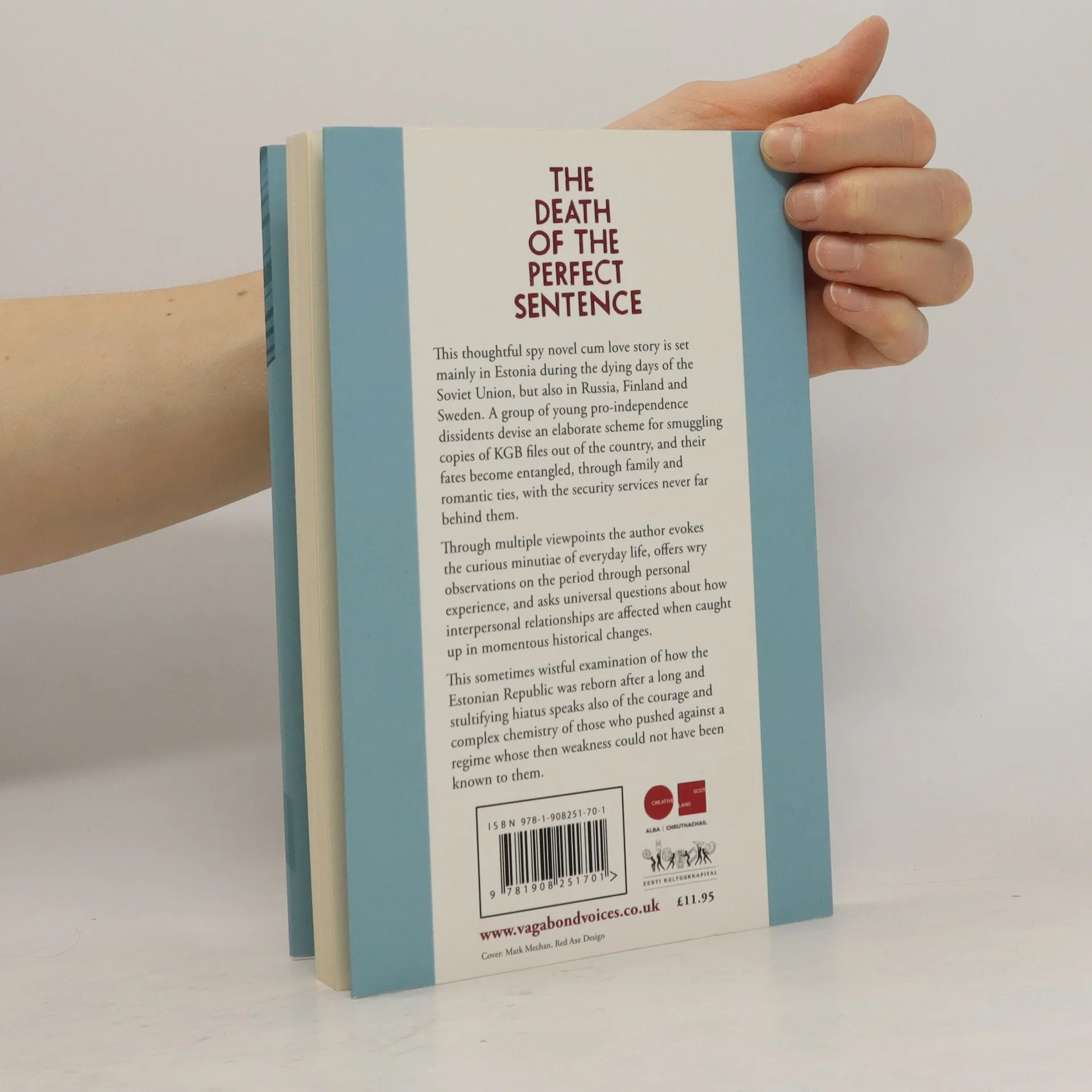
This thoughtful spy novel cum love story is set mainly in Estonia during the dying days of the Soviet Union, but also in Russia, Finland, and Sweden. A group of young pro-independence dissidents devise a scheme for smuggling copies of KGB files out of the country, and their fates become entangled, through family and romantic ties, with security services never far behind them. Multiple viewpoints evoke the curious minutiae of everyday life, offer wry observations on the period through personal experience, and ask universal questions about how interpersonal relationships are affected when caught up in momentous historical changes. This sometimes wistful examination of how the Estonian Republic was reborn speaks also of the courage and complex chemistry of those who pushed against a regime whose then weakness could not have been known.
Zakup książki
The Death of the Perfect Sentence, Rein Raud
- Język

- Rok wydania
- 2017
- Oprawa
- (miękka)
Metody płatności
Brakuje nam tutaj Twojej recenzji.
- Tytuł
- The Death of the Perfect Sentence
- Język
- angielski
- Autorzy
- Rein Raud
- Wydawca
- Vagabond Voices
- Rok wydania
- 2017
- Oprawa
- miękka
- Liczba stron
- 192
- ISBN10
- 1908251700
- ISBN13
- 9781908251701
- Seria
- Kategorie
- Tagi
- Ocena
- 3,75 z 5
- Opis
- This thoughtful spy novel cum love story is set mainly in Estonia during the dying days of the Soviet Union, but also in Russia, Finland, and Sweden. A group of young pro-independence dissidents devise a scheme for smuggling copies of KGB files out of the country, and their fates become entangled, through family and romantic ties, with security services never far behind them. Multiple viewpoints evoke the curious minutiae of everyday life, offer wry observations on the period through personal experience, and ask universal questions about how interpersonal relationships are affected when caught up in momentous historical changes. This sometimes wistful examination of how the Estonian Republic was reborn speaks also of the courage and complex chemistry of those who pushed against a regime whose then weakness could not have been known.