

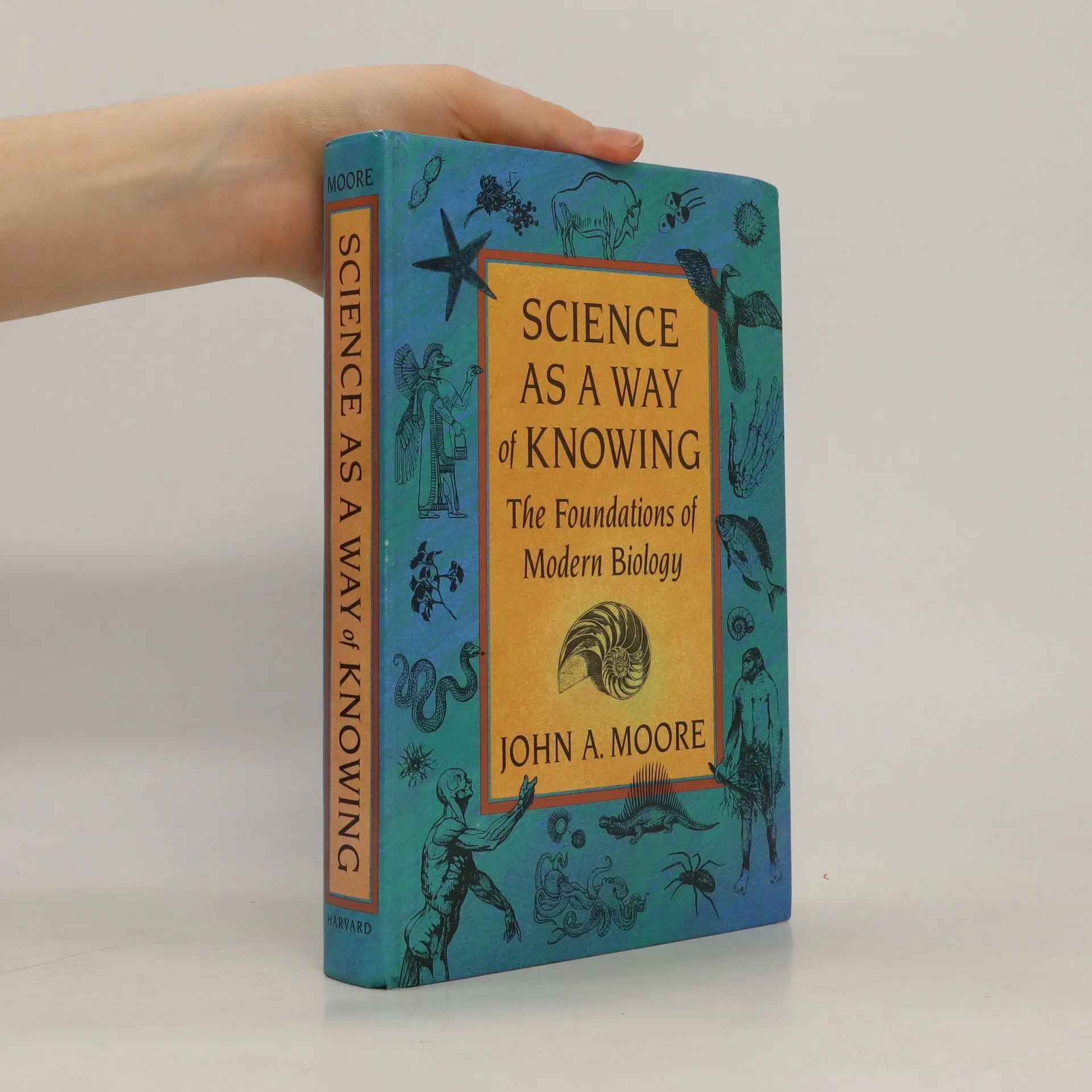


Więcej o książce
Science was not always the dominant way of knowing, as we see in this spirited exploration of how human beings over the millennia have sought to understand the phenomena of life. Central to the puzzle are several questions: How did living matter arise, and how does it reproduce itself? How does life develop from a single cell into a complex organism? And how did the vast variety of species we see around us, and those long-extinct, come to be? One of the intellectual wonders of our time has been biologists' gradual untangling of these great mysteries, beginning with the investigations of Aristotle and the Greeks, continuing through the experiments and theories of Darwin and his contemporaries, and culminating in the researches of geneticists, developmental biologists, paleontologists, and other specialists in the twentieth century.
Zakup książki
Science as a Way of Knowing, John Alexander Moore
- Język

- Rok wydania
- 1993
- Oprawa
- (twarda)
Metody płatności
Brakuje nam tutaj Twojej recenzji.
- Tytuł
- Science as a Way of Knowing
- Język
- angielski
- Autorzy
- John Alexander Moore
- Wydawca
- Harvard University Press
- Rok wydania
- 1993
- Oprawa
- twarda
- Liczba stron
- 544
- ISBN10
- 0674794818
- ISBN13
- 9780674794818
- Seria
- Tagi
- Nauki przyrodnicze, Nauka
- Ocena
- 4 z 5
- Opis
- Science was not always the dominant way of knowing, as we see in this spirited exploration of how human beings over the millennia have sought to understand the phenomena of life. Central to the puzzle are several questions: How did living matter arise, and how does it reproduce itself? How does life develop from a single cell into a complex organism? And how did the vast variety of species we see around us, and those long-extinct, come to be? One of the intellectual wonders of our time has been biologists' gradual untangling of these great mysteries, beginning with the investigations of Aristotle and the Greeks, continuing through the experiments and theories of Darwin and his contemporaries, and culminating in the researches of geneticists, developmental biologists, paleontologists, and other specialists in the twentieth century.