



Więcej o książce
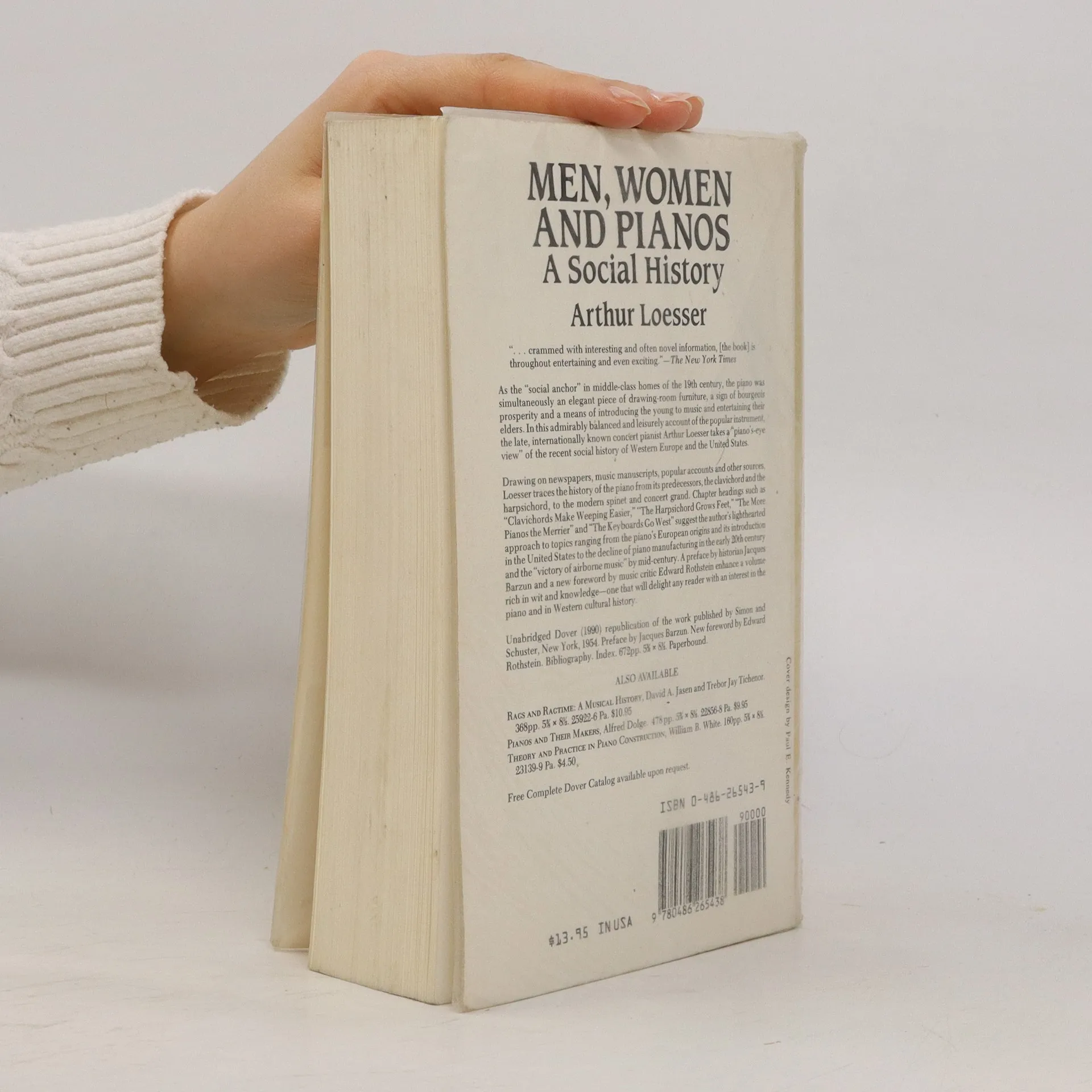
As the "social anchor" in middle-class homes of the nineteenth century, the piano was simultaneously an elegant piece of drawing-room furniture, a sign of bourgeois prosperity, and a means of introducing the young to music. In this admirably balanced and leisurely account of the popular instrument, the late, internationally known concert pianist Arthur Loesser takes a "piano's-eye view" of the recent social history of Western Europe and the United States.Drawing on newspapers, music manuscripts, popular accounts, and other sources, Loesser traces the history of the piano from its predecessors, the clavichord and the harpsichord, to the modern spinet and concert grand. Chapter headings such as "Clavichords Make Weeping Easier," "The Harpsichord Grows Feet," "The More Pianos the Merrier," and "The Keyboards Go West" suggest the author's lighthearted approach to topics ranging from the piano's European origins and its introduction in the United States to the decline of piano manufacturing in the early twentieth century and the "victory of airborne music" by mid-century. A preface by historian Jacques Barzun and a new foreword by music critic Edward Rothstein enhance a volume rich in wit and knowledge — one that will delight any reader with an interest in the piano and on Western cultural history.
Zakup książki
Men, Women and Pianos. A Social History, Arthur Loesser
- Język

- Rok wydania
- 1991
- Oprawa
- (miękka)
Metody płatności
Brakuje nam tutaj Twojej recenzji.
- Tytuł
- Men, Women and Pianos. A Social History
- Język
- angielski
- Autorzy
- Arthur Loesser
- Wydawca
- Dover Publications
- Rok wydania
- 1991
- Oprawa
- miękka
- Liczba stron
- 672
- ISBN10
- 0486265439
- ISBN13
- 9780486265438
- Seria
- Kategorie
- Ocena
- 4,05 z 5
- Opis
- As the "social anchor" in middle-class homes of the nineteenth century, the piano was simultaneously an elegant piece of drawing-room furniture, a sign of bourgeois prosperity, and a means of introducing the young to music. In this admirably balanced and leisurely account of the popular instrument, the late, internationally known concert pianist Arthur Loesser takes a "piano's-eye view" of the recent social history of Western Europe and the United States.Drawing on newspapers, music manuscripts, popular accounts, and other sources, Loesser traces the history of the piano from its predecessors, the clavichord and the harpsichord, to the modern spinet and concert grand. Chapter headings such as "Clavichords Make Weeping Easier," "The Harpsichord Grows Feet," "The More Pianos the Merrier," and "The Keyboards Go West" suggest the author's lighthearted approach to topics ranging from the piano's European origins and its introduction in the United States to the decline of piano manufacturing in the early twentieth century and the "victory of airborne music" by mid-century. A preface by historian Jacques Barzun and a new foreword by music critic Edward Rothstein enhance a volume rich in wit and knowledge — one that will delight any reader with an interest in the piano and on Western cultural history.