



Więcej o książce
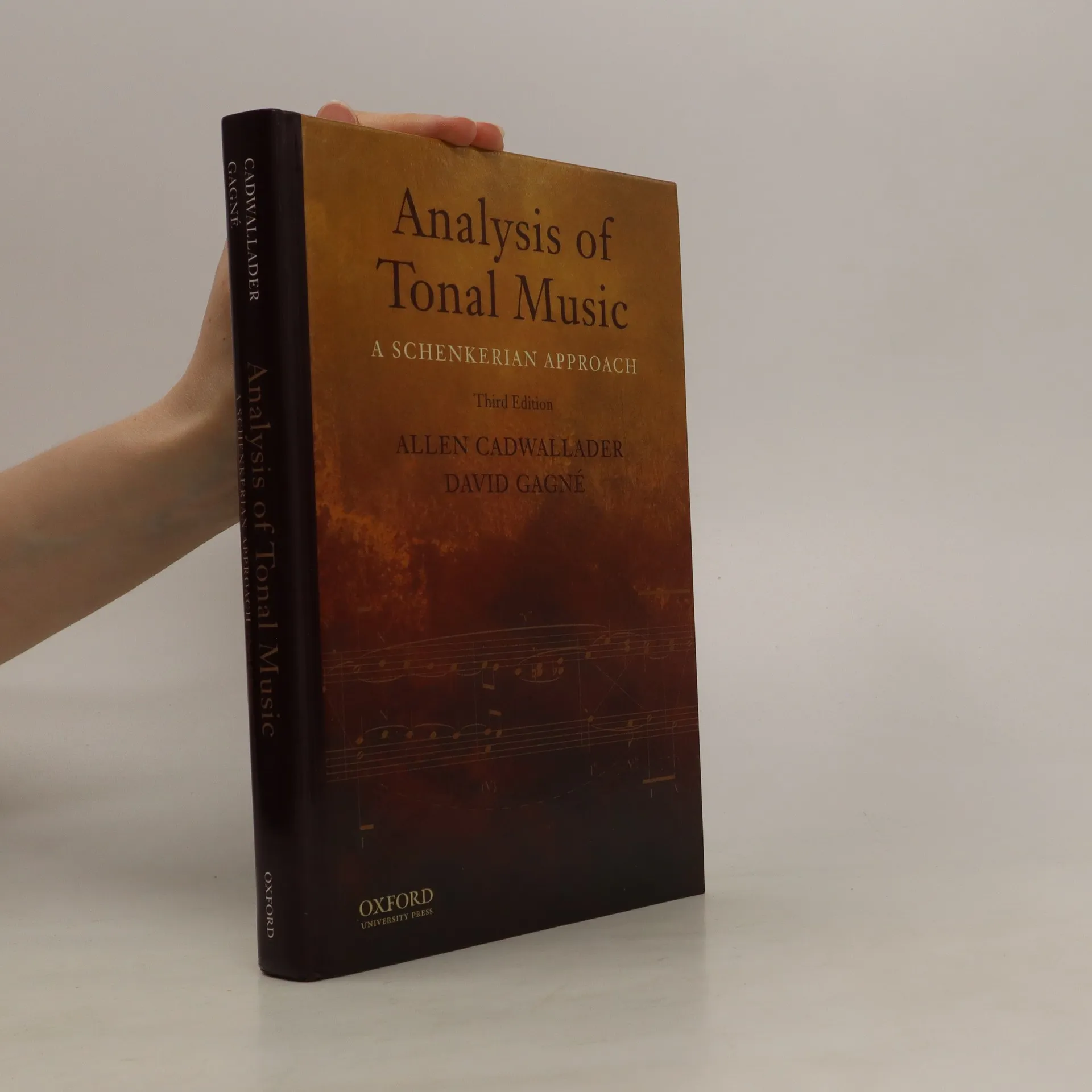
This comprehensive introduction to Schenkerian technique offers a logically organized exploration of its fundamental principles. Authors Allen Cadwallader and David Gagné emphasize specific, memorable compositions over stereotypical models, enabling students to critically engage with music and enhance their understanding and performance of Western art music. Part 1 introduces essential concepts such as melody, counterpoint, bass-line structures, the imaginary continuo, linear techniques, and the Ursatz (fundamental structure). Part 2 categorizes complete compositions, starting with one-part forms and progressing through binary, ternary, and rondo forms to the sonata principle. The book features over 200 analytical graphs, including new additions, an appendix on graphic notation, and a bibliography. In the third edition, references to strict counterpoint principles are more frequent, and discussions of harmonic structure and the imaginary continuo are enhanced. Emphasis on Schenker's ideas regarding musical form is increased throughout Part 2, and Chapter 9 is reordered to align with his concepts. A new analysis of a Brahms Intermezzo is included, along with a revised concluding chapter addressing Schenker's views on form and structural paradigms. Additionally, a thoroughly revised Student Workbook is provided to assist students in the analysis process.
Zakup książki
Analysis of Tonal Music, Allen Cadwallader, David Gagné
- Język

- Rok wydania
- 2011
- Oprawa
- (twarda)
Metody płatności
Brakuje nam tutaj Twojej recenzji.
- Tytuł
- Analysis of Tonal Music
- Język
- angielski
- Autorzy
- Allen Cadwallader, David Gagné
- Wydawca
- Oxford University Press
- Rok wydania
- 2011
- Oprawa
- twarda
- Liczba stron
- 432
- ISBN10
- 0199732477
- ISBN13
- 9780199732470
- Seria
- Ocena
- 4,1 z 5
- Opis
- This comprehensive introduction to Schenkerian technique offers a logically organized exploration of its fundamental principles. Authors Allen Cadwallader and David Gagné emphasize specific, memorable compositions over stereotypical models, enabling students to critically engage with music and enhance their understanding and performance of Western art music. Part 1 introduces essential concepts such as melody, counterpoint, bass-line structures, the imaginary continuo, linear techniques, and the Ursatz (fundamental structure). Part 2 categorizes complete compositions, starting with one-part forms and progressing through binary, ternary, and rondo forms to the sonata principle. The book features over 200 analytical graphs, including new additions, an appendix on graphic notation, and a bibliography. In the third edition, references to strict counterpoint principles are more frequent, and discussions of harmonic structure and the imaginary continuo are enhanced. Emphasis on Schenker's ideas regarding musical form is increased throughout Part 2, and Chapter 9 is reordered to align with his concepts. A new analysis of a Brahms Intermezzo is included, along with a revised concluding chapter addressing Schenker's views on form and structural paradigms. Additionally, a thoroughly revised Student Workbook is provided to assist students in the analysis process.