

Więcej o książce
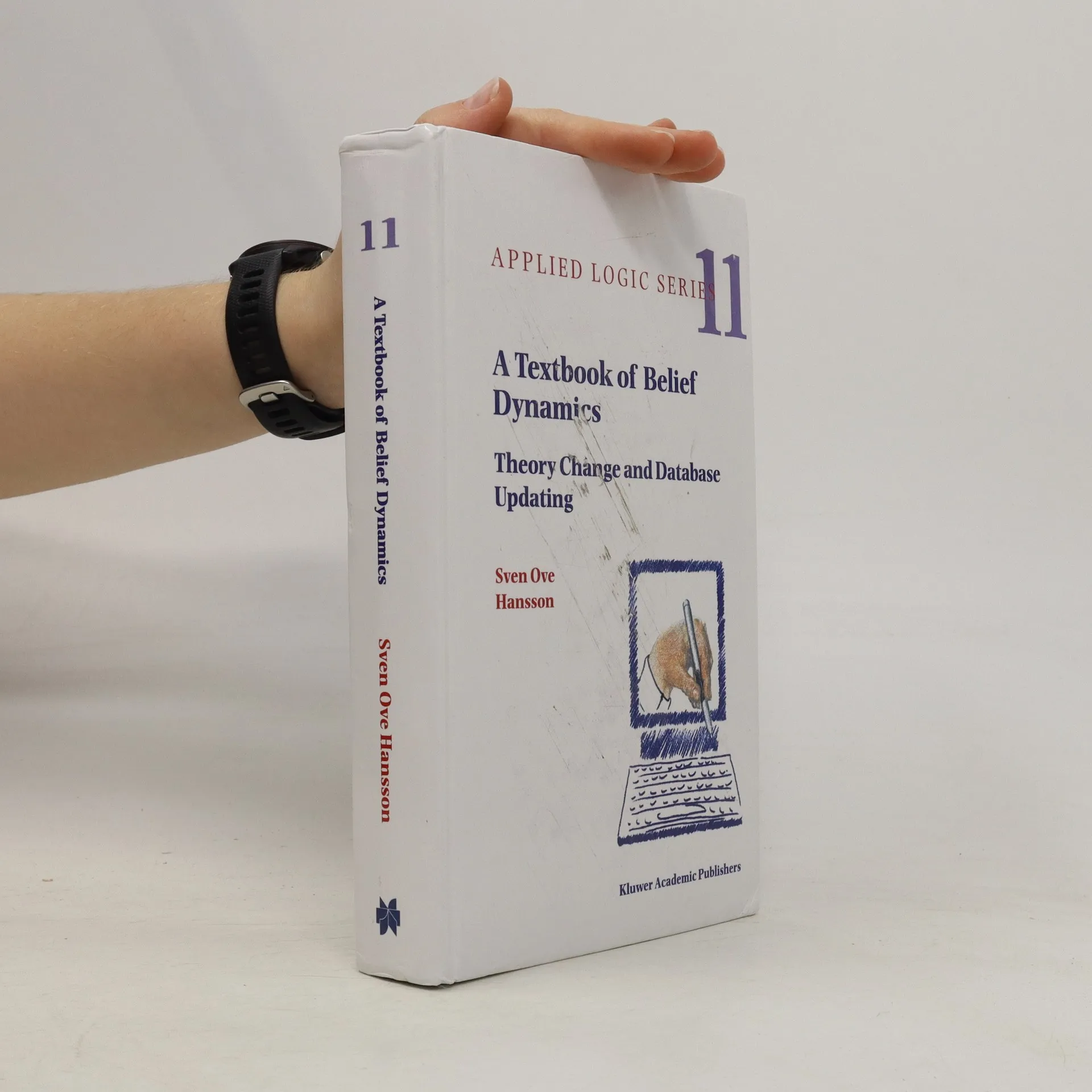
The mid-1980s saw the discovery of logical tools that make it possible to model changes in belief and knowledge in entirely new ways. These logical tools turned out to be applicable to both human beliefs and to the contents of databases. Philosophers, logicians, and computer scientists have contributed to making this interdisciplinary field one of the most exciting in the cognitive scientists - and one that is expanding rapidly. This, the first textbook in the new area, contains both discursive chapters with a minimum of formalism and formal chapters in which proofs and proof methods are presented. Using different selections from the formal sections, according to the author's detailed advice, allows the book to be used at all levels of university education. A supplementary volume contains solutions to the 210 exercises. The volume's unique, comprehensive coverage means that it can also be used by specialists in the field of belief dynamics and related areas, such as non-monotonic reasoning and knowledge representation.
Zakup książki
A Textbook of Belief Dynamics, Sven Ove Hansson
- Język

- Rok wydania
- 1999
- Oprawa
- (twarda)
Metody płatności
Brakuje nam tutaj Twojej recenzji.
- Tytuł
- A Textbook of Belief Dynamics
- Język
- angielski
- Autorzy
- Sven Ove Hansson
- Wydawca
- Springer
- Rok wydania
- 1999
- Oprawa
- twarda
- ISBN10
- 0792353242
- ISBN13
- 9780792353249
- Seria
- Kategorie
- Tagi
- Podręczniki
- Ocena
- 3 z 5
- Opis
- The mid-1980s saw the discovery of logical tools that make it possible to model changes in belief and knowledge in entirely new ways. These logical tools turned out to be applicable to both human beliefs and to the contents of databases. Philosophers, logicians, and computer scientists have contributed to making this interdisciplinary field one of the most exciting in the cognitive scientists - and one that is expanding rapidly. This, the first textbook in the new area, contains both discursive chapters with a minimum of formalism and formal chapters in which proofs and proof methods are presented. Using different selections from the formal sections, according to the author's detailed advice, allows the book to be used at all levels of university education. A supplementary volume contains solutions to the 210 exercises. The volume's unique, comprehensive coverage means that it can also be used by specialists in the field of belief dynamics and related areas, such as non-monotonic reasoning and knowledge representation.