

Więcej o książce
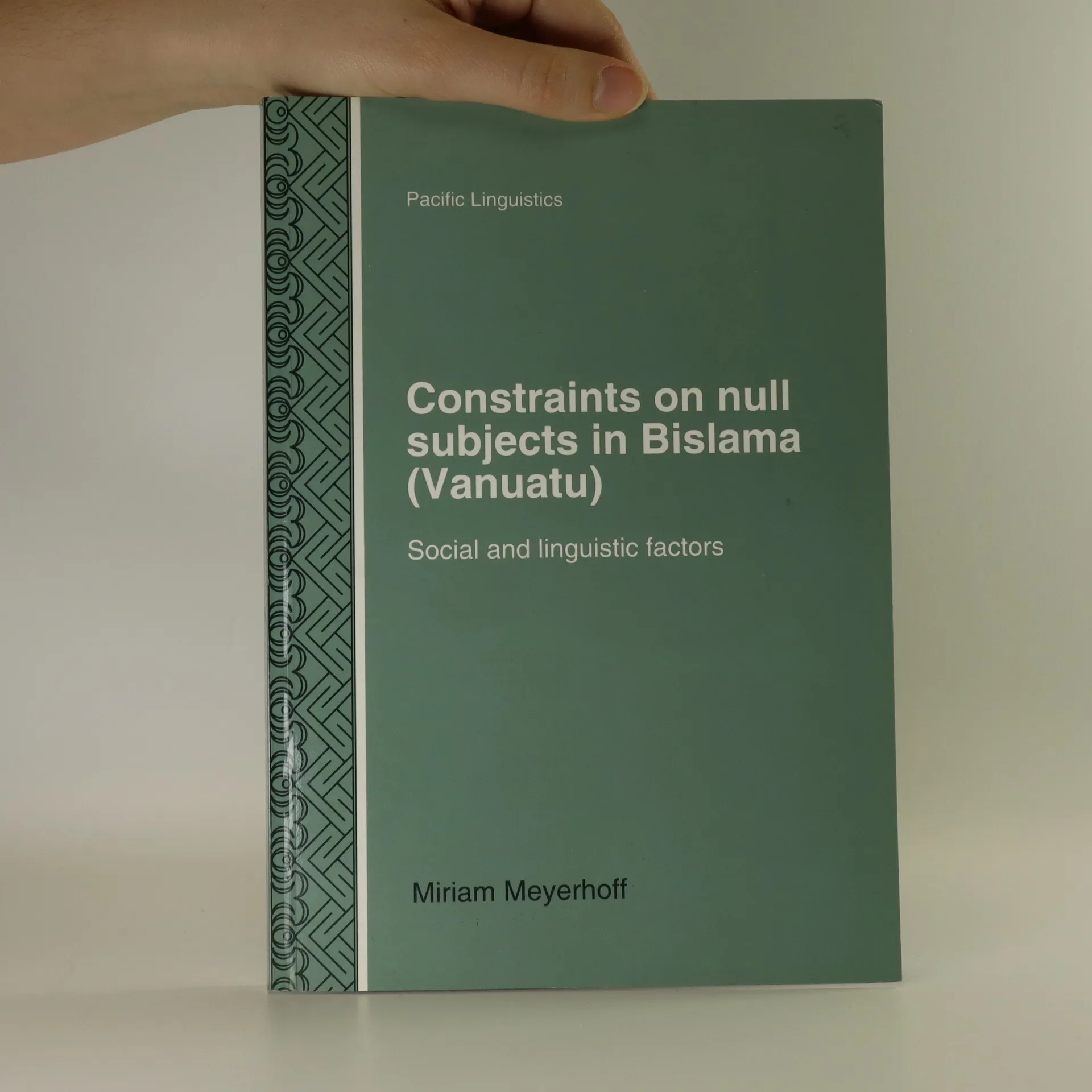
How can developments in a contact language inform the inquiry into the structural nature of language? How do they help us better understand the nature of language change and the processes of grammaticisation? Using data from everyday conversations in Bislama (the national language of Vanuatu), this book focuses on one variable, the alternation between overt pronominal and phonetically null subjects. It shows how an emergent system of subject-verb agreement in Bislama interacts with functional constraints on the interpretability of a subject; this interaction accounts for much of the alternation between the two forms of subject. The rich array of social functions that Bislama serves in the communities studied is examined in some detail, and yet it is shown that as Bislama becomes increasingly elaborate morphosyntactically, this kind of structural innovation takes place largely independently of social factors. By adopting the methods of sociolinguistics grounded in participant observation, and being grounded in theoretical treatments of subject agreement, this volume shows how the study of change in a contact language helps to bridge issues in different subfields of linguistics.
Zakup książki
Constraints on null subjects in Bislama (Vanuatu), Miriam Meyerhoff
- Język

- Rok wydania
- 2000
- Oprawa
- (miękka)
Metody płatności
Nikt jeszcze nie ocenił.
- Tytuł
- Constraints on null subjects in Bislama (Vanuatu)
- Język
- angielski
- Autorzy
- Miriam Meyerhoff
- Rok wydania
- 2000
- Oprawa
- miękka
- Liczba stron
- 206
- ISBN10
- 0858835223
- ISBN13
- 9780858835221
- Seria
- Kategorie
- Opis
- How can developments in a contact language inform the inquiry into the structural nature of language? How do they help us better understand the nature of language change and the processes of grammaticisation? Using data from everyday conversations in Bislama (the national language of Vanuatu), this book focuses on one variable, the alternation between overt pronominal and phonetically null subjects. It shows how an emergent system of subject-verb agreement in Bislama interacts with functional constraints on the interpretability of a subject; this interaction accounts for much of the alternation between the two forms of subject. The rich array of social functions that Bislama serves in the communities studied is examined in some detail, and yet it is shown that as Bislama becomes increasingly elaborate morphosyntactically, this kind of structural innovation takes place largely independently of social factors. By adopting the methods of sociolinguistics grounded in participant observation, and being grounded in theoretical treatments of subject agreement, this volume shows how the study of change in a contact language helps to bridge issues in different subfields of linguistics.