

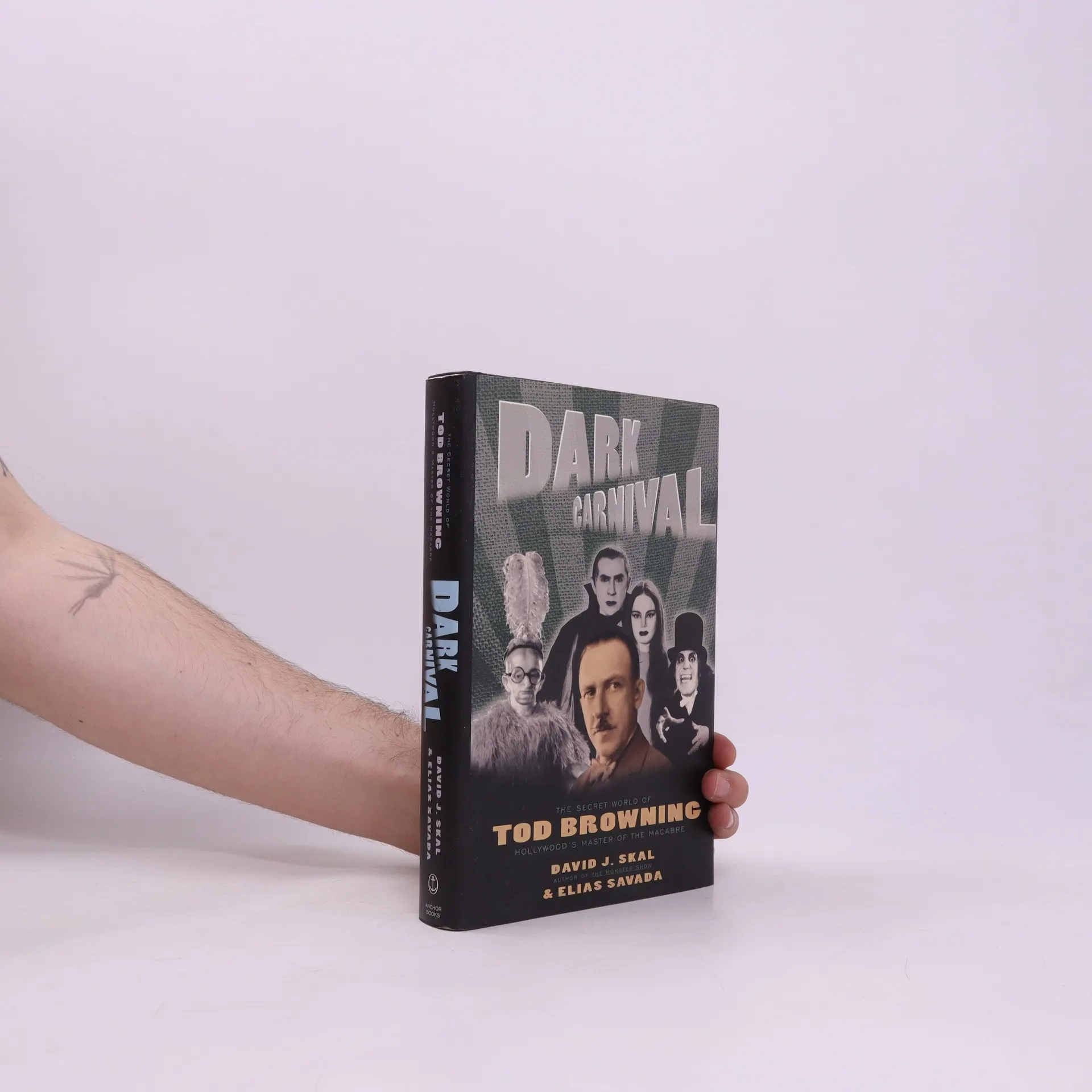

Więcej o książce
His career virtually began with that of motion pictures (he was an actor for D.W. Griffith), but filmmaker Tod Browning is remembered today for two early sound masterworks of horror: Dracula (1931), starring Bela Lugosi, and Freaks (1932), the bizarre, disquieting story of a traveling sideshow, cast with real-life human oddities. The outraged public reaction to the latter, which was quickly pulled from circulation, effectively derailed Browning's career. After a few final films, he withdrew to an eccentric retirement in Malibu until his death in 1962. Although his work was rediscovered by movie aficionados--Freaks became an arthouse staple in the antiestablishment 1960s--the director himself has remained largely anonymous. Skal and Savada rectify that situation with a detailed, painstakingly researched biography that draws on unpublished interviews with Browning's coworkers and friends as well as the new contributions of surviving family members. They call Browning's reclusive career and its dissolution 'one of Hollywood's most mysterious vanishing acts.' Their illuminating work should help win him his just place in the annals of cinema. - Gordon Flagg--BL 10/15/1995
Zakup książki
Dark Carnival, David J. Skal, Elias Savada
- Język

- Rok wydania
- 1995
- Oprawa
- (twarda)
Metody płatności
Brakuje nam tutaj Twojej recenzji.
- Tytuł
- Dark Carnival
- Język
- angielski
- Autorzy
- David J. Skal, Elias Savada
- Wydawca
- Doubleday
- Rok wydania
- 1995
- Oprawa
- twarda
- ISBN10
- 0385474067
- ISBN13
- 9780385474061
- Seria
- Kategorie
- Ocena
- 4,05 z 5
- Opis
- His career virtually began with that of motion pictures (he was an actor for D.W. Griffith), but filmmaker Tod Browning is remembered today for two early sound masterworks of horror: Dracula (1931), starring Bela Lugosi, and Freaks (1932), the bizarre, disquieting story of a traveling sideshow, cast with real-life human oddities. The outraged public reaction to the latter, which was quickly pulled from circulation, effectively derailed Browning's career. After a few final films, he withdrew to an eccentric retirement in Malibu until his death in 1962. Although his work was rediscovered by movie aficionados--Freaks became an arthouse staple in the antiestablishment 1960s--the director himself has remained largely anonymous. Skal and Savada rectify that situation with a detailed, painstakingly researched biography that draws on unpublished interviews with Browning's coworkers and friends as well as the new contributions of surviving family members. They call Browning's reclusive career and its dissolution 'one of Hollywood's most mysterious vanishing acts.' Their illuminating work should help win him his just place in the annals of cinema. - Gordon Flagg--BL 10/15/1995