



Więcej o książce
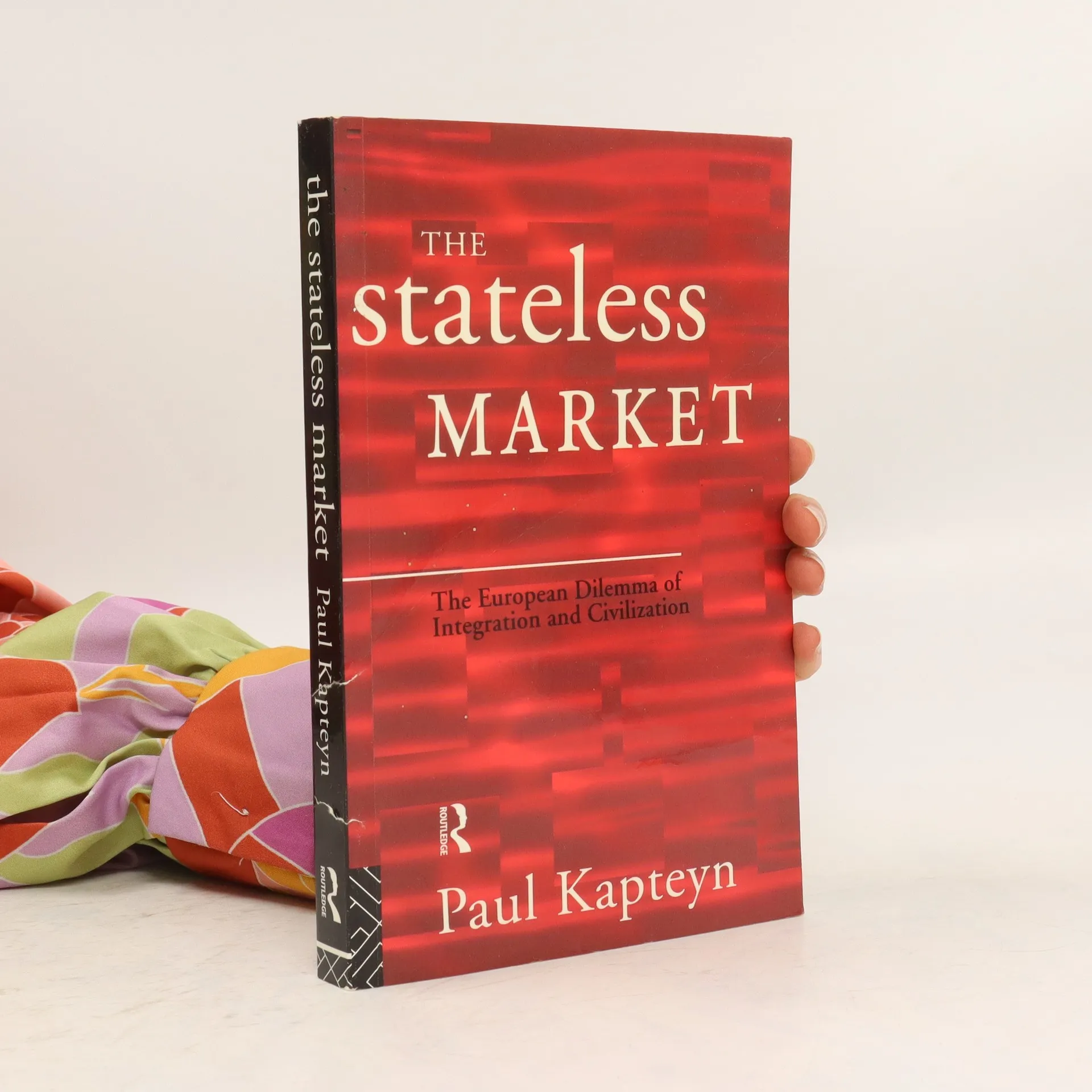
This book offers a broad view of the tension between state and market in the political evolution of the European Union. Contemporary developments and issues are set within the historical context of state formation. Paul Kapteyn argues that states are invariably formed by violent conquest, or by fusion in the face of an external threat; and that markets can emerge only only when the state has been established. He points out that while the histories of France, Britain, The Netherlands and Germany conform to these rules, the European Union does not; and he goes on to explore the reasons why this is not so, and its implications. The second section of the book is based on empirical research. Paul Kapteyn underpins his theoretical and historical argument with an analysis of official documents, newspaper articles and interviews with Eurocrats form the various member states. He concentrates especially on two case studies, of the Treaty of Schengen on judicial cooperation and harmonization, and of the problem of EU fraud. He also looks closely at eh consquences of the Maastricht Treaty. The Stateless Marlet is a thought-provoking text, ideally suited to students on European studies, politics, international relations and sociology courses. it will also be of great interest to those professionally concerned with European integration.
Zakup książki
The Stateless Market, Paul Kapteyn
- Język

- Rok wydania
- 1996
- Oprawa
- (miękka)
Metody płatności
Nikt jeszcze nie ocenił.
- Tytuł
- The Stateless Market
- Język
- angielski
- Autorzy
- Paul Kapteyn
- Wydawca
- Routledge
- Rok wydania
- 1996
- Oprawa
- miękka
- Liczba stron
- 208
- ISBN10
- 0415122333
- ISBN13
- 9780415122337
- Seria
- Tagi
- Biznes
- Opis
- This book offers a broad view of the tension between state and market in the political evolution of the European Union. Contemporary developments and issues are set within the historical context of state formation. Paul Kapteyn argues that states are invariably formed by violent conquest, or by fusion in the face of an external threat; and that markets can emerge only only when the state has been established. He points out that while the histories of France, Britain, The Netherlands and Germany conform to these rules, the European Union does not; and he goes on to explore the reasons why this is not so, and its implications. The second section of the book is based on empirical research. Paul Kapteyn underpins his theoretical and historical argument with an analysis of official documents, newspaper articles and interviews with Eurocrats form the various member states. He concentrates especially on two case studies, of the Treaty of Schengen on judicial cooperation and harmonization, and of the problem of EU fraud. He also looks closely at eh consquences of the Maastricht Treaty. The Stateless Marlet is a thought-provoking text, ideally suited to students on European studies, politics, international relations and sociology courses. it will also be of great interest to those professionally concerned with European integration.