


Więcej o książce
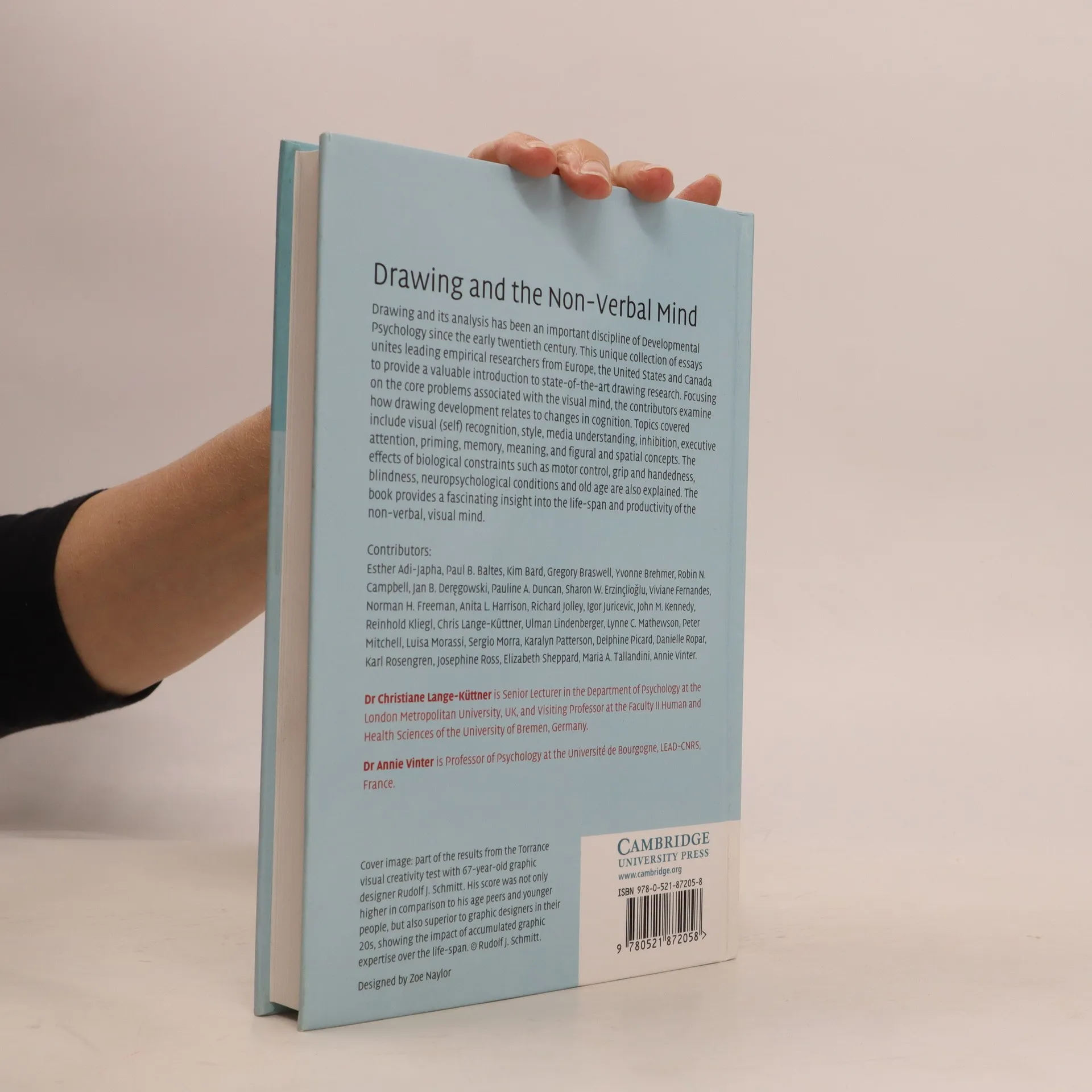
Drawing and its analysis has been an important discipline of Developmental Psychology since the early twentieth century. This unique collection of essays unites leading empirical researchers from Europe, the United States and Canada to provide a valuable introduction to drawing research. Focusing on the core problems associated with the visual mind, the contributors examine how drawing development relates to changes in cognition. Topics covered include visual (self) recognition, style, media understanding, inhibition, executive attention, priming, memory, meaning, and figural and spatial concepts. The effects of biological constraints such as motor control, grip and handedness, blindness, neuropsychological conditions and old age are also explained. The book provides a fascinating insight into the life-span and productivity of the non-verbal, visual mind.
Zakup książki
Drawing and the non-verbal mind : a life-span perspective, Annie Vinter, Christiane LangeKüttner
- Język

- Rok wydania
- 2008
- Oprawa
- (twarda)
Metody płatności
Nikt jeszcze nie ocenił.
- Tytuł
- Drawing and the non-verbal mind : a life-span perspective
- Język
- angielski
- Autorzy
- Annie Vinter, Christiane LangeKüttner
- Wydawca
- Cambridge University Press
- Rok wydania
- 2008
- Oprawa
- twarda
- Liczba stron
- 384
- ISBN10
- 0521872057
- ISBN13
- 9780521872058
- Seria
- Kategorie
- Tagi
- Sztuki piękne
- Opis
- Drawing and its analysis has been an important discipline of Developmental Psychology since the early twentieth century. This unique collection of essays unites leading empirical researchers from Europe, the United States and Canada to provide a valuable introduction to drawing research. Focusing on the core problems associated with the visual mind, the contributors examine how drawing development relates to changes in cognition. Topics covered include visual (self) recognition, style, media understanding, inhibition, executive attention, priming, memory, meaning, and figural and spatial concepts. The effects of biological constraints such as motor control, grip and handedness, blindness, neuropsychological conditions and old age are also explained. The book provides a fascinating insight into the life-span and productivity of the non-verbal, visual mind.