

Więcej o książce
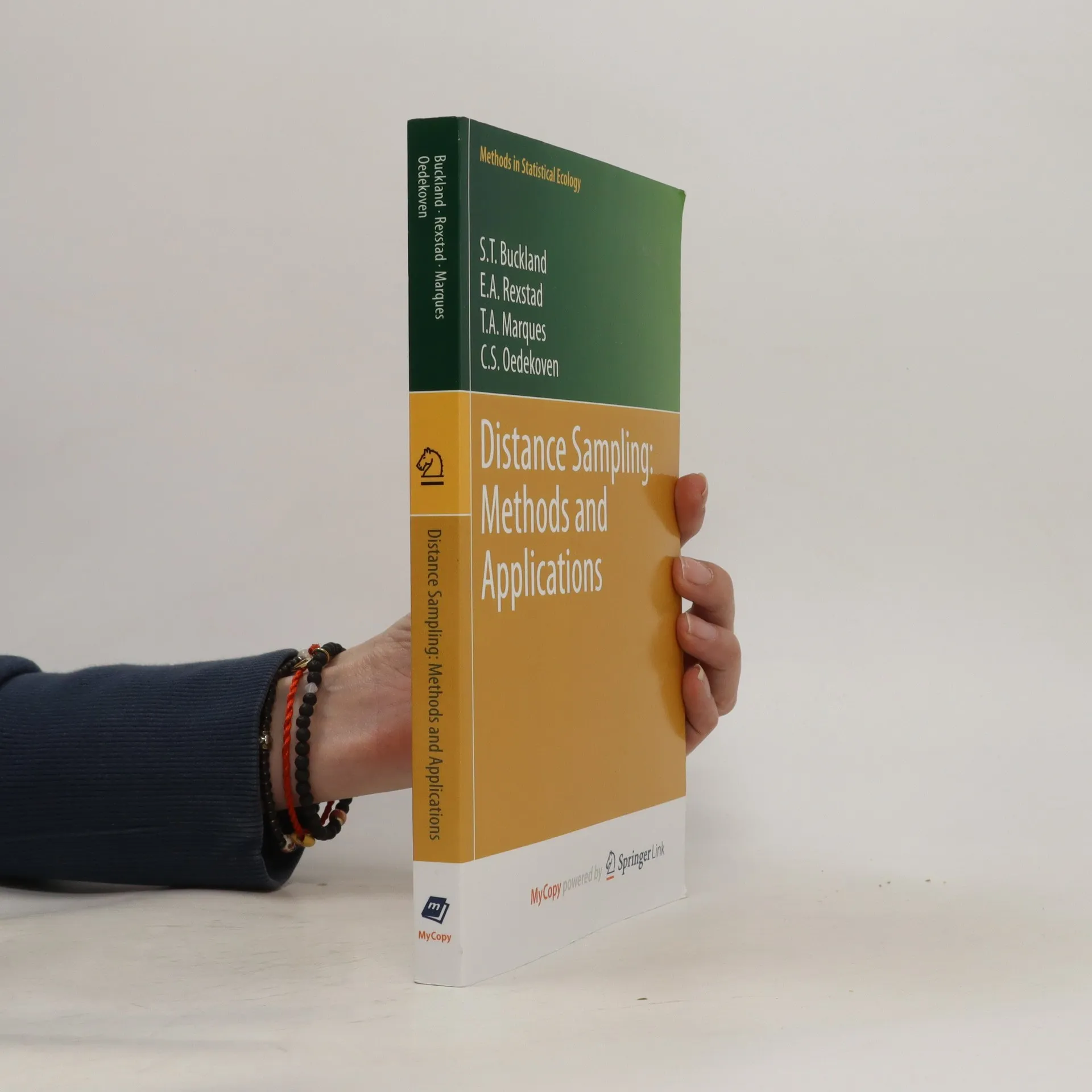
This book explores essential methods and recent advancements in distance sampling, valuable for practitioners and the broader field of ecology. As the fourth installment dedicated to this topic, it reflects on developments over the past decade, highlighting the most useful advancements. The text is self-contained, revisiting earlier topics while incorporating new methods, software, and applications. Distance sampling encompasses techniques like line and point transect sampling to estimate animal density or abundance based on distances to detected individuals. Illustrated through case studies, the book provides datasets and computer code via an accompanying website, utilizing both the software Distance and R code. Organized into three parts, the first section covers basic methods, survey design, distance sampling experiments, field methods, and data issues. The second part focuses on various modeling approaches for distance sampling data. The final section discusses variations of the basic method, special considerations for different taxa (such as songbirds, seabirds, cetaceans, primates, ungulates, butterflies, and plants), advancements addressing key assumption failures, and includes a checklist for survey conductors.
Zakup książki
Distance Sampling: Methods and Applications, kolektiv
- Język

- Rok wydania
- 2015
- Oprawa
- (miękka)
Metody płatności
Nikt jeszcze nie ocenił.
- Tytuł
- Distance Sampling: Methods and Applications
- Język
- angielski
- Autorzy
- kolektiv
- Wydawca
- Springer
- Rok wydania
- 2015
- Oprawa
- miękka
- Liczba stron
- 296
- ISBN10
- 3319192205
- ISBN13
- 9783319192208
- Seria
- Opis
- This book explores essential methods and recent advancements in distance sampling, valuable for practitioners and the broader field of ecology. As the fourth installment dedicated to this topic, it reflects on developments over the past decade, highlighting the most useful advancements. The text is self-contained, revisiting earlier topics while incorporating new methods, software, and applications. Distance sampling encompasses techniques like line and point transect sampling to estimate animal density or abundance based on distances to detected individuals. Illustrated through case studies, the book provides datasets and computer code via an accompanying website, utilizing both the software Distance and R code. Organized into three parts, the first section covers basic methods, survey design, distance sampling experiments, field methods, and data issues. The second part focuses on various modeling approaches for distance sampling data. The final section discusses variations of the basic method, special considerations for different taxa (such as songbirds, seabirds, cetaceans, primates, ungulates, butterflies, and plants), advancements addressing key assumption failures, and includes a checklist for survey conductors.