



Więcej o książce
What is childhood, and how did psychology become the authority on 'normal' development? This revised and updated edition interrogates the assumptions surrounding child development psychology, critically evaluating its role in social practice. Since the first edition, the influence of childcare experts and the 'psy complex' has intensified. The book explores how shifts in advanced capitalism have led to new understandings of children and more punitive institutional responses. It addresses the paradox of childhood in a context where young adults are increasingly economically dependent on their families amid political insecurity. The new edition includes an updated review of psychological theories, such as attachment and evolutionary psychology, and reflects on the evolving focus on fathers and fathering. It offers fresh perspectives on the connections between Piaget and Vygotsky, aligning more closely with discussions in the sociology of childhood and critical educational research. Coverage now includes more on child rights debates and a new chapter on practice dilemmas in child protection, highlighting the "raced" and gendered impacts of current policies. This engaging text provides essential resources for improving professional practice in social work, education, and health, offering critical insights into the politics shaping developmental psychological knowledge. It is crucial reading for anyone working with children or in
Zakup książki
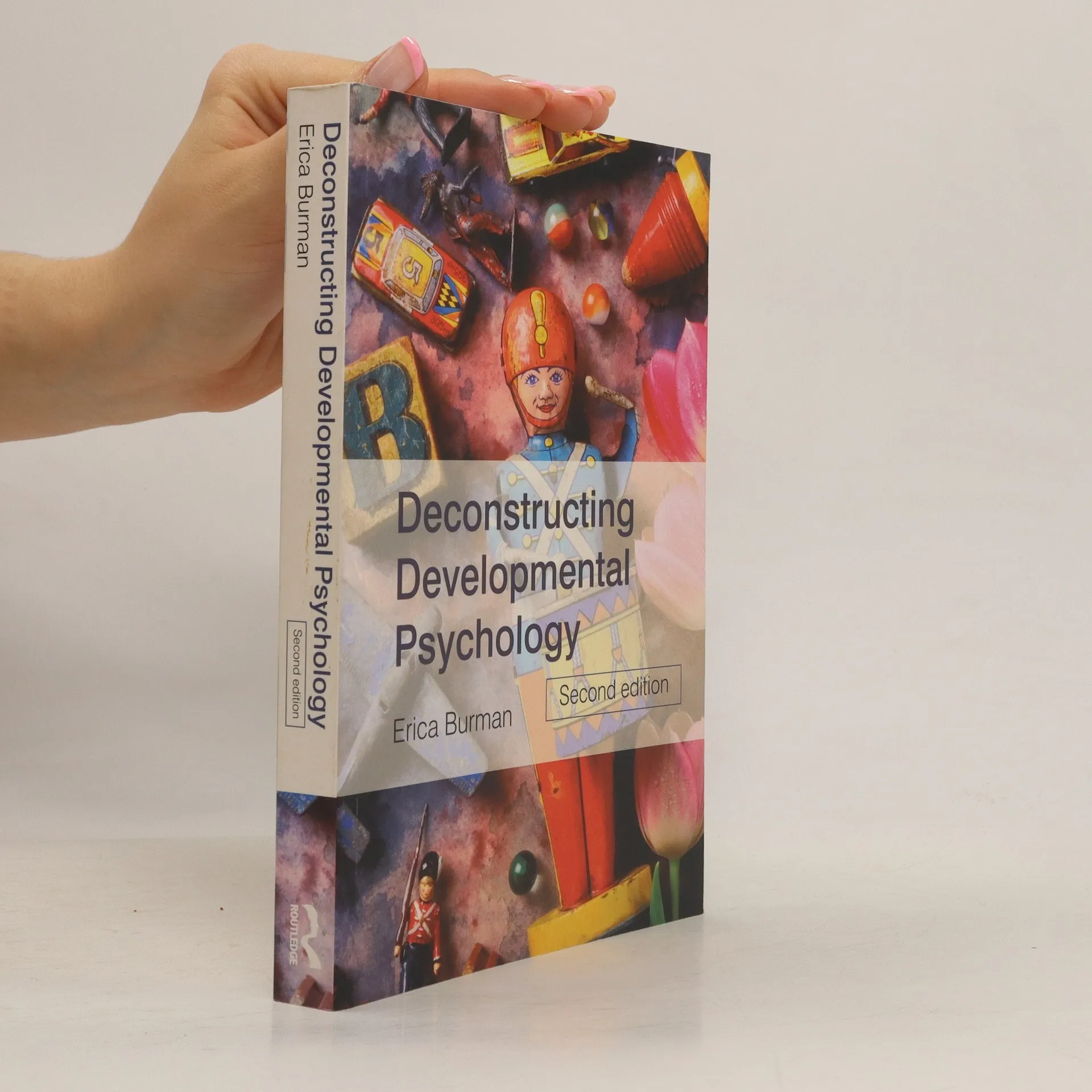
Deconstructing Developmental Psychology, Erica Burman
- Język

- Rok wydania
- 2008
- Oprawa
- (miękka)
Metody płatności
Brakuje nam tutaj Twojej recenzji.
- Tytuł
- Deconstructing Developmental Psychology
- Język
- angielski
- Autorzy
- Erica Burman
- Wydawca
- Routledge
- Rok wydania
- 2008
- Oprawa
- miękka
- Liczba stron
- 264
- ISBN10
- 0415395623
- ISBN13
- 9780415395625
- Seria
- Kategorie
- Ocena
- 3,8 z 5
- Opis
- What is childhood, and how did psychology become the authority on 'normal' development? This revised and updated edition interrogates the assumptions surrounding child development psychology, critically evaluating its role in social practice. Since the first edition, the influence of childcare experts and the 'psy complex' has intensified. The book explores how shifts in advanced capitalism have led to new understandings of children and more punitive institutional responses. It addresses the paradox of childhood in a context where young adults are increasingly economically dependent on their families amid political insecurity. The new edition includes an updated review of psychological theories, such as attachment and evolutionary psychology, and reflects on the evolving focus on fathers and fathering. It offers fresh perspectives on the connections between Piaget and Vygotsky, aligning more closely with discussions in the sociology of childhood and critical educational research. Coverage now includes more on child rights debates and a new chapter on practice dilemmas in child protection, highlighting the "raced" and gendered impacts of current policies. This engaging text provides essential resources for improving professional practice in social work, education, and health, offering critical insights into the politics shaping developmental psychological knowledge. It is crucial reading for anyone working with children or in