



Parametry
Więcej o książce
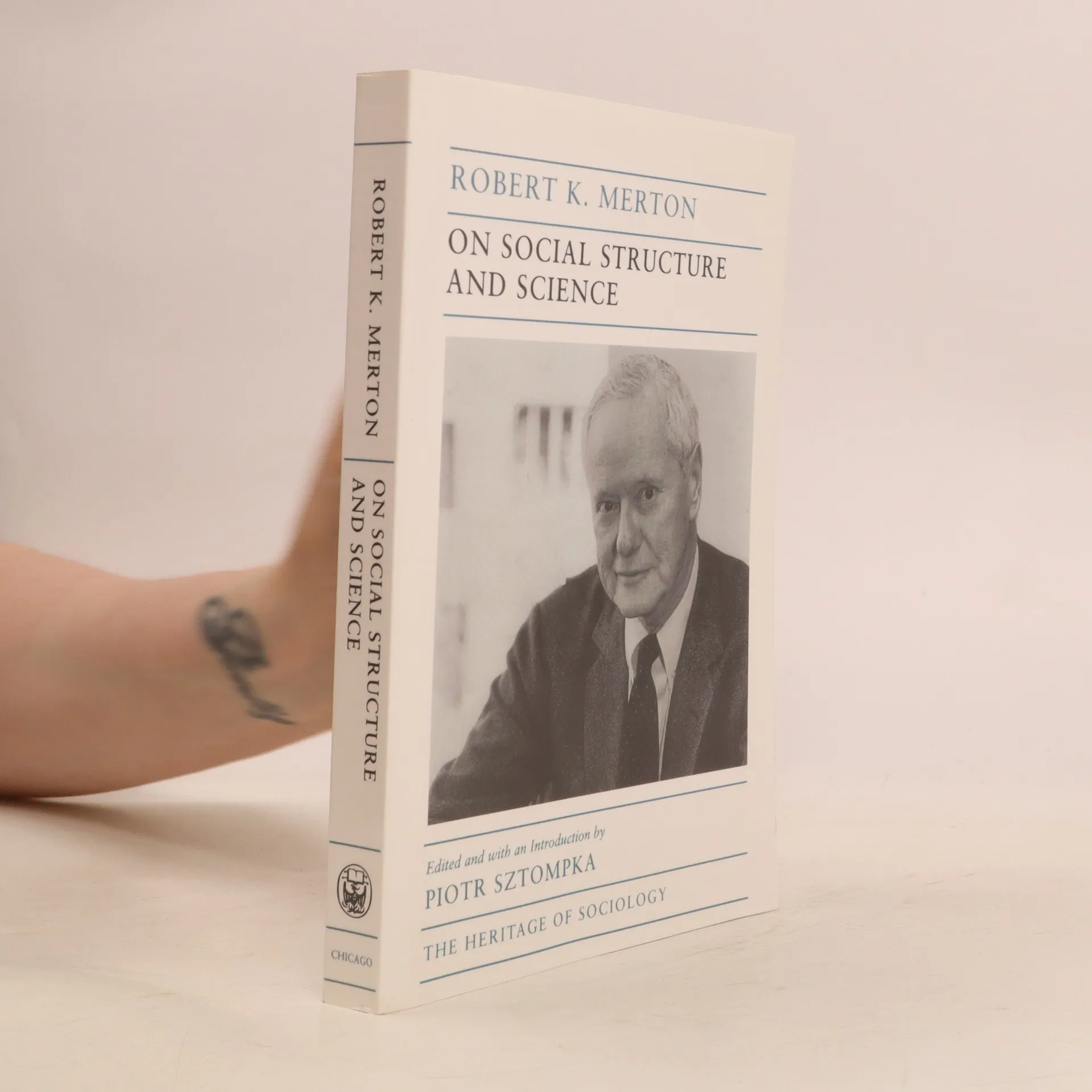
Robert K. Merton is unarguably one of the most influential sociologists of his time. A figure whose wide-ranging theoretical and methodological contributions have become fundamental to the field, Merton is best known for introducing such concepts and procedures as unanticipated consequences, self-fulfilling prophecies, focused group interviews, middle-range theory, opportunity structure, and analytic paradigms.This definitive compilation encompasses the breadth and brilliance of his works, from the earliest to the most recent. Merton's foundational writings on social structure and process, on the sociology of science and knowledge, and on the discipline and trajectory of sociology itself are all powerfully represented, as are his autobiographical insights in a fascinating coda. Anchored by Piotr Sztompka's contextualizing introduction, Merton's vast oeuvre emerges as a dynamic and profoundly coherent system of thought, a constant source of vitality and renewal for present and future sociology.
Zakup książki
On Social Structure and Science, Robert King Merton
- Język

- Rok wydania
- 1996
- Oprawa
- (miękka)
Metody płatności
Brakuje nam tutaj Twojej recenzji.
- Tytuł
- On Social Structure and Science
- Język
- angielski
- Autorzy
- Robert King Merton
- Rok wydania
- 1996
- Oprawa
- miękka
- ISBN10
- 0226520714
- ISBN13
- 9780226520711
- Seria
- Tagi
- Ocena
- 3,8 z 5
- Opis
- Robert K. Merton is unarguably one of the most influential sociologists of his time. A figure whose wide-ranging theoretical and methodological contributions have become fundamental to the field, Merton is best known for introducing such concepts and procedures as unanticipated consequences, self-fulfilling prophecies, focused group interviews, middle-range theory, opportunity structure, and analytic paradigms.This definitive compilation encompasses the breadth and brilliance of his works, from the earliest to the most recent. Merton's foundational writings on social structure and process, on the sociology of science and knowledge, and on the discipline and trajectory of sociology itself are all powerfully represented, as are his autobiographical insights in a fascinating coda. Anchored by Piotr Sztompka's contextualizing introduction, Merton's vast oeuvre emerges as a dynamic and profoundly coherent system of thought, a constant source of vitality and renewal for present and future sociology.