

Więcej o książce
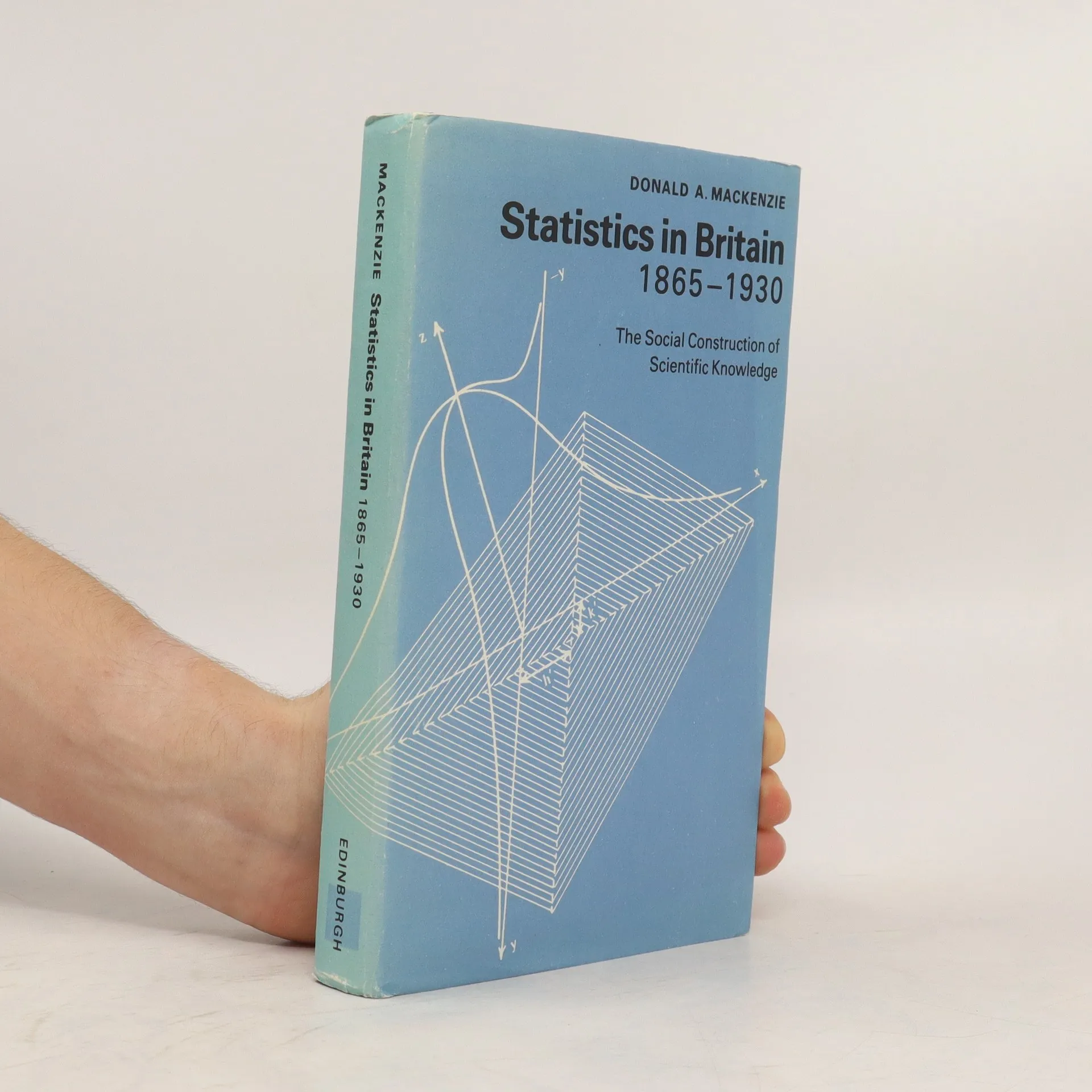
This rigorous and well-documented book makes a powerful and fascinating contribution to the history and sociology of Science. Its subject is the crucial period in the development of the modern theory of statistics, when the 'British School' - like Galton, Pearson, Fisher, Yule, and Gosset - turned the embryonic discipline into an established and important scientific field, introducing such concepts as regression, correlation, chi-square testing, t-test, and method of maximum likelihood. It contributes to Sociology also, because Galton to Galton, Pearson and Fisher, all convinced eugenists, statistical theory and method was envisaged as an instrument for social change. Eugenics is shown to have played an important role in motivating their work, thus reflecting the interests of the professional middle class in late Victorian and Edwardian Britain. This is given special consideration in the light of the famous controversy between the 'Biometric School' and the Mendelians.
Zakup książki
Statistics in Britain 1865-1930, Donald A. MacKenzie
- Język

- Rok wydania
- 1981
- Oprawa
- (twarda)
Metody płatności
Brakuje nam tutaj Twojej recenzji.
- Tytuł
- Statistics in Britain 1865-1930
- Język
- angielski
- Autorzy
- Donald A. MacKenzie
- Wydawca
- Edinburgh University Press
- Rok wydania
- 1981
- Oprawa
- twarda
- Liczba stron
- 306
- ISBN10
- 0852243693
- ISBN13
- 9780852243695
- Seria
- Ocena
- 4,3 z 5
- Opis
- This rigorous and well-documented book makes a powerful and fascinating contribution to the history and sociology of Science. Its subject is the crucial period in the development of the modern theory of statistics, when the 'British School' - like Galton, Pearson, Fisher, Yule, and Gosset - turned the embryonic discipline into an established and important scientific field, introducing such concepts as regression, correlation, chi-square testing, t-test, and method of maximum likelihood. It contributes to Sociology also, because Galton to Galton, Pearson and Fisher, all convinced eugenists, statistical theory and method was envisaged as an instrument for social change. Eugenics is shown to have played an important role in motivating their work, thus reflecting the interests of the professional middle class in late Victorian and Edwardian Britain. This is given special consideration in the light of the famous controversy between the 'Biometric School' and the Mendelians.